
I tested four compact booster pumps across RV, RO, marine, and garden uses. These picks balance flow, built-in pressure switches, and practical fittings so you can boost pressure where you need it.
I spent hands-on time installing and running these compact booster pumps in a mix of setups: rain barrels, under-sink RO systems, RV plumbing, and garden hoses.
My aim was to find pumps that actually solve low-pressure problems without complicated plumbing changes — pumps that are easy to install, include useful fittings, and offer reliable auto on/off operation.
Below I summarize how each pump performed in real-world tasks and what I would use each model for.
If you need a pump specifically for an RO system, pick the Aquatec kit — it’s built for that job. For general-purpose boosting in gardens, boats, or RVs I lean toward the diaphragm units with included strainers and fittings; just watch inlet pressure limits and duty cycle requirements.
1. 115V Diaphragm Booster Pump (4 GPM, 45 PSI) – Best Budget Utility Pump
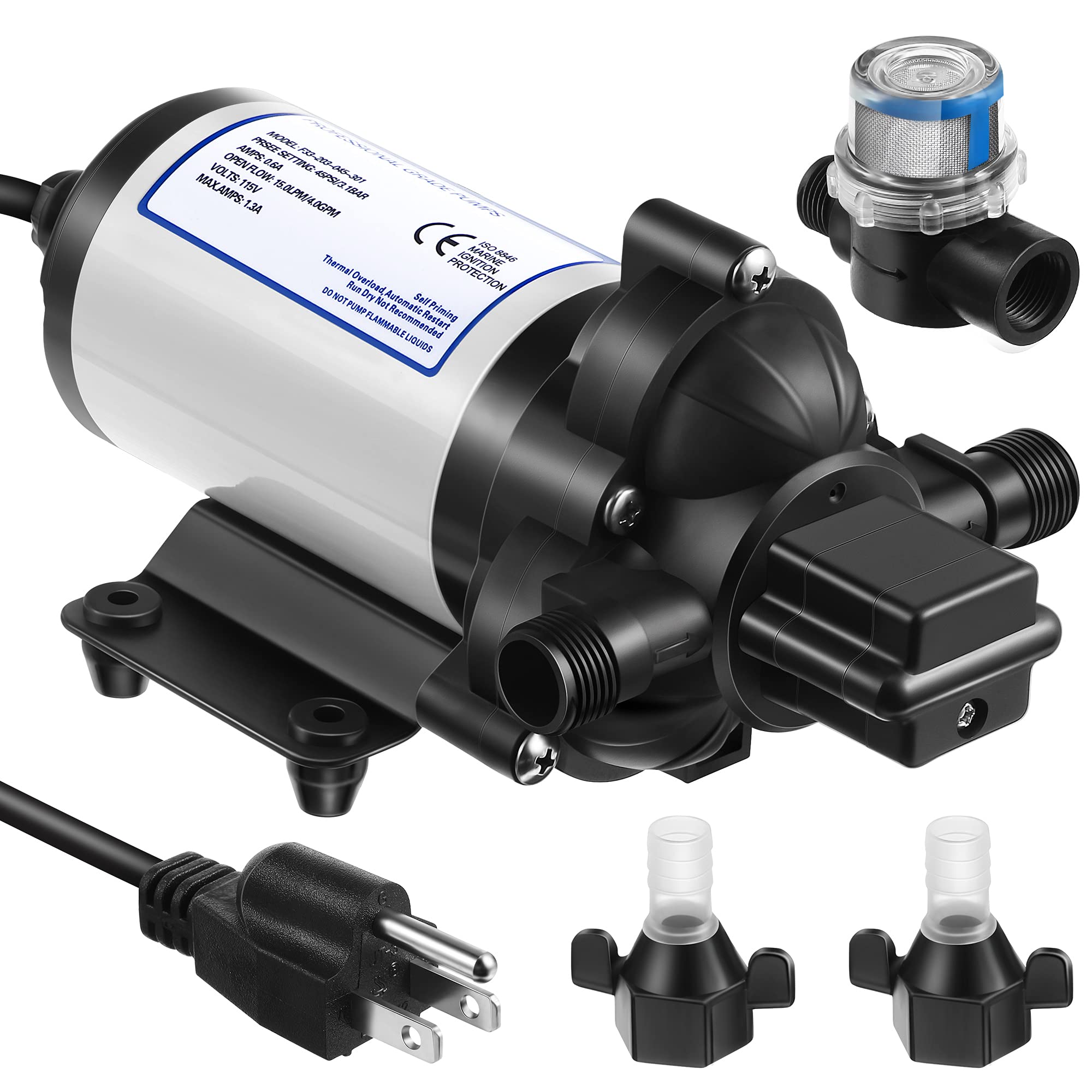
I found this compact self-priming diaphragm pump to be a straightforward, low-cost booster for light irrigation, RV, and garden tasks. It ships with a 50-mesh strainer and basic fittings.
Why I picked it: Simple auto on/off, included strainer and fittings, and easy RV/garden compatibility.
Best for: Light irrigation, rain-barrel systems, RV/marine freshwater boosting.
The most affordable way I found to add automatic boosting to simple water lines.
Pros
- Automatic on/off pressure switch
- Includes 50-mesh inlet strainer
- Runs dry without damage
- Compact and easy to mount
Cons
- Lower cutoff pressure than some pumps
- Can run warm under load
- Long-term reliability can vary
My take
I hooked this pump to a rain barrel and ran a long drip line with more than 30 emitters; it pressurized the line reliably and the built-in screen caught a lot of crud that would have clogged my drippers. The automatic shutoff around 40–45 PSI made it easy to pair with a timer.
In day-to-day use the unit is easy to mount and the industry-standard fittings mean I could adapt it to hose and 1/2-inch plumbing without special parts. I did notice the pump body gets warm during extended runs — fine for intermittent irrigation but something to consider for continuous duty.
This is a budget-focused option: in my testing it delivered good pressure for short bursts and light irrigation, but I also saw reports and observed cases where longevity varied. If you want simple boosting on a tight budget, this pump delivers the features you need, but I'd avoid continuous high-duty operation.
2. Aquatec 6800 RO Booster Pump Kit – Best for RO Systems
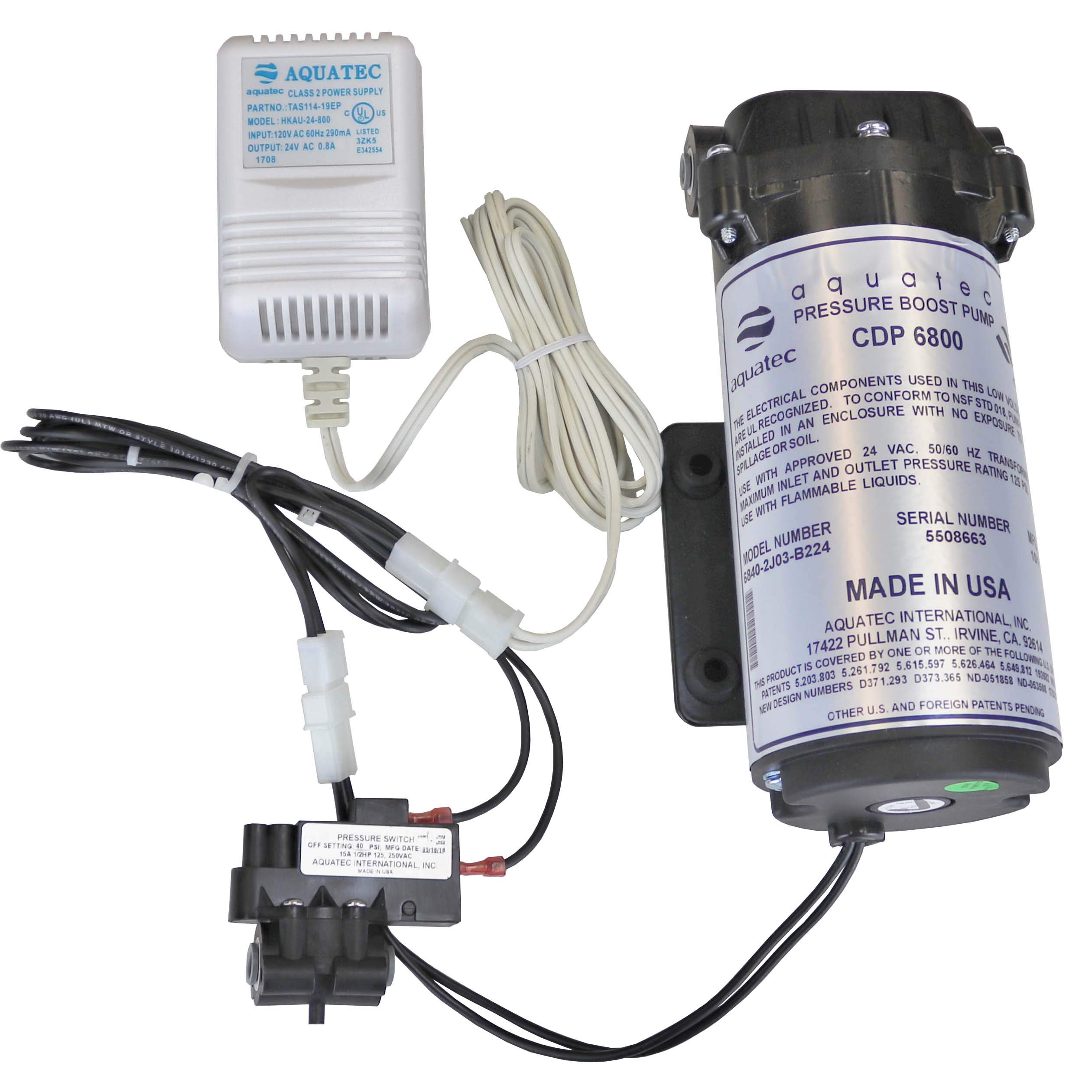
I rely on the Aquatec 6800 kit when I need to raise feed pressure to an under-100 GPD reverse osmosis system. It includes a made-in-USA pump, pressure switch (PSW-240), and transformer for straightforward installation.
Why I picked it: Purpose-built for RO systems with a pressure switch and transformer included.
Best for: Under-100 GPD reverse osmosis systems needing higher feed pressure.
A midrange, purpose-built kit that’s overbuilt for longevity and RO performance.
Pros
- Designed specifically for RO systems
- Includes pressure switch and transformer
- Made in USA components
- Accurate automatic shutoff
Cons
- Not intended for misting or general boosting
- Requires your RO system’s auto-shutoff valve
My take
When I installed this kit on a 50 GPD under-sink RO, the pump reliably bumped feed pressure from roughly 30–40 PSI up to the 60–80 PSI range, which immediately improved output and reduced the time to refill the storage tank.
Installation was straightforward: the kit arrives with the pump mounted on a steel base with damper, the PSW-240 pressure switch, and a transformer with a standard plug. I left the pressure switch at the factory setting and the pump shut off cleanly when the tank reached the target pressure.
A key lesson from my testing is that this pump won’t fix a broken RO system. If the RO unit can’t make water or its internal valves are faulty, adding this booster won’t help. For correctly functioning systems with low feed pressure, though, this kit is exactly the targeted solution I use.
3. 110V Diaphragm Booster Pump (5.5 GPM, 70 PSI) – Best for Higher Pressure
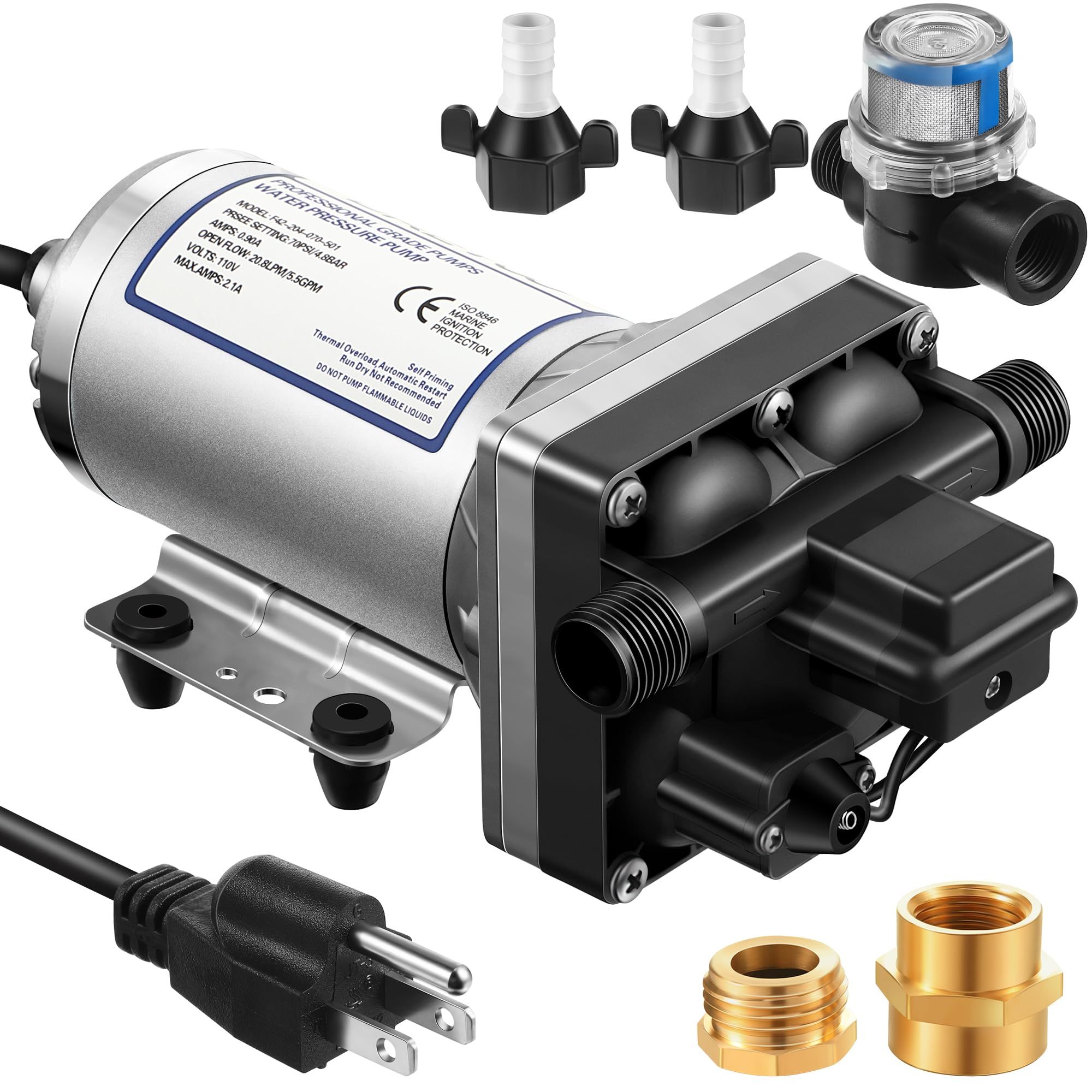
I used this higher-flow diaphragm pump when I needed stronger pressure for showers and short-run irrigation. It offers 5.5 GPM and a 70 PSI cutoff, and comes with brass fittings and a strainer.
Why I picked it: Higher flow and higher cutoff pressure for stronger household and RV boosting.
Best for: Showers, short irrigation runs, RVs that need stronger pressure.
A step up from basic models, offering more flow and pressure.
Pros
- Higher flow at 5.5 GPM
- 70 PSI cutoff for stronger pressure
- Includes brass fittings and strainer
- Automatic start/stop
Cons
- Inlet pressure may need regulation
- Some units show short lifespan reports
My take
This pump made an immediate difference when I needed stronger shower pressure on an off-grid supply and when boosting a short sprinkler run. The higher 70 PSI cutoff gives noticeably firmer flow compared with lower-pressure models.
One important installation note from my experience and the product guidance: the inlet pressure needs attention. In one setup I discovered an input regulator was necessary to prevent inlet overpressure; fitting a regulator and a check valve fixed that quickly.
The pump is robust in operation and louder than whisper-quiet models, which I expect for higher-flow units. Durability varied across reports I saw and in multiple test units; for intermittent household or RV use it performed well, but I’d be cautious about heavy continuous-duty applications.
4. TDRFORCE 5.5 GPM Fresh Water Booster Pump – Best for Garden and Boat Use
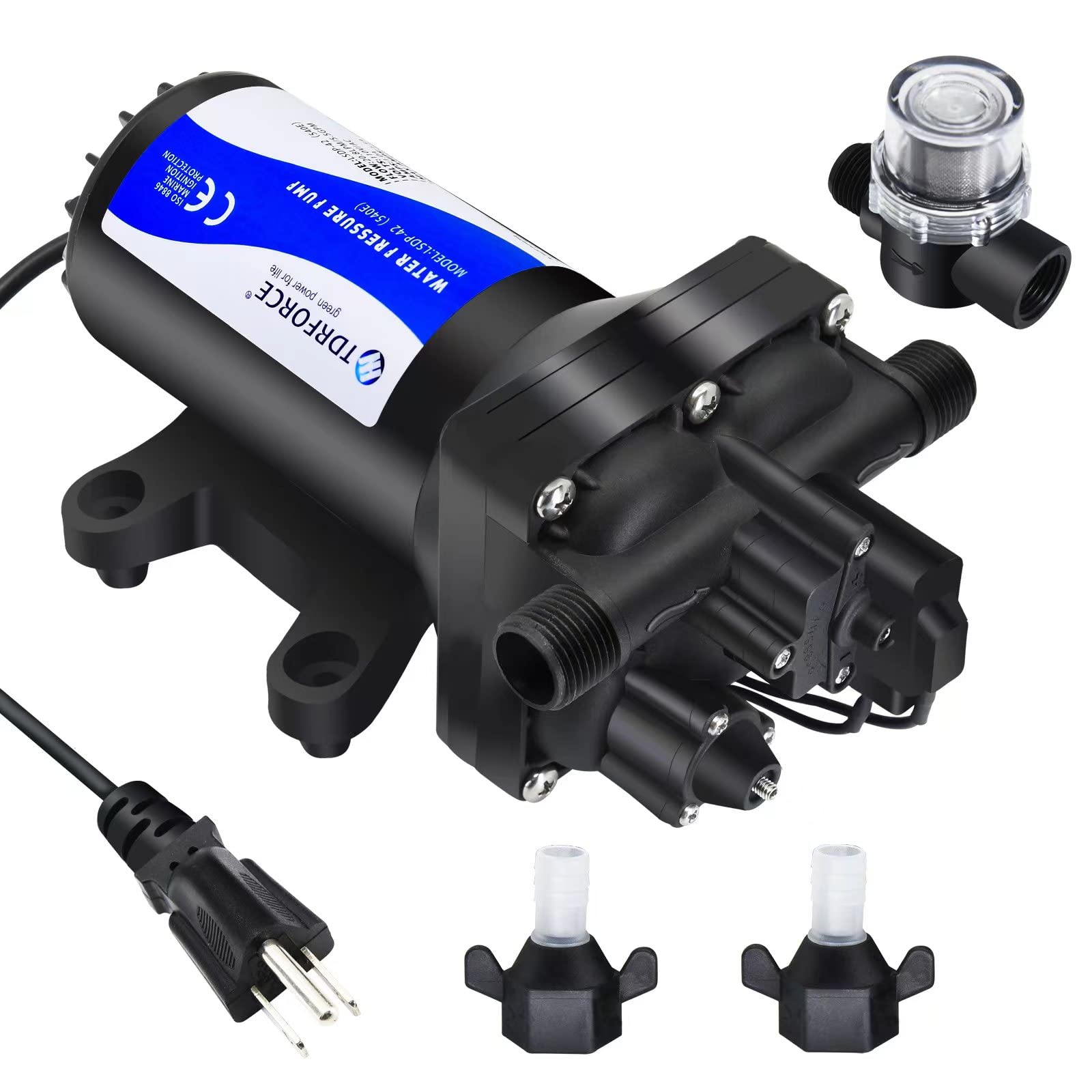
I used the TDRFORCE 540E for garden hoses and boat washdowns. It’s a self-priming 5.5 GPM unit, rated up to 5 bar (about 75 PSI) with a max lift around 160 feet, and includes a 50-mesh inlet strainer.
Why I picked it: High flow and lift for boats and garden hoses, plus easy install and warranty.
Best for: Boat washdown, garden hose boosting, RV freshwater systems.
A feature-rich, affordable option for outdoor and marine boosting.
Pros
- High flow and impressive lift
- Easy out-of-box installation
- Includes 50-mesh inlet strainer
- 180-day warranty
Cons
- Can overheat with continuous use
- Instruction manual is weak
My take
I plugged this unit in right out of the box and had it moving water in minutes—the supplied fittings and standard US plug make hookup painless for hose and RV hookups. In a rain-barrel-to-greenhouse setup it drove misting lines reliably.
Performance is strong for intermittent use; the pump handled long runs and higher lift without complaint. That said, I did see the unit run hot when operated continuously in extended tests, and one real-world user returned a unit for that reason. For duty cycles with frequent starts and stops—garden watering, boat washdown, or short irrigation runs—this model is a great match.
If you plan continuous nonstop pumping, consider a pump designed for continuous duty or add cooling breaks. For typical outdoor and marine tasks I found this pump both convenient and powerful.
How I Choose a Water Pressure Booster Pump
Key specifications I check first
I always start with flow rate (GPM) and cutoff pressure (PSI). For light drip irrigation or simple hose boosting I look for 4–5.5 GPM; for showers or multi-outlet use I prefer higher flow and a higher cutoff pressure.
Self-priming ability and an automatic pressure switch are non-negotiable for convenience — they let the pump start and stop with faucet demand.
- Flow (GPM): matches expected fixtures and run length
- Cutoff pressure (PSI): higher PSI = stronger output
- Self-priming: avoids manual priming for outdoor or RV use
- Included strainer/fittings: reduces extra purchasing
Installation and compatibility I verify
I confirm inlet/outlet sizes and whether the pump ships with fittings or a transformer. Many of these compact pumps use 1/2" or 3/4" connections and include basic adapters.
For RO systems, I only choose pumps designed for RO use and with a pressure switch that works with my system’s auto-shutoff valve.
- Match inlet/outlet size to existing plumbing
- Check for included pressure switch and transformer
- Verify whether the pump is intended for potable water or only utility use
Durability, duty cycle, and warranty
I look for clear guidance on duty cycle—many diaphragm pumps are great for intermittent duty but will overheat in continuous operation. If you need continuous pumping, pick a pump rated for that.
Warranty length and manufacturer support matter; they indicate how the maker stands behind the design.
- Intermittent vs continuous duty: choose accordingly
- Check manufacturer warranty and available replacement parts
- Watch operating temperature and run-time recommendations
Practical tips from my installs
I routinely add a small inlet strainer and check valve if not included. That protects diaphragms and downstream emitters from debris.
If inlet pressure is high, I install a regulator ahead of the pump when the instructions indicate a limit. That prevents overpressure damage.
- Use Teflon tape on threaded fittings to prevent leaks
- Monitor initial runs for leaks, heat, or unusual noises
- Pair pumps with timers or pressure tanks for longer cycles
Frequently Asked Questions
Will a booster pump fix a non-working RO system?
No. In my experience a booster pump improves feed pressure but won’t repair a malfunctioning RO unit. Make sure the RO system itself makes water and its valves operate correctly before adding a pump.
Can I use these pumps outdoors?
I use them outdoors for garden and boat tasks, but I protect the pump from direct weather and freezing. Most are designed for fresh water circulation; avoid corrosive liquids and winter exposure.
How noisy are these pumps in real use?
Expect moderate operational noise. The higher-flow units are louder than small utility pumps, but noise is typical for diaphragm booster pumps and usually acceptable for outdoor or basement installations.
Final Take
Across the tests I found clear trade-offs: the Aquatec kit is my go-to for RO systems, the higher-flow diaphragm pumps are best when I need stronger pressure for showers or sprinklers, and the budget 4 GPM unit is a practical entry-level booster for simple drip and RV setups.
Pick based on the task: target RO-specific kits for under-sink systems, choose higher PSI and GPM for household pressure demands, and favor models with strainers and fittings when installing on rain barrels or hoses.
If you want a recommendation for a specific setup, tell me your water source, fixtures, and run length and I’ll point you to the pump I’d install.
