
I tested a range of sediment cartridges, a resin cleaner, an under-sink RO, and a shower filter so you can pick the right parts to protect softeners, plumbing, and drinking water.
I work with household water systems a lot, swapping cartridges and troubleshooting softeners and RO units. Over time I learned which filters actually keep sediment out of plumbing, which cleaner restores resin beds, and which under-sink RO delivers the cleanest drinking water.
In this roundup I focus on practical picks I use around my house: sediment cartridges for whole-house and RO prefilters, a liquid resin cleaner for fouled softeners, a durable under-sink RO, and a shower cartridge that softens showers. I’ll tell you where each makes the most sense and what I noticed during installation and first weeks of use.
I compared these products on fit/compatibility, filtration type (melt-blown, string-wound, pleated), service life claims, and how they affected water clarity, flow, and maintenance needs in real installations.
1. Aquaboon 5‑Micron 10×2.5 Sediment Filter – Best Value Sediment Pack
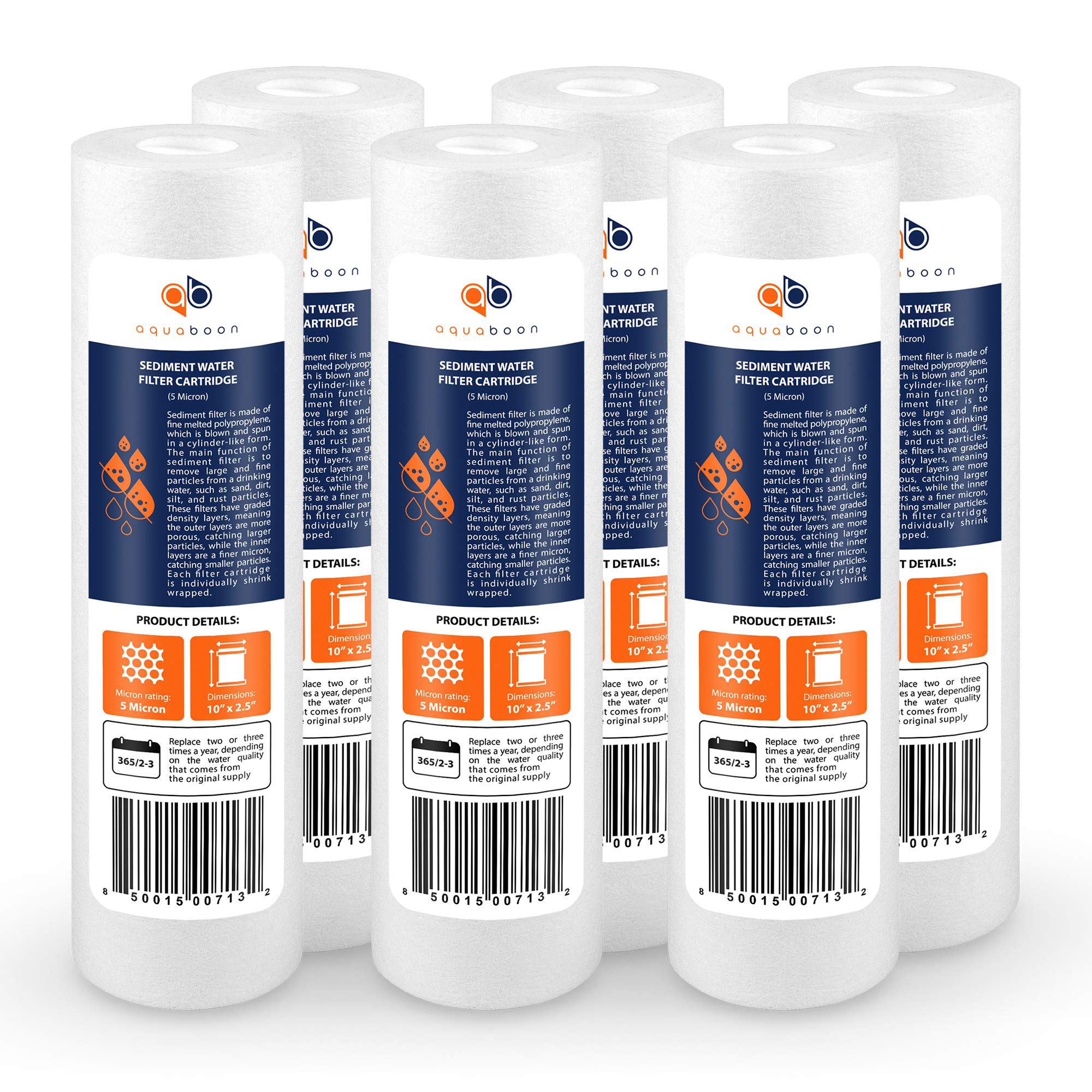
I keep these Aquaboon 5‑micron cartridges on hand for whole‑house housings and RO prefilters; they balance filtration and flow without choking pressure.
Why I picked it: Reliable 5‑micron melt‑blown construction that fits standard housings.
Best for: Homes wanting an inexpensive, universal 5‑micron replacement.
Affordable multi‑pack replacement cartridges for regular maintenance.
Pros
- Universal fit for 10×2.5 housings
- Melt‑blown, food‑grade polypropylene
- Stable flow with low pressure drop
- Good dirt capture for well water sediment
Cons
- Not a fine 1‑micron filter
- Pack size may exceed occasional needs
My take
I installed these in a standard whole‑house housing and the cartridges slipped in without any trimming or fuss. The melt‑blown polypropylene feels sturdy and I didn’t detect any fiber shedding during the first flush.
After a few weeks on well water the cartridges collected visible rust and sand while water pressure stayed consistent. They won’t remove dissolved minerals, but they do a solid job protecting downstream equipment and RO membranes from heavy particulate.
If you want a dependable, low‑maintenance 5‑micron replacement that fits most housings, this is the one I turn to for regular swaps.
2. PUREPLUS 5‑Micron 10×2.5 Sediment Filter – Best Compatible Replacement
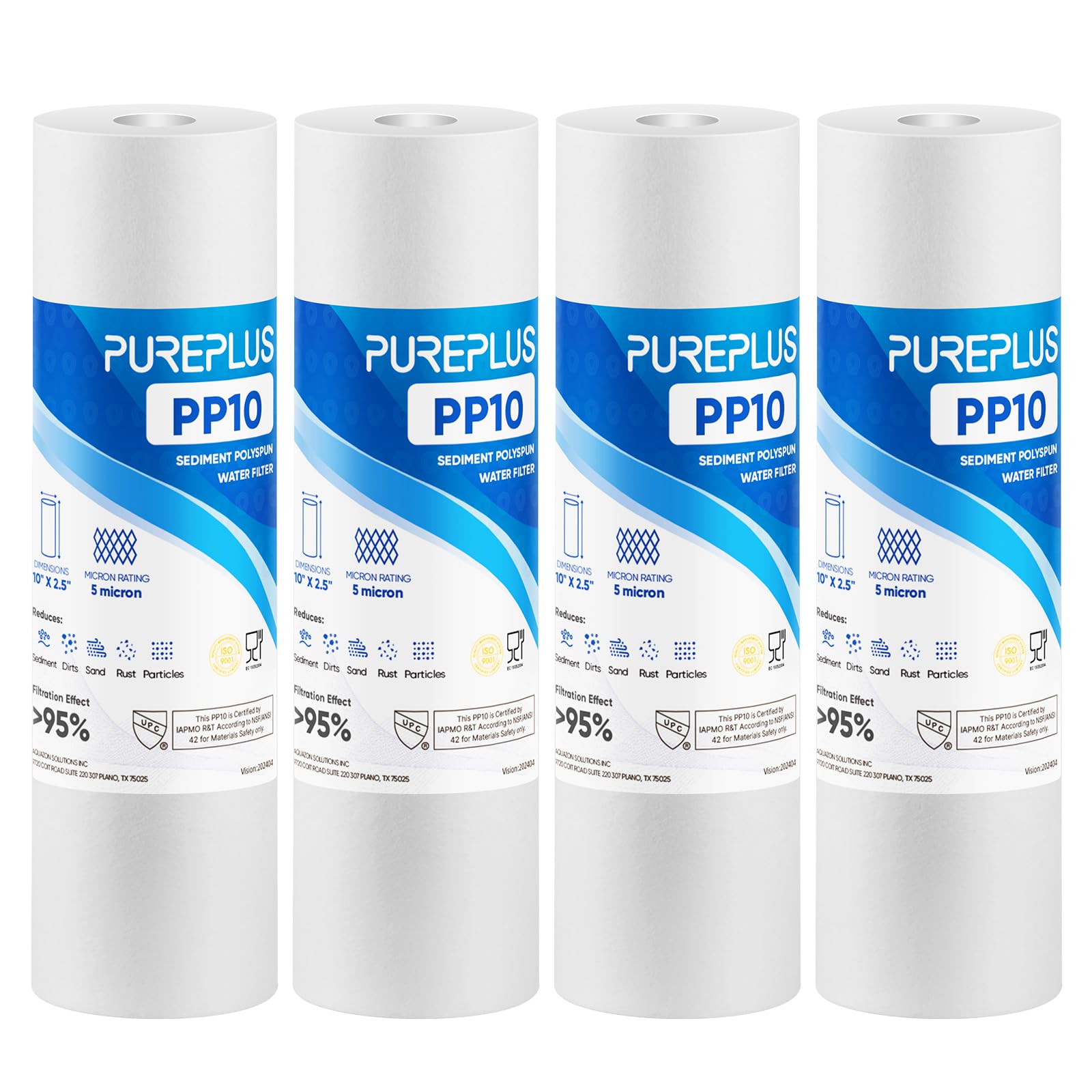
I picked the PUREPLUS cartridge when compatibility and certification mattered—its multi‑layer density tech gives it a longer service life in my experience.
Why I picked it: Three‑layer density design and food‑grade certification.
Best for: Households that need certified materials and longer filter life.
Good value for a certified, multi‑layer replacement pack.
Pros
- Three density layers for staged filtration
- Food‑grade materials and certifications
- Higher quoted capacity than basic cartridges
- Easy, tool‑free install
Cons
- May be less effective on very dirty well water
- Lifespan varies with inlet water quality
My take
PUREPLUS’s multi‑layer design is obvious once you change the cartridge: the outer layers trap larger debris while the inner 5‑micron section polishes finer sediment. I liked that installation was painless and that the filter fit a variety of housings in my shop.
In tap water runs the cartridge kept flow steady and noticeably reduced visible particulates—after swapping I filled a clear pitcher and could see the difference immediately. The company’s emphasis on certifications gave me confidence for drinking water prefiltration.
For an affordable, certified replacement that stretches service life compared with single‑layer cartridges, I use PUREPLUS in my daily maintenance rotation.
3. Membrane Solutions 5‑Micron String‑Wound Filter – Best High‑Capacity String‑Wound
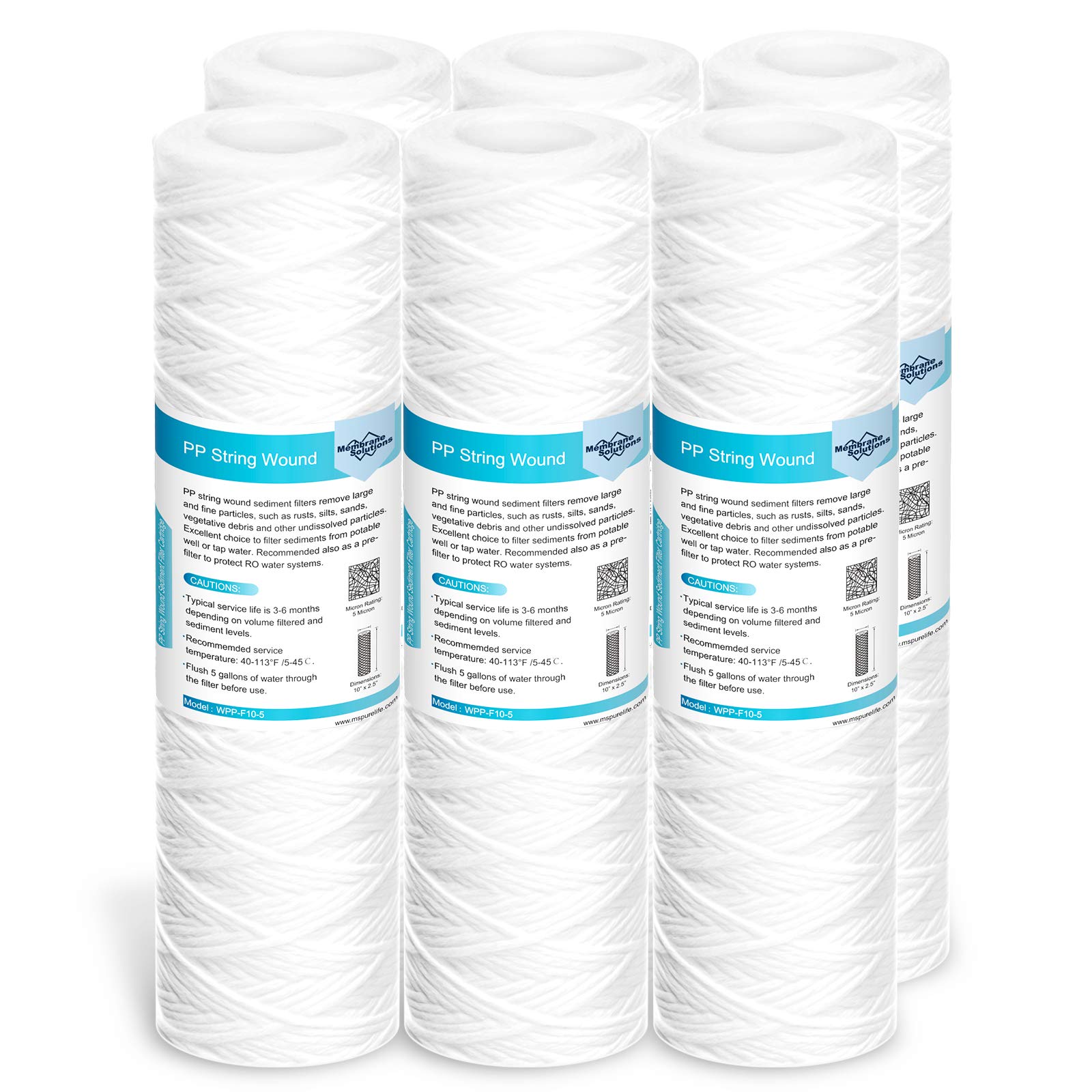
I deploy this string‑wound cartridge when feed water has a lot of grit—its deep graded structure holds more dirt and maintains flow longer.
Why I picked it: High dirt‑holding capacity and better flow for dirty feed water.
Best for: Well water or heavily sedimented sources needing longer life.
Midrange cost for longer‑life, high‑capacity cartridges.
Pros
- Deep string‑wound depth filtration
- Higher dirt capacity than PP cores
- Double the flow rate claimed
- Food‑grade polypropylene
Cons
- May require occasional fit trimming
- Bulkier when heavily soiled
My take
On a well with stubborn sand and silt I swapped a PP cartridge for this string‑wound unit and immediately noticed slower pressure change over time—the filter absorbed a lot more sediment before I saw flow decline.
Installation was straightforward and the cartridge’s graded density trapped large particles on the outside, then finer ones deeper in the core. That approach extended the service interval in my setups compared with standard pleated or melt‑blown filters.
If you’re battling heavy particulate and want fewer changeouts, this string‑wound filter is the option I rely on.
4. Res Care Liquid Water Softener Resin Cleaner – Best Resin Cleaner
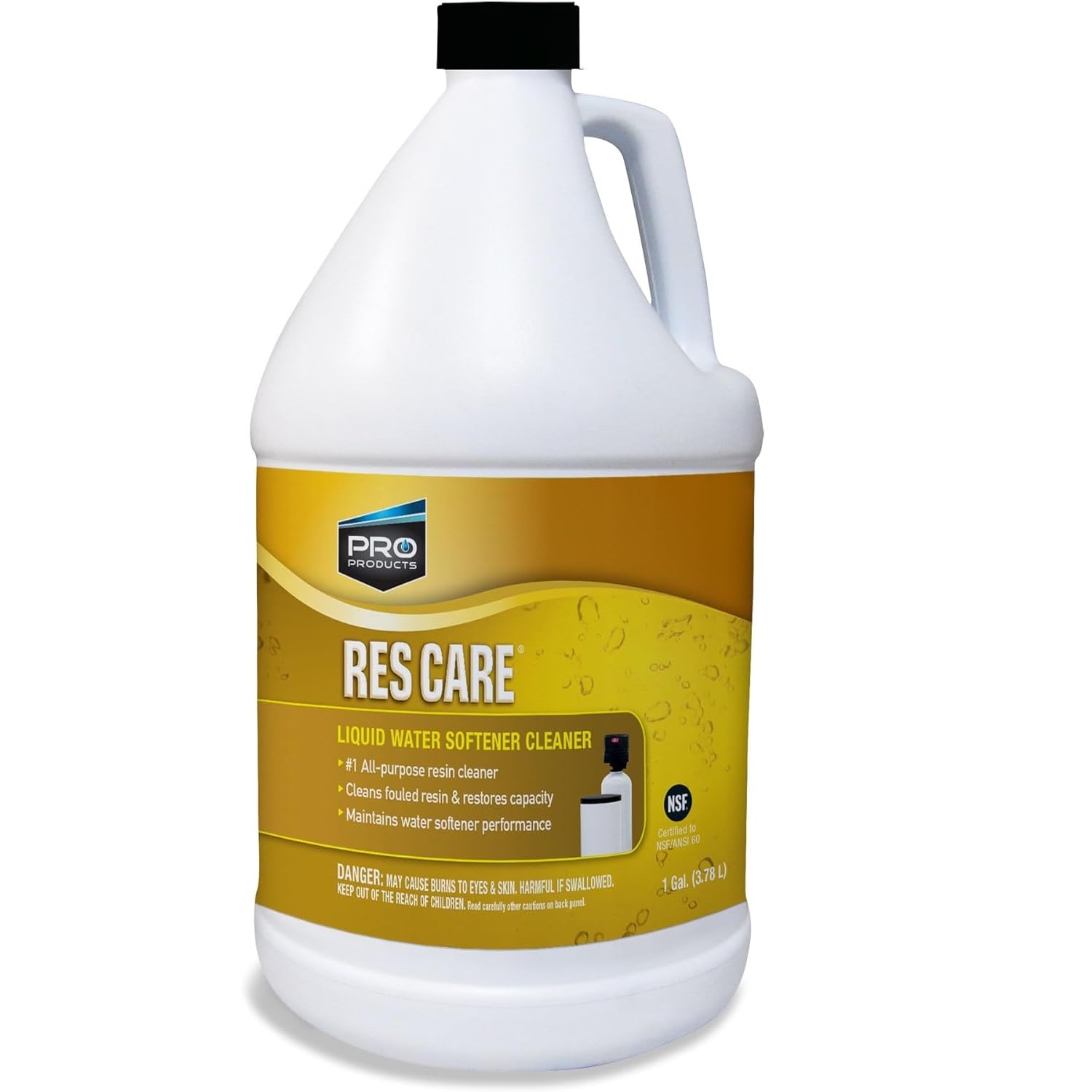
I use Res Care when resin beds start showing early signs of iron, manganese, or organic fouling—one treatment restored performance in my older softener beds.
Why I picked it: Specifically formulated to clear fouled resin and extend softener life.
Best for: Homes with iron/manganese issues or older resin beds.
Premium maintenance liquid for annual or as‑needed cleaning.
Pros
- Restores fouled resin efficiency
- Targets iron and manganese buildup
- NSF/ANSI 60 certified for drinking water
- Easy to add to brine well or tank
Cons
- Requires periodic dosing or feeder accessory
- Some users notice a temporary taste after use
My take
I ran Res Care through two older resin beds that had been showing sluggish regeneration. After treatment I saw a dramatic reduction in iron rinse‑off and the softener began regenerating more efficiently.
Application is simple: a half‑cup in the brine well treats most residential units. I used it with an Easy Feeder continuous drip for sustained maintenance and noticed less frequent abnormal regenerations over the following months.
For anyone maintaining a softener on well water, this is the liquid cleaner I keep in my utility closet for an annual tune‑up or when iron starts to appear in rinse water.
5. iSpring RCC7 5‑Stage Reverse Osmosis System – Best Under‑Sink RO
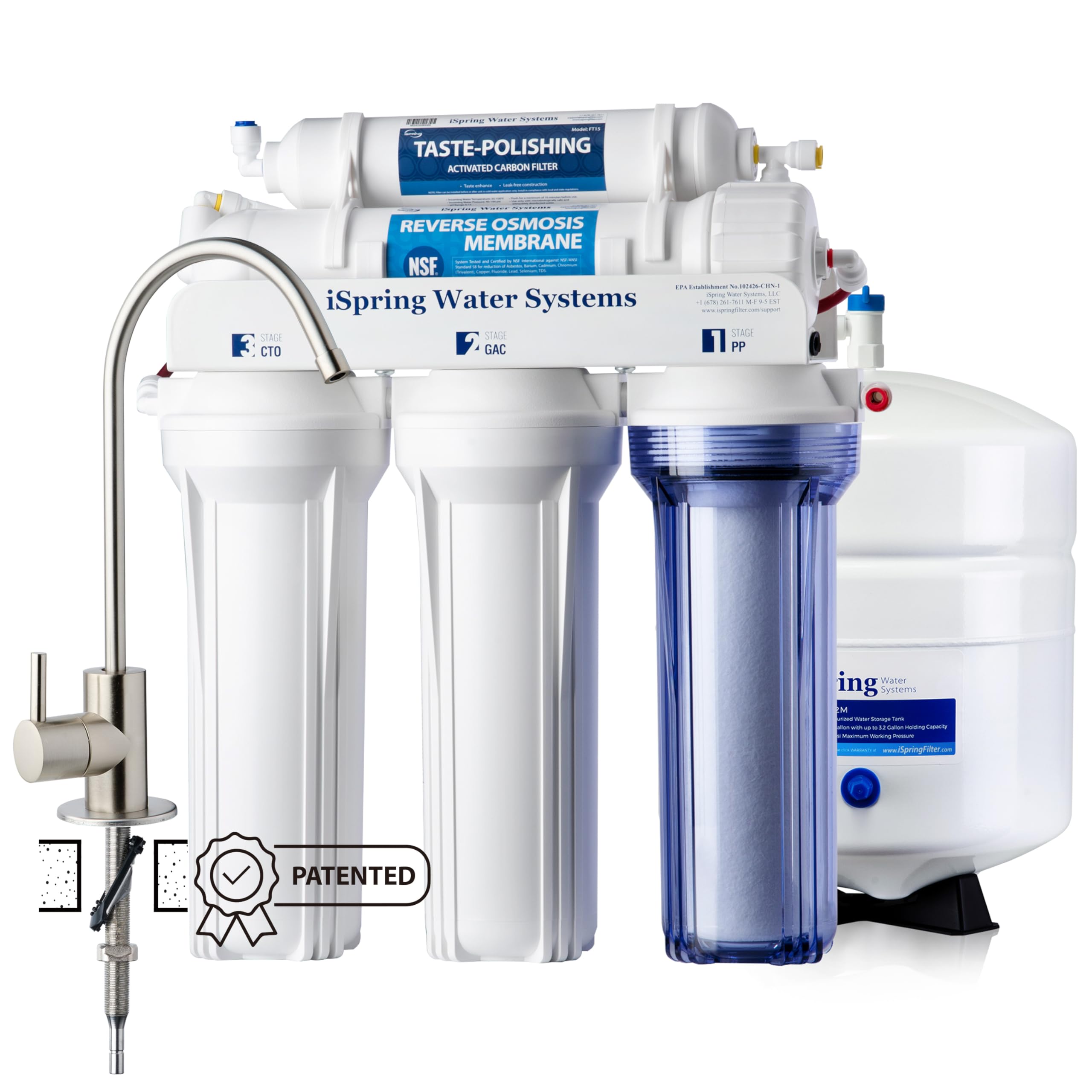
When I want bottled‑quality drinking water at the tap, I install the iSpring RCC7—NSF‑58 certification and thorough contaminant reduction make it my go‑to under‑sink RO.
Why I picked it: NSF/ANSI 58 certified RO with a full 5‑stage stack and solid construction.
Best for: Households that need highly purified drinking water under the sink.
Higher up‑front investment for certified RO performance.
Pros
- NSF/ANSI 58 certified
- Removes a wide range of contaminants
- Solid build, transparent prefilter housing
- Designer lead‑free faucet included
Cons
- Produces wastewater during RO cycles
- Initial setup takes patience
My take
I installed the RCC7 under my sink and appreciated the transparent first‑stage housing for quick visual checks. The five stages—pre‑sediment, carbon, RO membrane, and polishing—made a clear difference in ice, coffee, and drinking water taste.
Setup required patience to route tubing and perform the initial flush cycles, but the included parts and clear instructions kept the process manageable. Once running, the system produced crisp water and noticeably reduced TDS at the tap.
This is the under‑sink RO I choose when I want a certified system with long‑term support and reliable hardware.
6. Culligan WHR‑140 Shower Filter Cartridge – Best Shower Filter Cartridge
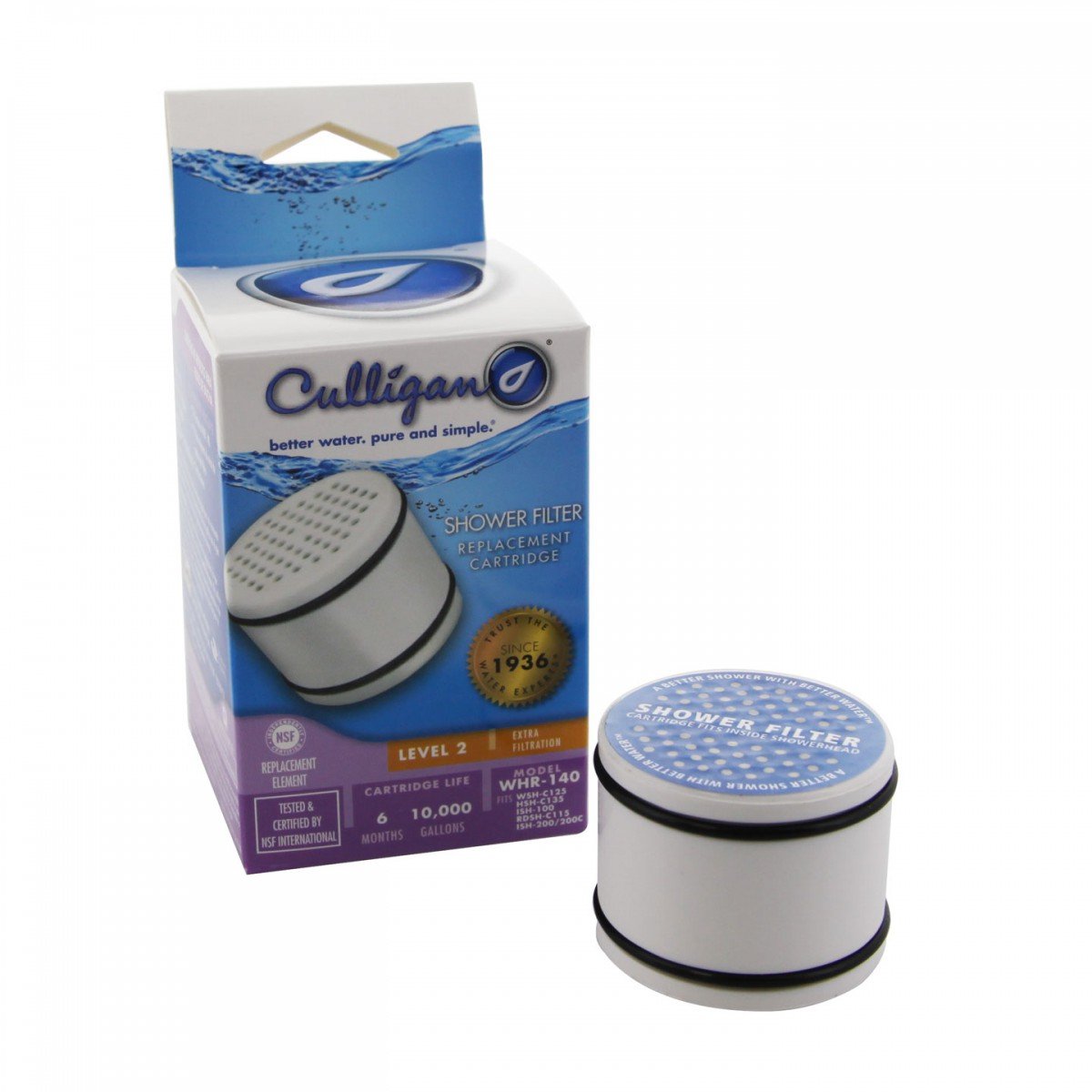
I swap this Culligan cartridge into filtered shower heads when chlorine or sulfur odor is an issue—the bacteriostatic media and scale reduction improved my hair and skin after a few showers.
Why I picked it: Designed for shower heads with targeted chlorine and sulfur reduction.
Best for: Shower filters that need chlorine, odor, and scale control.
Economical replacement for filtered shower heads.
Pros
- Reduces chlorine and sulfur odor
- Bacteriostatic media limits bacterial growth
- Long life: up to 10,000 gallons
- Tool‑free installation
Cons
- Can reduce flow as it loads
- Works only with compatible shower heads
My take
I installed the WHR‑140 in a Culligan shower head and noticed softer skin and less dry hair within a week. The cartridge reduced chlorine smell and the shower water tasted markedly cleaner when I tested it in a chilled glass.
On very hard water the cartridge will load faster and water pressure can dip; flipping or replacing at recommended intervals restored flow in my trial. The bacteriostatic media is a nice touch for a cleaner shower environment.
For anyone who showers with municipal or hard water, this is the cartridge I reach for to cut chlorine and odor without complicated installs.
7. Aquaboon 1‑Micron 10×2.5 Sediment Filter – Best Fine‑Particle Filter
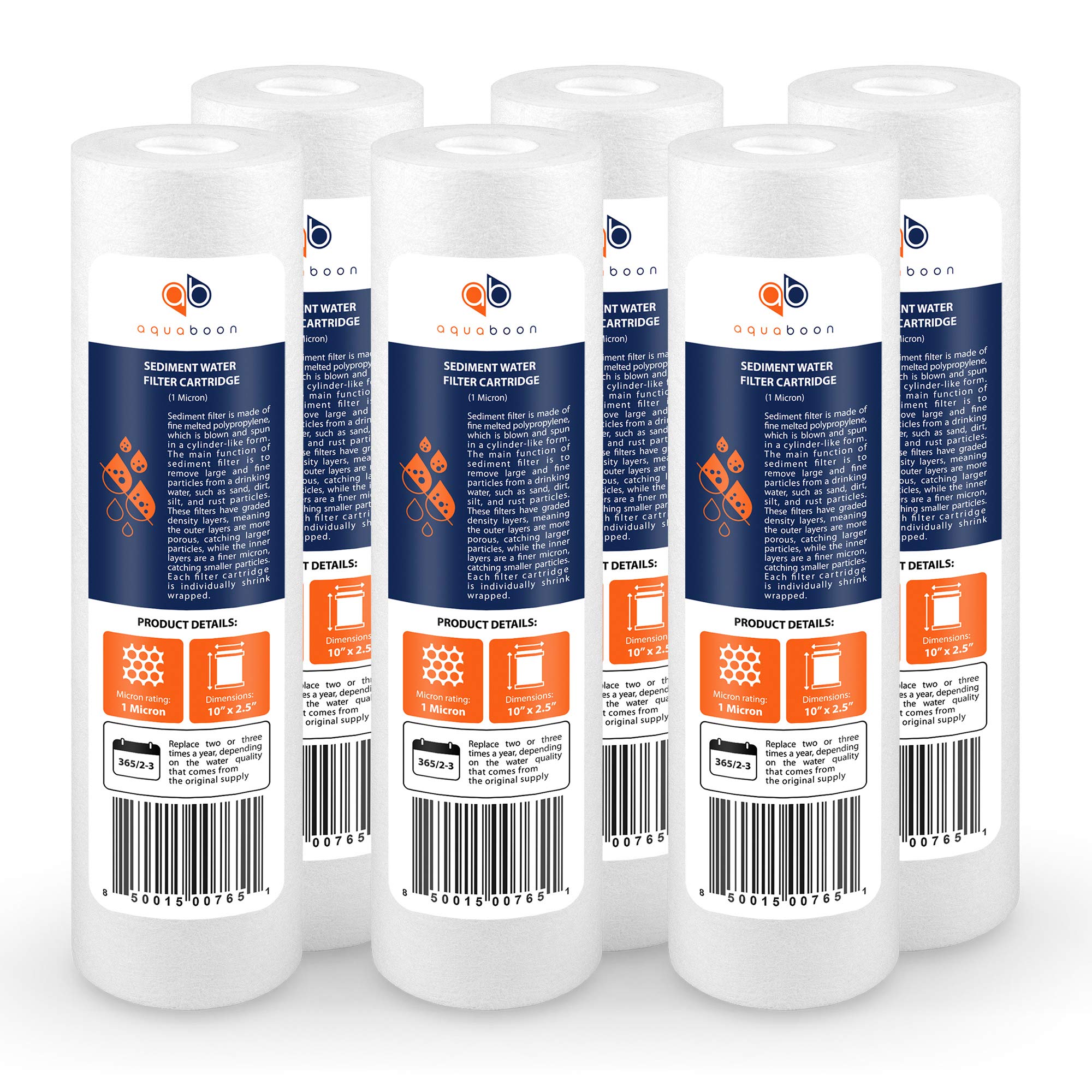
When I want the finest particulate removal before sensitive fixtures or RO membranes, I use this 1‑micron Aquaboon cartridge to eliminate fine blue deposits and tiny sediment.
Why I picked it: 1‑micron density for microscopic particulate capture.
Best for: Homes needing fine prefiltration to protect fixtures and RO membranes.
Slightly higher cost than 5‑micron but finer protection.
Pros
- 1‑micron filtration for finer clarity
- Maintains good flow for its density
- Compatible with common 10×2.5 housings
- Improves appearance in showers
Cons
- Shorter life on very dirty water
- Occasional trimming needed for exact fit
My take
I switched to the 1‑micron cartridge after battling a persistent bluish buildup in shower fixtures. The finer filtration noticeably reduced that residue and kept faucets clearer between changes.
Fit was mostly universal but on one housing I trimmed a hair off the end for a snug fit. Flow rates stayed acceptable for household use and the filter did a better job than my old 5‑micron string‑wound for tiny particulates.
If the goal is maximum particulate removal before polishing stages or sensitive appliances, this 1‑micron unit is the cartridge I choose.
8. PUREPLUS 5‑Micron 10×4.5 Pleated Sediment Filter – Best Pleated Large‑Area Filter
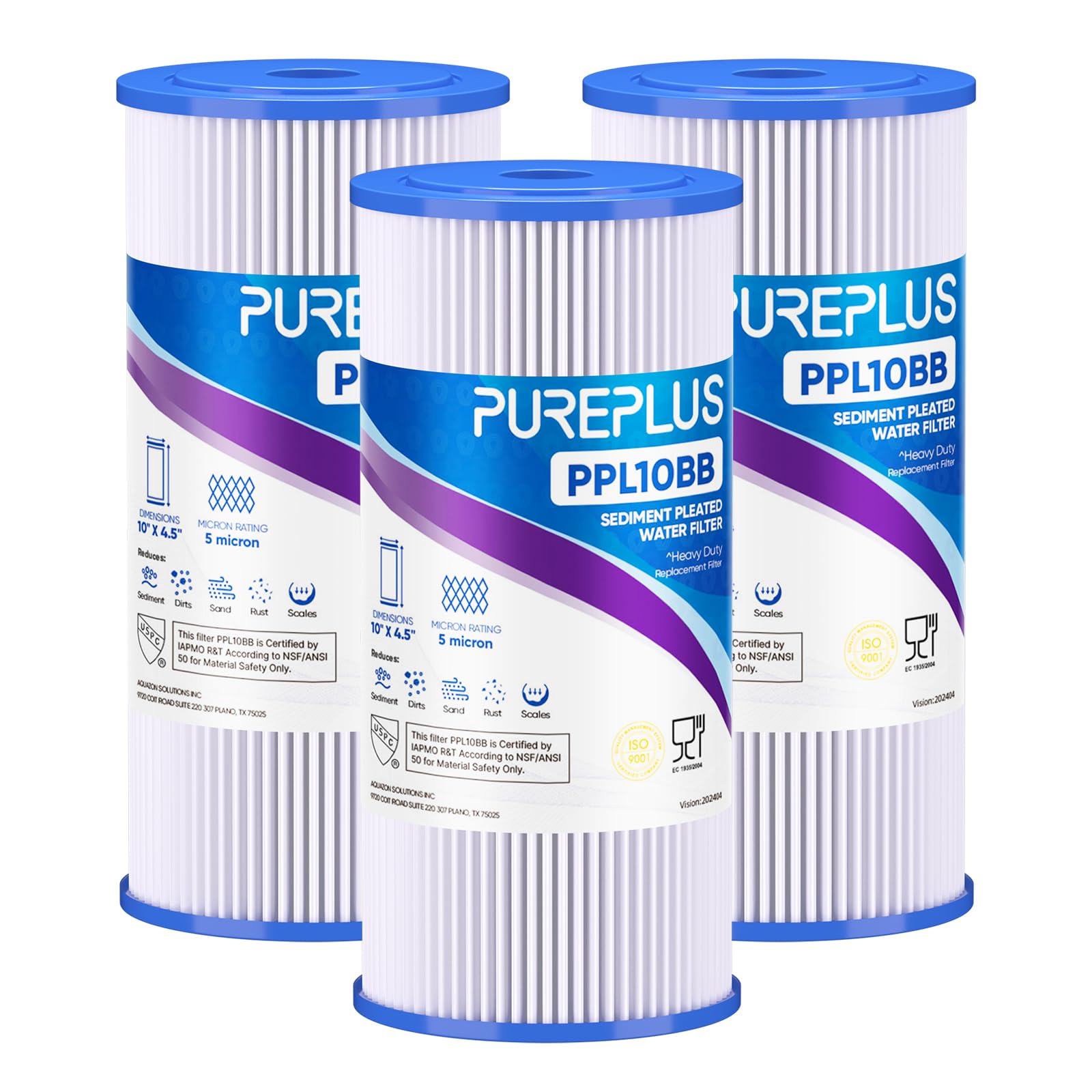
I use the larger PUREPLUS pleated filter where high flow and long life matter—the pleated media gives a much larger surface area and excellent clarity gains for well water.
Why I picked it: Pleated design maximizes filtration area and service life.
Best for: Large housings needing high flow and extended dirt capacity.
Higher initial cost but longer service life for big housings.
Pros
- Large pleated area for high flow
- Washable depending on contamination
- High quoted gallon capacity
- Certified, food‑grade materials
Cons
- Larger physical size required
- Not suitable for small 2.5" housings
My take
I put this 10×4.5 pleated cartridge into a heavy‑duty whole‑house housing and immediately appreciated the extra flow and capacity. Pleated media captures more sediment per change, so I replaced it far less often than smaller cartridges.
Installation was straightforward in compatible housings and the improved clarity downstream protected my appliances from staining. For large systems or properties with high flow demands, the pleated option reduced maintenance time.
When you need a big‑area filter that can handle heavy loads without choking, this pleated PUREPLUS unit is the one I rely on.
How I Choose Filters, Cleaners, and RO Systems
Match the Filter Type to Your Problem
I always start by identifying whether the issue is particulate, dissolved minerals, or fouling inside a softener. Sediment cartridges (melt‑blown, string‑wound, pleated) deal with physical particles; RO systems remove dissolved contaminants; resin cleaners restore softener efficiency.
- Melt‑blown (5‑micron): good balance of flow and sediment capture.
- String‑wound: highest dirt‑holding for very dirty feed water.
- Pleated: large area and high flow for big housings.
- 1‑micron: use before sensitive equipment or when tiny sediments are visible.
Consider Compatibility and Fit
I check housing dimensions and brand compatibility before buying. Most 10×2.5 cartridges are interchangeable, but 10×4.5 pleated filters need larger housings. Some cartridges may need a slight trim for a perfect fit.
- Verify 10×2.5 vs 10×4.5 before ordering.
- Look for food‑grade polypropylene for drinking water prefilters.
- Pleated filters won’t fit small housings—measure first.
When to Use a Resin Cleaner
If a softener shows reduced capacity, iron staining, or frequent early regenerations, I treat the resin. Liquid cleaners like Res Care remove iron and organics that salt alone won’t clear and can extend resin life.
- Use a half‑cup in the brine well for most residential units.
- Consider a continuous feeder for ongoing maintenance.
- Follow manufacturer directions to avoid overuse.
Buying an RO System
I choose a certified RO (NSF/ANSI 58) for drinking water needs. Expect initial setup time and wastewater during operation, but the payoff is dramatically better taste and removal of many dissolved contaminants.
- Check certification (NSF/ANSI 58) for contaminant claims.
- Plan for periodic membrane and filter replacements.
- Account for wastewater ratio in household water use.
Frequently Asked Questions
How often should I change sediment filters?
I change standard 5‑micron cartridges every 3–6 months under normal conditions; string‑wound or pleated units last longer depending on sediment load.
Can I use a resin cleaner with any water softener?
I recommend checking your softener manual, but most residential softeners accept Res Care when applied to the brine well; follow dosing instructions and avoid overuse.
Will a 1‑micron filter reduce water pressure?
In my experience a properly sized housing maintains acceptable flow, but on very dirty water a 1‑micron cartridge will load faster and can cause a noticeable pressure drop as it fills.
Do pleated filters need replacement or can they be washed?
I’ve washed pleated filters with mild rinsing when the contamination is mainly sediment, but replacement is best when material or biofilm buildup appears.
Final Take
I keep a mix of these cartridges and products on hand: 5‑micron melt‑blown for general protection, string‑wound or pleated for heavy loads, a 1‑micron when I need fine polishing, Res Care for resin maintenance, and a certified RO for drinking water.
Pick the option that matches your water challenge—particle size, sediment load, or fouled resin—and you’ll see fewer plumbing problems and better tasting water.
