
I tested compact RO storage tanks and a 50-gallon rain barrel so you can pick the right water tank for drinking water or harvesting rain.
I spent time swapping out under-sink RO tanks and setting up a rain barrel to see how each style performs in real life. In this roundup I focus on how much usable water you actually get, how easy each tank is to install, and what maintenance or extra fittings you’ll likely need.
If you want reliable filtered drinking water at the tap, my tests show which RO tanks deliver steady pressure and simple installation. If you’re collecting rainwater for irrigation, I explain what matters for outdoor durability and linking multiple barrels.
I compared these tanks on usable capacity, installation effort, connection hardware, materials safety, and how the tanks performed once installed under a sink or outside next to a downspout.
1. APEC Tank-4 4 Gallon RO Storage Tank – Best Overall RO Tank
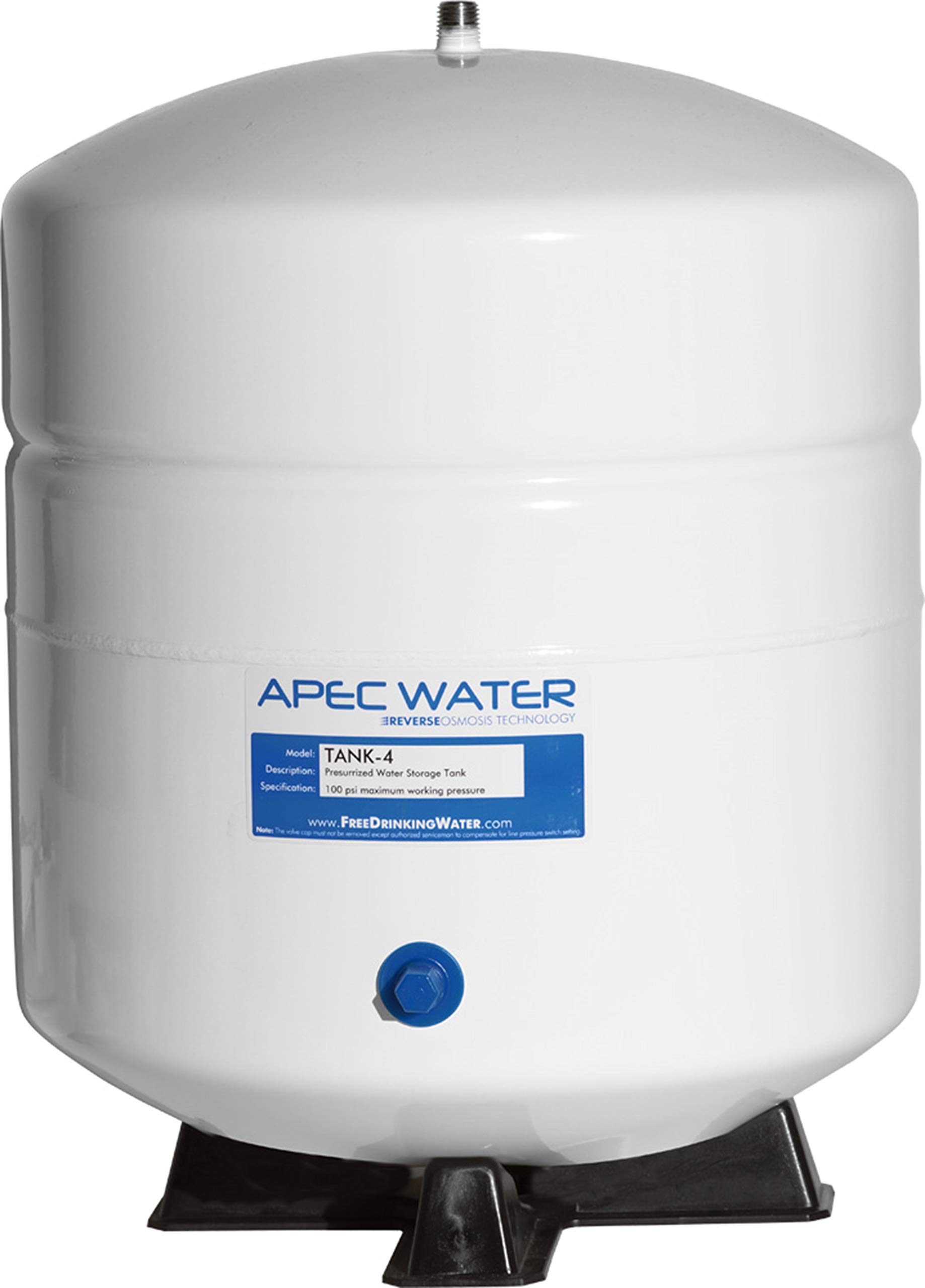
I found this APEC tank to be a reliable, heavy-duty RO storage option with strong flow and food-grade internals.
Why I picked it: Great flow and materials quality for a direct replacement on most RO systems.
Best for: Homeowners replacing an old RO tank who want healthy water and strong tap flow.
Mid-range option with durable construction.
Pros
- Strong outlet flow and fast fill
- Food-grade bladder reduces taste and odor risks
- Stainless steel connector for durability
- Works vertical or horizontal
Cons
- Tank valve not included
- Some report initial rubbery smell
My take
I replaced a tired stock RO tank with this APEC unit and immediately noticed a higher, steadier flow at the kitchen faucet. The tank is pre-pressurized and holds the expected usable water volume (about 3.2 gallons), which meant I could fill larger containers without constant dribbling.
Installation was straightforward on my system, but I had to source a shut-off/connector fitting separately since the tank arrives without a ball valve. The stainless steel connector and post-cured diaphragm gave me confidence in long-term taste and odor performance, and I did not detect any persistent off-taste after routing water through an extra inline carbon filter as a precaution.
If you want a robust RO storage tank that performs like a professional replacement, this one checked the boxes in my setup. Just plan for the small extra step of adding the correct connector valve if you don’t already have one.
2. FCMP Raincatcher 50-Gallon Rain Barrel – Best for Gardening
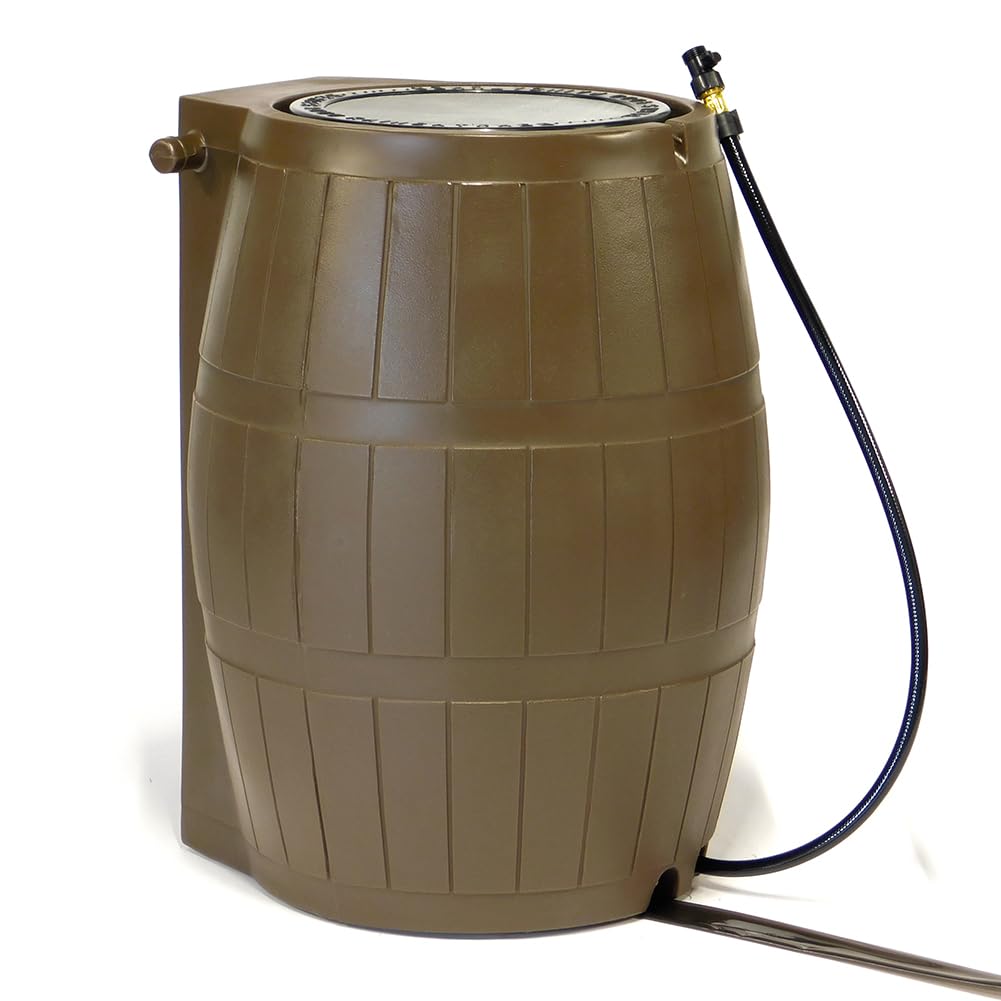
I used this flat-back barrel for rain harvesting and found it easy to hook to a downspout and expand into a linked system.
Why I picked it: Large, UV-resistant barrel that links easily and includes a full kit.
Best for: Gardeners who want a simple, expandable rain-harvesting setup.
Affordable way to conserve water for outdoor use.
Pros
- 50-gallon capacity for garden use
- Flat-back fits snug to downspouts
- Includes debris screen and linking kit
- UV-inhibited, BPA-free plastic
Cons
- Requires a stand for best flow
- Flow weak when barrel is nearly empty
My take
I set this Raincatcher against my house and connected a downspout diverter; the wide opening and debris screen made setup fast and tidy. The included hose, thumb valve, overflow hose, and linking kit meant I had everything needed to start catching rain without scavenging parts.
The barrel’s flow to the front hose worked best once the barrel was at least half full, so I raised it on a sturdy stand to boost gravity-fed pressure for irrigation. I also linked a second barrel later on; the side spigots make series connections easy and reliable.
For outdoor water storage aimed at watering beds, washing tools, or topping off ponds, this barrel delivered consistent, chlorine-free water and has held up well to sun exposure on my property.
3. tankRO 4 Gallon RO Expansion Tank – Best Budget RO Tank
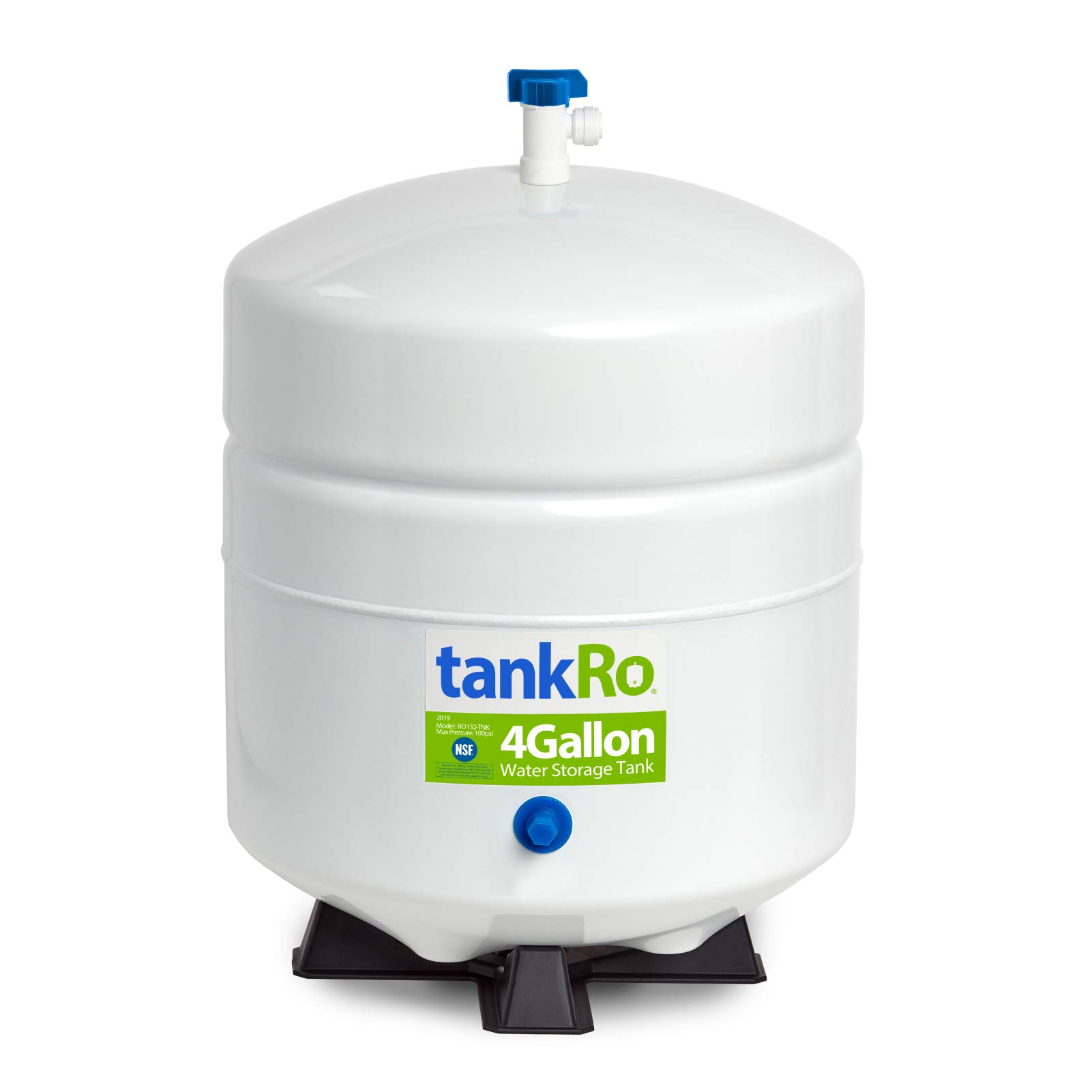
This compact tank gave me immediate pressure at the tap and includes a ball valve and stand for quick installation.
Why I picked it: Includes tank ball valve and stand, which simplifies install under a sink.
Best for: Anyone who wants an inexpensive, plug-and-play RO tank replacement.
A budget-friendly RO tank that still hits key performance marks.
Pros
- Comes with ball valve and stand
- Excellent pressure out of the box
- Compact size fits under most sinks
- NSF-certified components
Cons
- Threaded fittings may need tape
- Long-term life can vary
My take
I installed this tank under my sink and appreciated that a ball valve and stand were included — that removed a step I usually have to do separately. Out of the box the pressure was strong and the faucet flow was noticeably better than the tired original tank I removed.
Installation was fast, but when I used plastic connectors I ran into a minor leak that was resolved by adding thread seal tape. I also liked that the tank’s post-cured diaphragm is designed to keep water tasting neutral and that the compact footprint fits comfortably in small cabinets.
If you want a no-frills replacement that gets you back to full tap pressure without hunting for parts, this tank is a practical pick.
4. tankRO 4 Gallon RO Expansion Tank (Compact) – Best Compact RO Tank (Alternate)
I used a second tankRO unit in parallel to boost capacity; performance was solid once fittings were sealed correctly.
Why I picked it: Good small footprint and feels rugged; useful for parallel installations.
Best for: Setups needing extra on-demand volume by pairing tanks.
Cost-effective way to increase RO storage capacity.
Pros
- Durable steel domes and welded seams
- Works upright or on its side
- Good usable water capacity
- Free tank ball valve included
Cons
- May require thread tape on fittings
- Not a sealed kit for all plumbing types
My take
I installed two of these tanks in parallel to increase available filtered water. Once I tightened connections properly and used thread seal tape, the paired tanks delivered steady, extended faucet flow without losing pressure quickly.
The finish and construction felt robust; the manufacturer’s note about epoxy primer and polyurethane paint suggests it will tolerate a variety of environments better than thinner tanks. The 3.2-gallon usable capacity per tank is predictable, so planning parallel installations is straightforward.
My takeaway: this tank is an economical, compact option if you need more on-demand RO water and are comfortable making plumbing adjustments to ensure leak-free connections.
How I Pick Water Storage Tanks
Key factors I consider
I look at usable capacity versus nominal capacity, because RO tanks list a gallon size but only deliver about 3.2 gallons of usable water on a 4-gallon unit.
Connection type and included hardware matter. A tank that includes a ball valve or compatible connector cuts installation time significantly.
Materials and certifications tell me whether a tank will keep water tasting clean. I prioritize food-grade bladders, stainless connectors, and NSF-certified components.
- Usable volume: expect roughly 75–80% of nominal capacity in RO tanks
- Pre-pressurized tanks simplify setup; check the working pressure rating
- For rain barrels, pick UV-inhibited polyethylene for outdoor longevity
- Confirm inlet/outlet thread size (1/4" common for RO tanks) before ordering fittings
- Plan for a stand or elevation for gravity-fed flow from rain barrels
Installation and maintenance tips I use
I always have thread seal tape on hand for plumbing fittings — it fixes most small leaks quickly.
If a new RO tank has an initial rubbery smell, running water through an inline carbon filter or flushing the tank for a short time usually clears it.
Replace RO tanks every few years if you notice reduced flow; bladders lose pressure over time and that’s the most common failure mode.
- Test faucet flow after install to confirm improved pressure
- Raise rain barrels on a solid stand for better outlet pressure
- Keep debris screens clean on rain barrels to avoid clogs
Frequently Asked Questions
How much water will I actually get from a 4-gallon RO tank?
I typically see about 3.0–3.2 gallons of usable water from a 4-gallon nominal tank because the rest of the volume is taken up by the air bladder.
Do RO tanks come with the connector valve I need?
Some tanks include a ball valve and stand, but others do not. I always check the listing and plan to buy or verify a 1/4" connector or adapter if it’s not included.
Can I put a rain barrel directly on the ground?
I don’t recommend it. I raise rain barrels on a solid stand to increase gravity pressure and make hose connections easier.
Final Take
If you want the simplest path to restored tap pressure, I recommend an RO tank that includes a ball valve and fits your cabinet space.
For outdoor water savings, the Raincatcher 50-gallon barrel gave me the easiest setup and the best expandability for linking multiple barrels.
Pick the tank that matches how you intend to use it, plan for a couple of extra fittings, and you’ll have reliable water storage ready for the long haul.
