
I tested six popular watercolor papers across sizes, bindings, and paper types. I share which pads I reach for for practice, travel, mixed media, and gallery-worthy work.
I paint with watercolor a lot, so I keep a range of papers on hand. Some pads are for sloppy practice and experimentation; others are the sheets I reserve when a piece matters.
In this roundup I focused on texture, weight, absorbency, binding, and real-world performance with wet-on-wet, lifting, layering, and light scraping. I also considered sheet counts and format — because the right binding or loose sheet can change how and where I work.
I compared these options by how they handle water and pigment, how much buckling I saw, how durable the surface was to lifting and light scrubbing, and how practical the format and sheet count felt for real projects.
1. Canson XL Series Watercolor Pad, Heavyweight White Paper, Foldover Binding, 30 Sheets, 9×12 inch – Best Overall for Practice
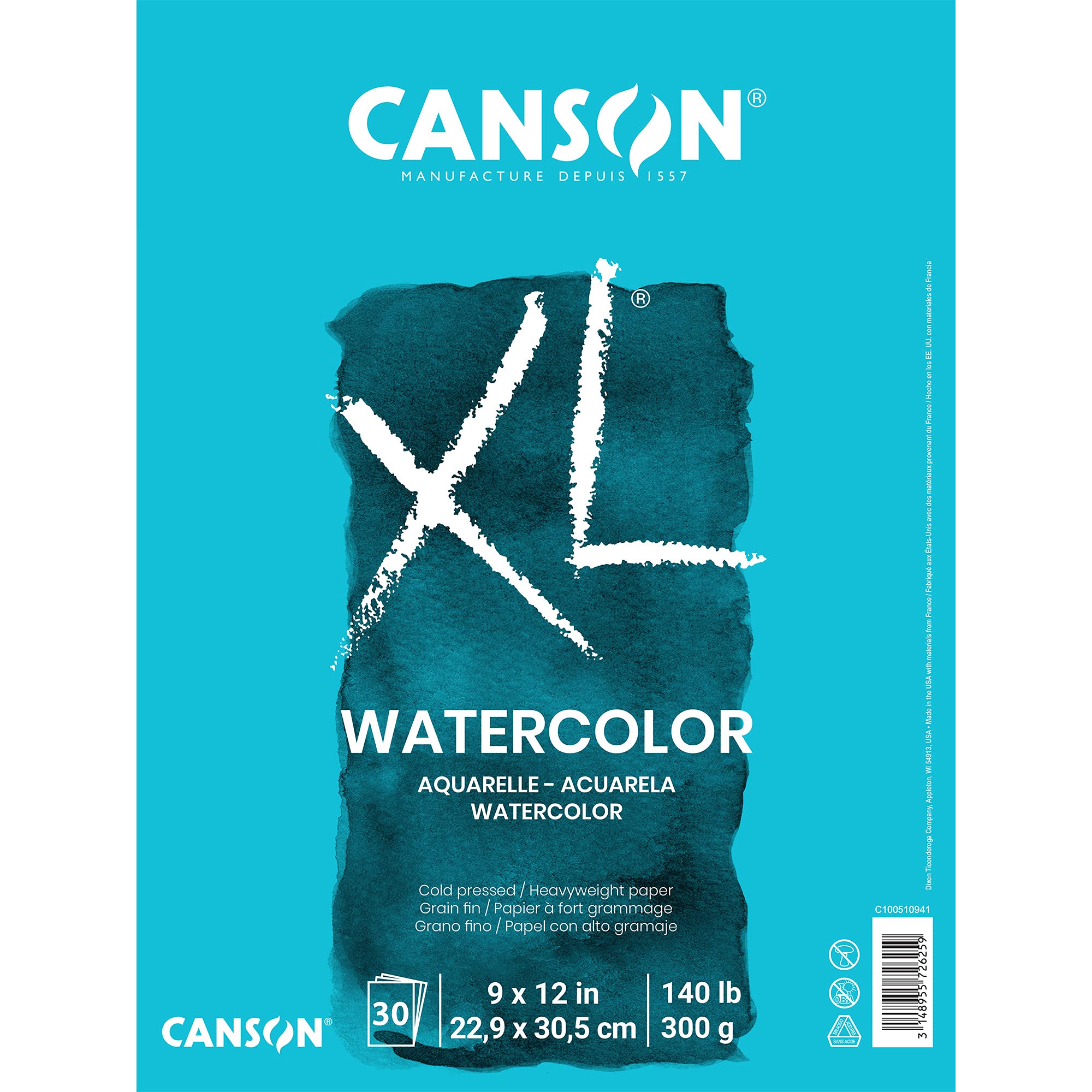
This is the workhorse pad I reach for when I want dependable cold-press paper without worrying about wasting expensive sheets.
Why I picked it: Great balance of texture, weight, and affordability for frequent practice.
Best for: Daily exercises, studies, travel-sized pieces, and mixed-media experiments.
Very affordable for a 30-sheet cold-press pad.
Pros
- Solid 140 lb/300 gsm weight
- Foldover binding for portability
- Versatile for many media
- Generous 30-sheet count
Cons
- Not 100% cotton
- Limits heavy scrubbing and extreme layering
My take
I appreciate this Canson XL pad because it gives me a dependable cold-press surface at a price I don’t stress over. The texture is toothy enough for granulation and dry-brush marks, but smooth enough to pencil in preliminary sketches.
In practice the sheets take washes well and I can lift color with a damp brush without the surface falling apart, though I won’t demand museum-grade lifting or aggressive scrubbing from it. For my travel setups the 9×12 size is perfect — portable and easy to trim for smaller studies.
Because it's designed for students, I often use it for mixed-media tests: pen, ink washes, and even light gouache layer well. When I need archival cotton paper for finished pieces I switch, but for learning and producing multiples this pad is a go-to.
2. Watercolor Sketchbook 10″x12″, 32 Sheets (64 Pages) Water Color Paper, 140lb/300gsm Watercolor Paper, Spiral Hardcover Watercolor Notebook for Painting, Water Color Sketch Books for Teens & Adults. Dark Blue 12″ x 10″ (Pack of 1) – Best Spiral Sketchbook
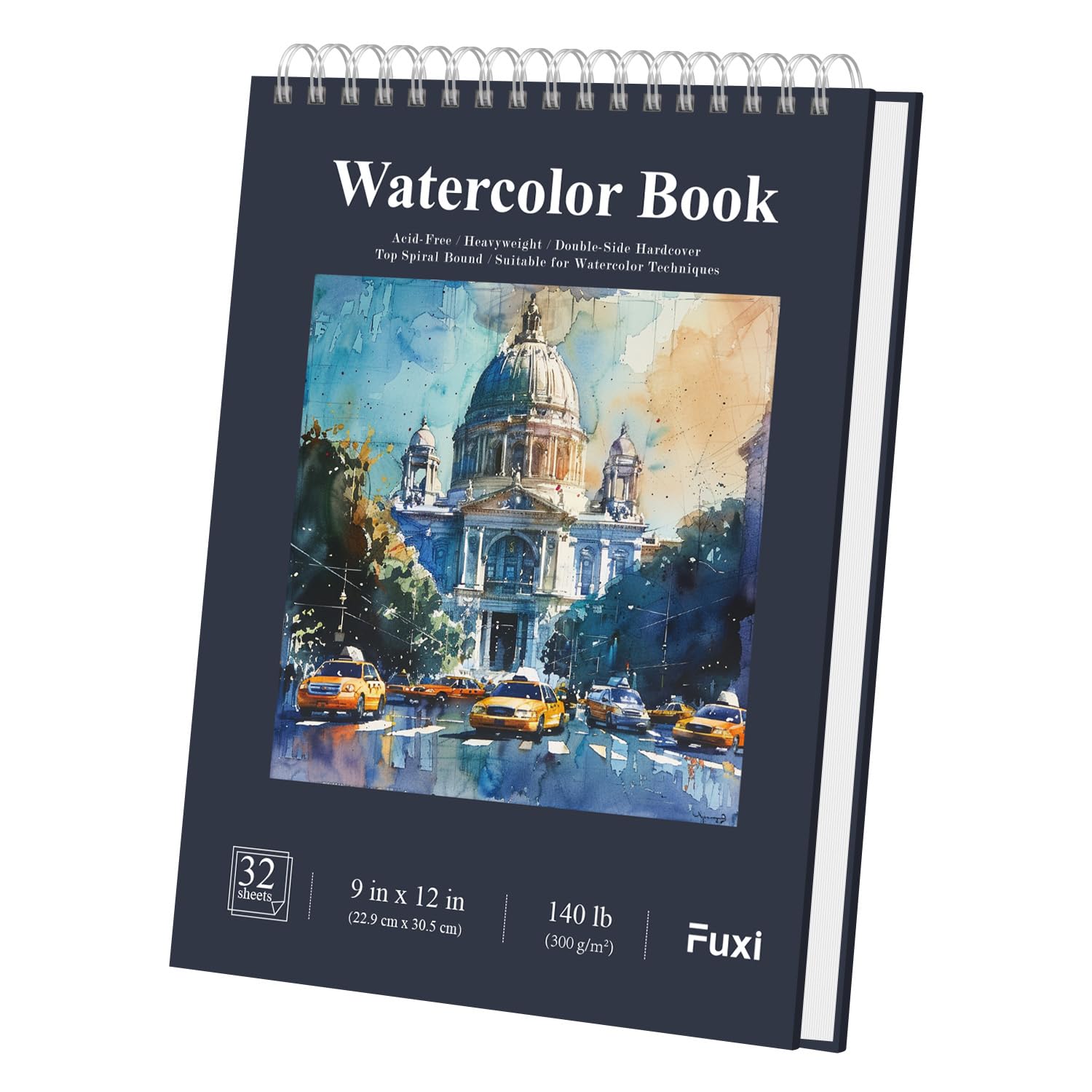
I bring this spiral, hard-cover sketchbook when I want a protected workspace and the ability to work across a flat surface without clamps.
Why I picked it: Top spiral and hard covers make studio-level convenience portable.
Best for: On-the-go painting, sketchbook practice, and marker or mixed-media work.
Good value for a hardcover, spiral-bound watercolor book.
Pros
- Hard covers protect work
- Top spiral lies flat
- Both sides cold-press textured
- Perforated for clean removal
Cons
- Spiral holes reduce usable width
- Possible bleed with some permanent markers
My take
I like the sturdy double hard covers — they give me a firm surface when I don't have an easel and protect the stack of pages when I carry the book around. The top spiral binding keeps every sheet flat while I paint.
The paper is 140 lb cold-press on both sides, and that weight holds washes with minimal buckling. Perforations tear out cleanly to the true advertised size, which I appreciate when I want to remove a finished sketch.
In my testing the book handles pencils, charcoal, watercolors, and most markers well; I have seen occasional bleeding with very aggressive permanent markers, so I keep a thin protective sheet under pages when using inks. Overall it’s a versatile travel sketchbook I trust for studies and finished small pieces.
3. UCreate Watercolor Paper, White, Package, 140 lb., 9″ x 12″, 50 Sheets 9-x-12-Inch – Best for Classroom & High Sheet Count
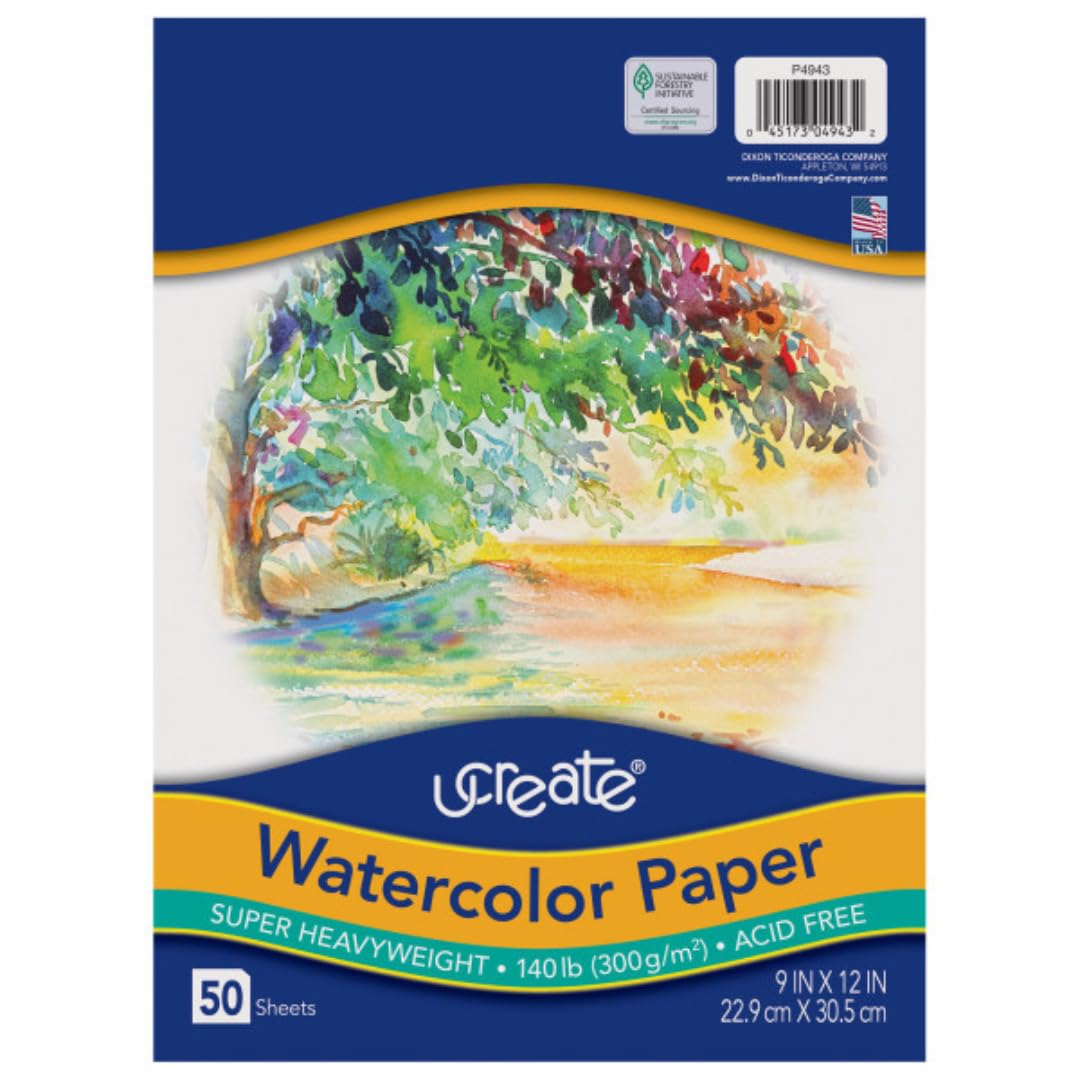
When I need lots of loose sheets for exercises, cards, or group projects, this 50-sheet pack is my go-to economical option.
Why I picked it: High sheet count and loose format make experimentation easy.
Best for: Class projects, practice sheets, card-making, and gel printing trials.
Extremely economical per sheet for high-volume use.
Pros
- Loose sheets for flexible use
- High 50-sheet count
- Sturdy for light wet work
- Made in the USA
Cons
- Off-white tone
- Not ideal for heavy multi-wash pieces
My take
I keep a stack of these loose sheets for drills, swatches, and classroom demos. The 140 lb weight gives enough body that my pieces don't tear, and the texture is uniform across sheets so washes behave predictably.
Because the pages are loose I can trim and cut them into cards or paste into sketchbooks without fuss, which I often do for practice cards and gift stationery. The off-white tone is noticeable next to brighter cotton papers, but it hasn’t interfered with color work for me.
If I’m painting very wet, multiple-wash landscapes, I reach for cotton paper. For everything else — sketches, ink washes, prints, and practice — these sheets are a practical, no-nonsense choice.
4. Canson Artist Series Watercolor Paper, Wirebound Pad, 5.5×8.5 inches, 20 Sheets (140lb/300g) – Artist Paper for Adults and Students – Watercolors, Mixed Media, Markers and Art Journaling 1 Pack 5.5″ x 8.5″ Side Wire Art Media Paper – Best Portable Wirebound
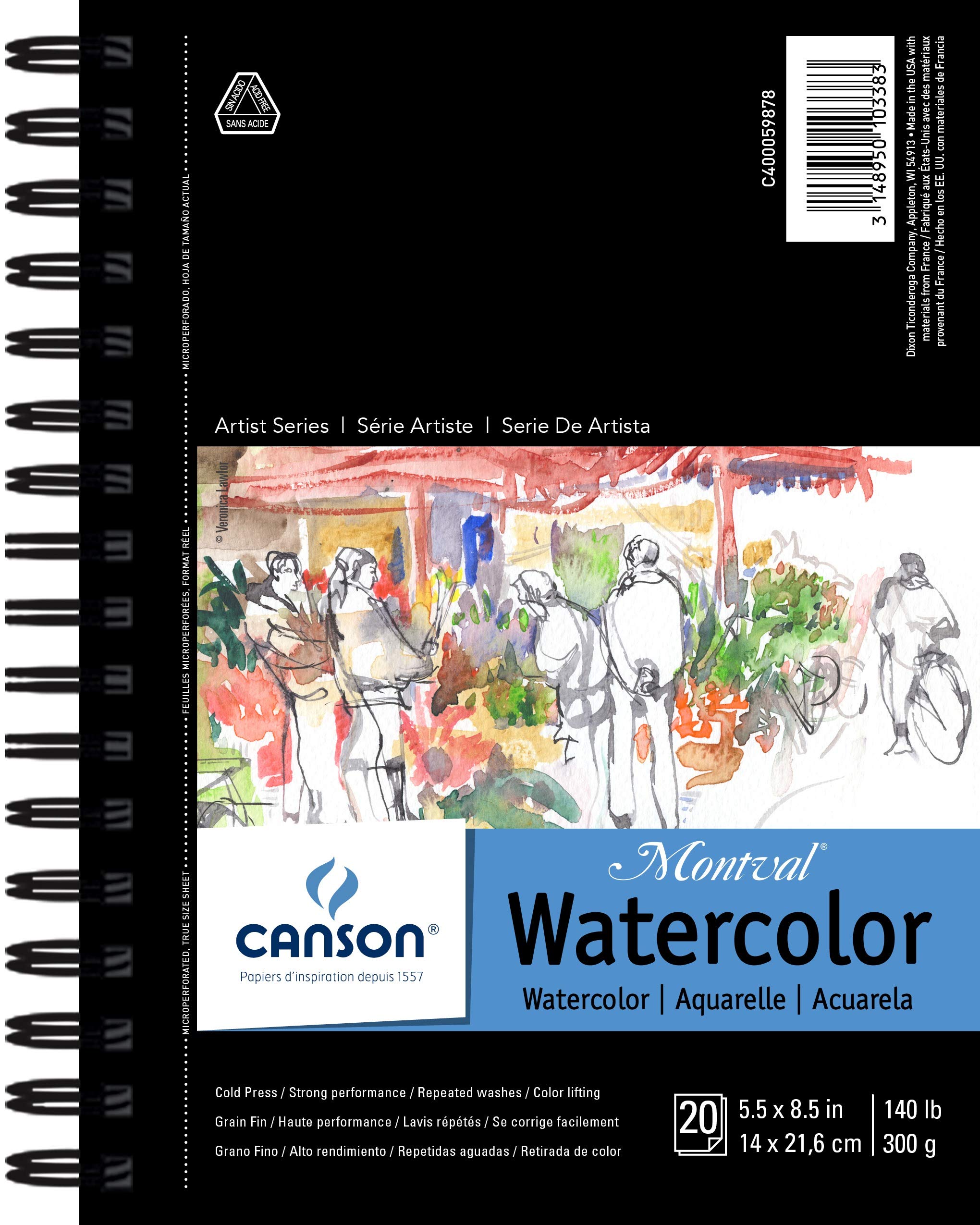
This compact Canson Artist Series pad is the one I grab for small, focused pieces and page-by-page technique work.
Why I picked it: High-quality mold-made paper in a compact, portable format.
Best for: Pocket studies, art journaling, scraping and lifting techniques.
Compact and affordable for a higher-grade cold-press sheet.
Pros
- Mold-made cold-press surface
- Handles scraping and erasing
- Micro-perforated true-size sheets
- Comes with useful tips sheet
Cons
- Small 5.5×8.5 size
- Only 20 sheets per pad
My take
I like this pad for focused studies and for testing techniques that abuse the paper surface, like scraping and lifting. The mold-made surface stands up better than many student pads when I push it with repeated washes.
The micro-perforation makes removing a clean, true-size sheet effortless, and Canson’s handy removable half-sheet with tips is a small but thoughtful touch I actually use as a bookmark. For plein-air thumbnail sketches or quick watermedia experiments the size is perfect, though I do wish it came in a slightly larger mid-size for longer studies.
Overall it sits between student and professional ranges in feel — tougher and more consistent than budget pads, but still compact and travel-friendly.
5. Arches Watercolor Paper Pad, 140 pound, Cold Press, 9″x12″ 9″x12″ Cold Press – Best Premium Cotton
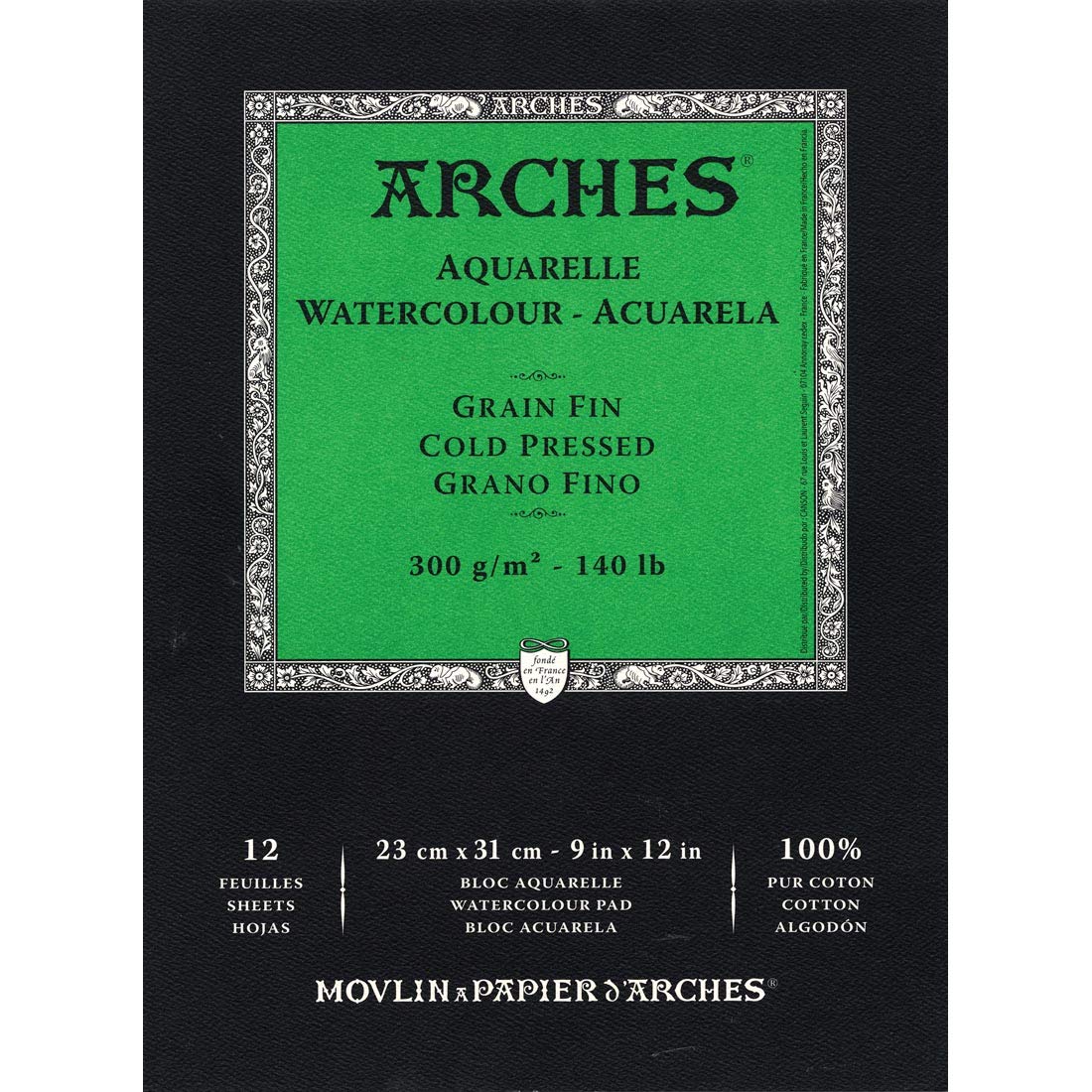
When I want the surface to respond beautifully and lift color reliably, I use Arches cold-press — it’s my choice for important pieces.
Why I picked it: 100% cotton fiber with long fibers gives superior handling and finish.
Best for: Final pieces, heavy layering, controlled lifts, and gallery work.
Premium option — higher investment for archival cotton paper.
Pros
- 100% cotton fibers
- Excellent color absorption
- Holds multiple washes
- Lifts and reworks well
Cons
- More expensive than pulp pads
- Initial warping before it flattens
My take
I keep Arches for pieces where I want maximum control: pigments float and blend beautifully into the long cotton fibers, and I can lift color cleanly to adjust edges and highlights. The paper's texture captures granulating pigments with lovely depth.
It warps a bit while wet, but once dry it flattens nicely and the result looks noticeably richer than what I get on pulp-based sheets. Because of the cotton content it survives heavy-handed layering and repeated washes without tearing.
I treat Arches as an investment for the work that matters: studies that may become final pieces, commissions, or anything I plan to frame.
6. Canson XL Series Watercolor Paper Pad 11×15″ 11×15 Fold Over – Best Large-Format Practice Pad
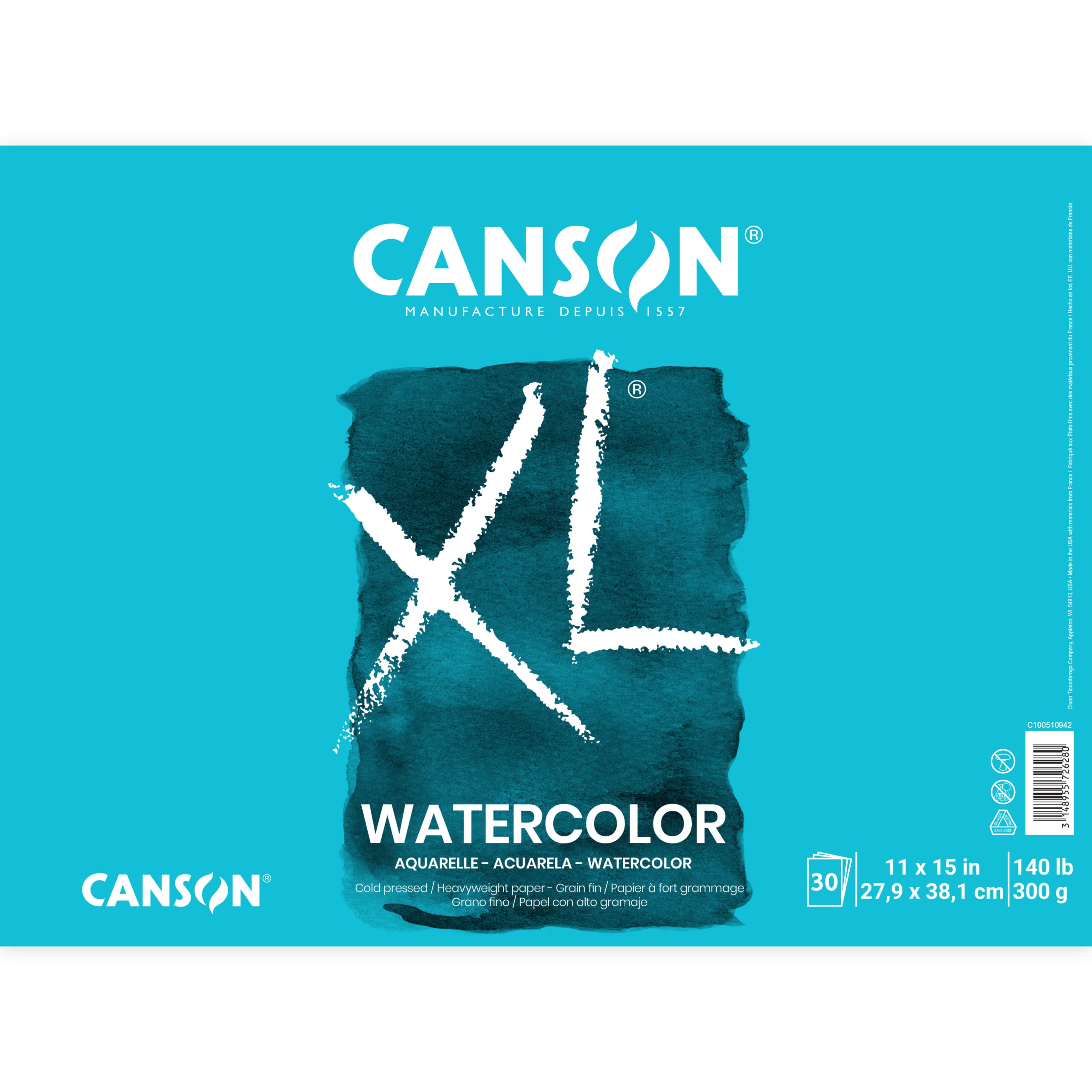
I use this larger Canson XL when I need room to breathe — practice landscapes, comics spreads, or teaching demos.
Why I picked it: Large format and heavyweight surface for bigger studies.
Best for: Large studies, classroom demos, and multi-media experiments.
Large-sheet value for mid-grade cold-press paper.
Pros
- Generous 11×15 size
- 140 lb/300 gsm weight
- Good for multiple techniques
- Affordable large-format option
Cons
- Pulp-based, not cotton
- One side slightly smoother
My take
When I need space to compose a landscape or storyboard sequence, I reach for this 11×15 Canson XL. The larger sheet gives me room for broad washes and compositional exploration.
The paper accepts washes reliably and takes a fair amount of reworking, though it doesn’t have the bounce or absorbency of cotton papers. One side is a touch smoother than the other, which I sometimes prefer for detailed pen work before applying color.
For big practice pieces, teaching demos, or anything where I want quantity and size without breaking the bank, this pad does the job well.
How I Choose Watercolor Paper
Weight and Surface
I start by checking the paper weight (140 lb / 300 gsm is my go-to for most work). Heavier paper resists buckling and lets me wash more confidently.
Surface matters: cold-press gives texture for granulation and brushwork; hot-press is smoother for fine detail.
- 140 lb/300 gsm — versatile all-rounder
- Heavier paper for multi-wash pieces
- Cold-press for texture; hot-press for detail
Fiber Content: Pulp vs Cotton
I prefer 100% cotton for pieces I care about because it lifts and layers beautifully. Pulp papers are excellent for practice, classroom, and mixed-media testing.
If I need archival longevity and richest pigment handling, I reach for cotton; if I’m practicing or producing multiples, a pulp pad is more practical.
- Cotton: best for archival, lifts, and heavy layering
- Pulp: affordable, great for practice and high-volume work
Format and Binding
Binding affects workflow. I use spiral or top-bound sketchbooks for travel and convenience, foldover pads for portability, and loose sheets when I need to trim or framed pieces.
Perforations and protective hard covers are small features that save time and protect finished pieces.
- Spiral/top-binding lies flat for on-the-go work
- Foldover pads are portable and simple
- Loose sheets are best for trimming and framing
Sheet Count and Purpose
I match sheet count to purpose: high counts for classes and practice, small pads for focused studies. Don’t overbuy premium papers if you need volume for exercises.
Think practical: lots of cheap sheets for experimentation, fewer premium sheets for final pieces.
- High sheet count for practice and classrooms
- Lower sheet count for premium, archival work
Frequently Asked Questions
Can I use acrylics or gouache on these papers?
Yes. I use light-bodied gouache and diluted acrylics on 140 lb cold-press sheets. Heavy acrylics can stiffen or strain pulp papers, so I reserve thick acrylic layers for cotton or mixed-media boards.
Will these papers warp when wet?
Most 140 lb papers will show some warp while wet; it usually flattens when dry. I tape sheets down or stretch cotton sheets for critical pieces to reduce buckling.
Which paper is best for learning watercolor techniques?
I recommend a reliable student-grade 140 lb pad for learning — it’s forgiving and affordable, so I practice freely without fearing wasted sheets.
Final Take
I keep both pulp and cotton papers in my studio because they serve different purposes: practice and volume versus archival, finished work.
If you’re starting, pick a mid-weight cold-press pad for most techniques and add a small cotton block when you want to step up your final pieces.
My final tip: match paper to project — the right surface makes technique and color behave the way you want.
