
I tested five weatherstripping options for different door types and gaps — from adhesive silicone flaps to heavy-duty aluminum sweeps and kerf inserts — and I explain which I use where and why.
I spent time installing and testing several weatherstripping products around my house so I could recommend the right type for specific doors and gaps.
In this roundup I focus on ease of installation, durability, sealing performance, and where each product makes the most sense in real-world use.
Across these options I reached for the adhesive silicone flap when I needed a fast visible seal, the aluminum sweep when I wanted a permanent commercial-grade fix, and kerf inserts when my door already had a groove to accept them.
1. Alien Draft Seal Silicone Flap — 49 ft – Best Overall
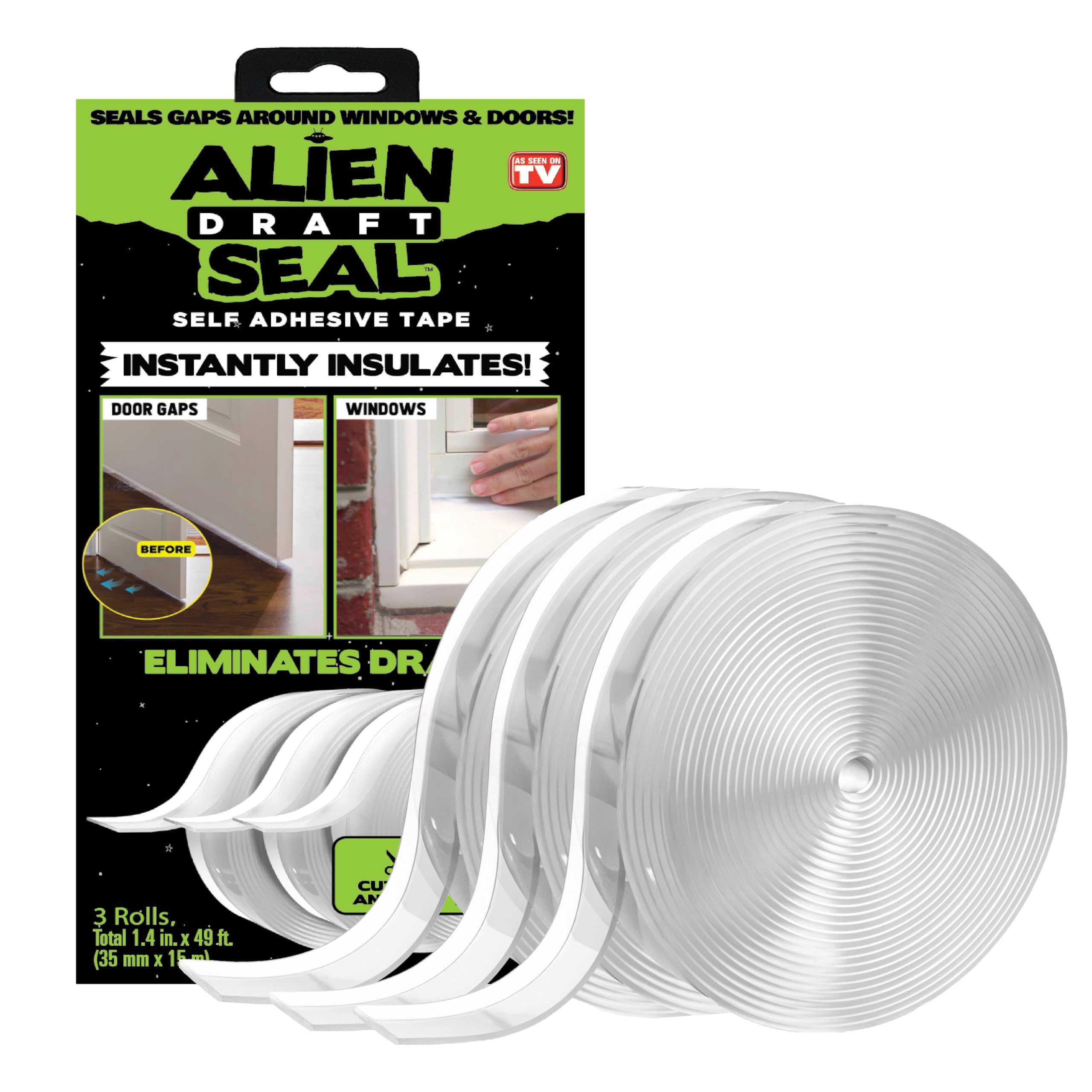
Transparent silicone flap weatherstrip with strong adhesive, sold as three rolls totaling 49 feet for sealing door and window gaps.
Why I picked it: Long combined length, flexible silicone flaps, and very strong adhesive make it versatile for many gaps.
Best for: Sealing bottom and side door gaps and awkward window edges where a visible, sticky flap works best.
Good value for the total coverage you get.
Pros
- Very long combined length
- Sticky, moisture-resistant adhesive
- Nearly invisible when installed
- Flexible silicone that resists hardening
Cons
- Corners require extra trimming
- Needs very clean surface to stick reliably
My take
I installed this on a drafty door to the garage and across a couple of windows. The clear silicone flap blends into the frame and the adhesive held up even after I sprayed the area with water to test moisture resistance.
Preparation mattered: I cleaned paint and grease off the door, dried it thoroughly, and pressed the adhesive firmly for about 30 seconds. After that the strips stayed put through multiple door openings.
It stopped the steady stream of cold air without adding bulk — remember this is a draft guard, not thermal insulation. For odd corners I had to get creative trimming and layering, but the material cuts easily and remains flexible.
If you want a low-profile, adhesive solution that covers lots of perimeter with one purchase, this is the one I reach for first.
2. EVA Closed-Cell Foam Tape — 50 ft – Best Budget
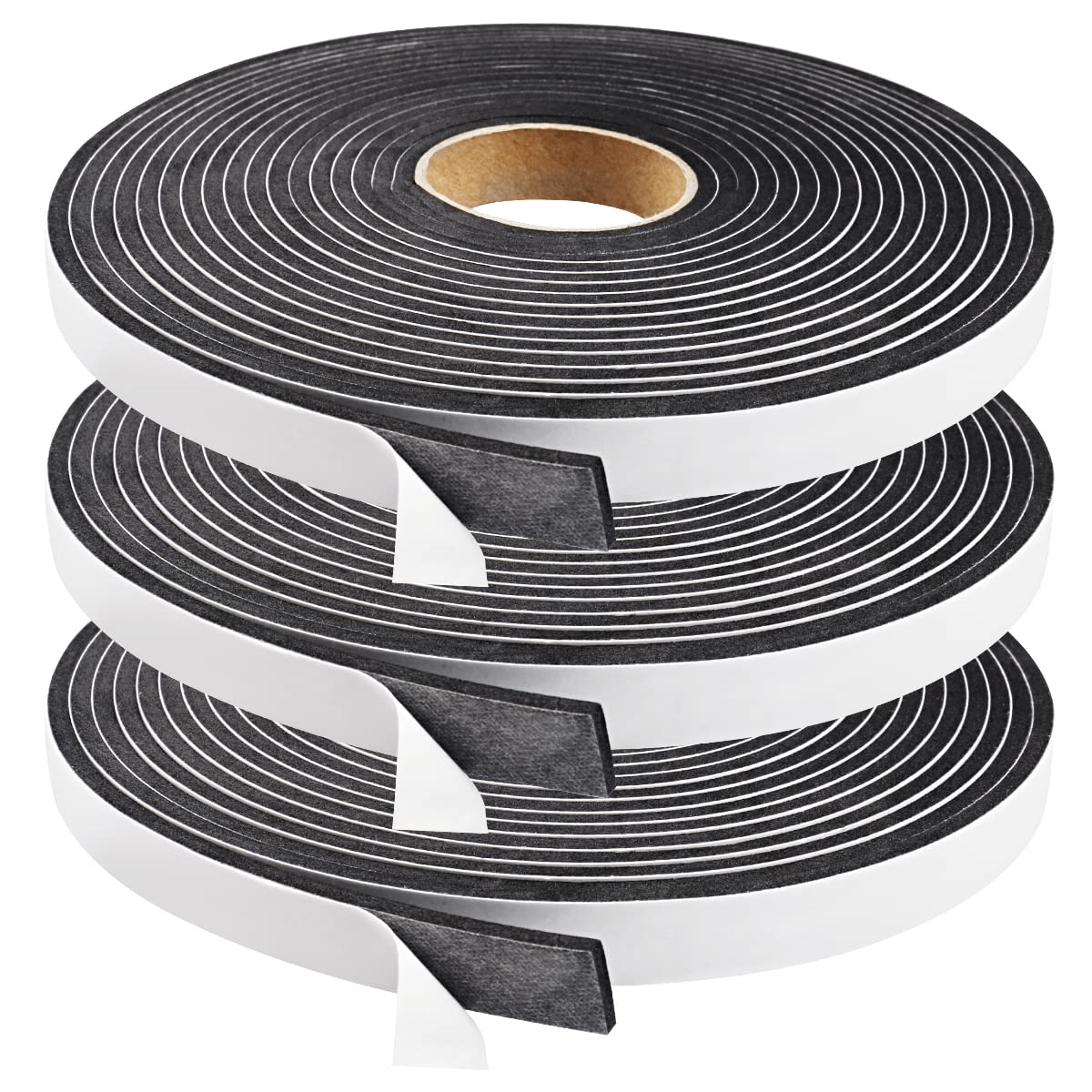
High-density, single-sided adhesive foam tape in three rolls (50 ft total) that blocks drafts and reduces noise in small gaps.
Why I picked it: Closed-cell foam gives sound and draft reduction at a very low cost per foot.
Best for: Thin gaps around windows, sliding doors, and DIY projects where a slim foam strip is ideal.
Budget-friendly option for small to moderate gaps.
Pros
- Closed-cell resists moisture
- Good sound-dampening for its thickness
- Easy to cut and shape
- Strong peel-and-stick backing
Cons
- Too thin for larger gaps
- Rolls can be bundled tightly in packaging
My take
I used this foam tape on a sliding patio door and found it very easy to trim and apply. The adhesive stuck well once the frame was cleaned with alcohol and allowed to dry.
It noticeably reduced draft and the slamming noise of the patio door. Because the tape is relatively thin, I wouldn’t use it on gaps that are several millimeters larger than the strip thickness.
A small annoyance: the three rolls arrived packed together, which made separating them fiddly at first. In cold weather I found the foam a bit stiffer to work with, but it still seated cleanly once pressed.
3. M-D All-Season Aluminum Door Sweep — 48 in – Best Heavy-Duty
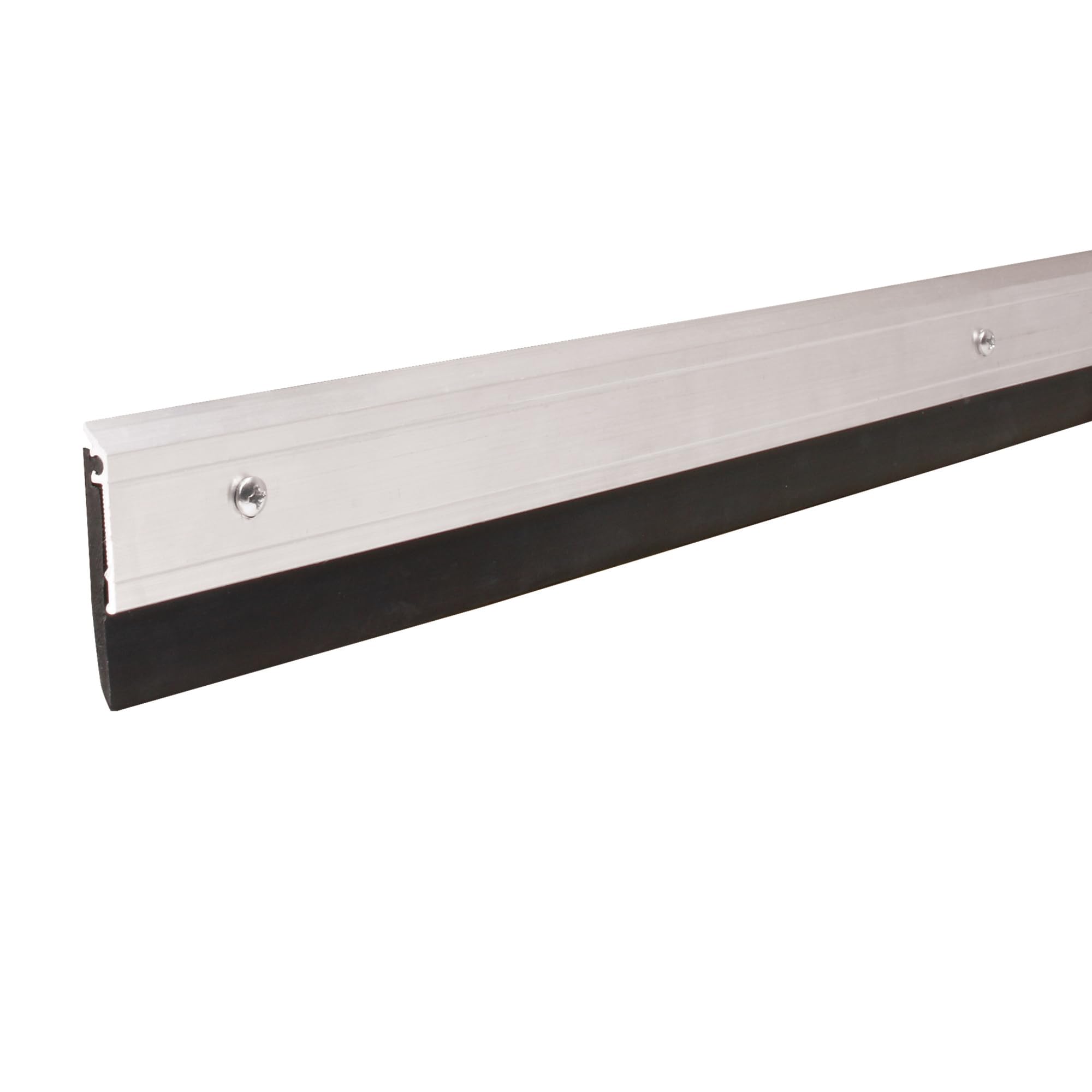
Screw-on aluminum door sweep with a robust rubber fin that seals gaps up to 3/8" for exterior or high-traffic doors.
Why I picked it: Commercial-grade construction and screw-on mounting give a permanent, heavy-duty seal that won’t fall off.
Best for: Exterior doors, garage-entry doors, and any high-traffic opening where longevity matters.
A durable, longer-term investment compared with stick-on options.
Pros
- Sturdy aluminum construction
- Seals gaps up to 3/8 inch
- Includes screws for secure mounting
- Designed for high-traffic use
Cons
- Requires cutting to size with tools
- Rubber fin may be shorter than expected
My take
I installed this sweep on the door between my garage and the house and immediately noticed less air movement and fewer flies coming in. The metal housing feels solid and built to last.
Installation is simple but different from peel-and-stick: you position the sweep, mark pilot holes, and screw it in. I trimmed the aluminum with a small hacksaw for a clean fit at 48 inches.
Follow the guidance about the rubber only lightly touching the threshold; overcompressing makes the door hard to open. Once set correctly, this sweep seals reliably and handles frequent use without wearing down quickly.
4. Kerf-Style PVC Door Seal — 40 ft (White) – Best for Kerf Slots
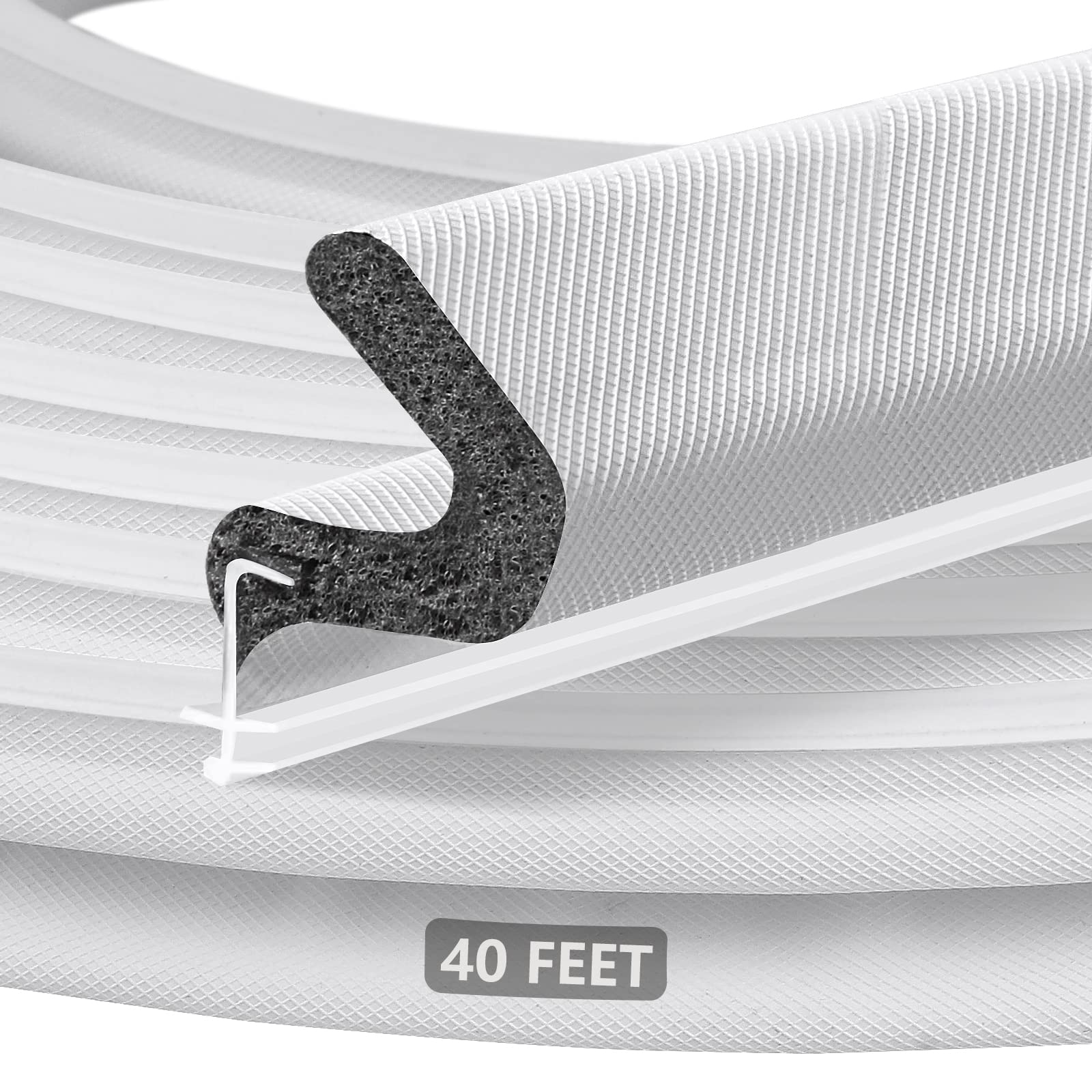
Kerf-insert weatherstrip with a rigid PVC flange and dark gray foam core that blocks light and seals gaps from 1/4" to 1/2".
Why I picked it: No adhesive required and excellent light-blocking performance when your door has a groove to accept it.
Best for: Doors with existing kerf grooves where you want a neat, long-lasting insert.
Good value for a long roll that can cover multiple doors.
Pros
- Blocks light very effectively
- Long 40-foot roll
- No adhesive—slides into existing groove
- Rigid flange keeps seal secure
Cons
- Requires compatible kerf on the door
- Measure groove size before buying
My take
I slid this kerf strip into an existing groove on my front door and finished the job in about five minutes. The fit was snug and the dark core eliminated the little strip of light that used to leak through.
Because it uses a flange that seats in the groove, there’s no adhesive to fail later. It felt durable and stopped the cold air coming through around the door.
Make sure you measure your groove before ordering: this design fits a narrow range of groove widths and won’t work on a flat jamb without a slot.
5. BBTO V-Shaped Kerf Weatherstripping — 40 ft (Black) – Best for Replacement Fit
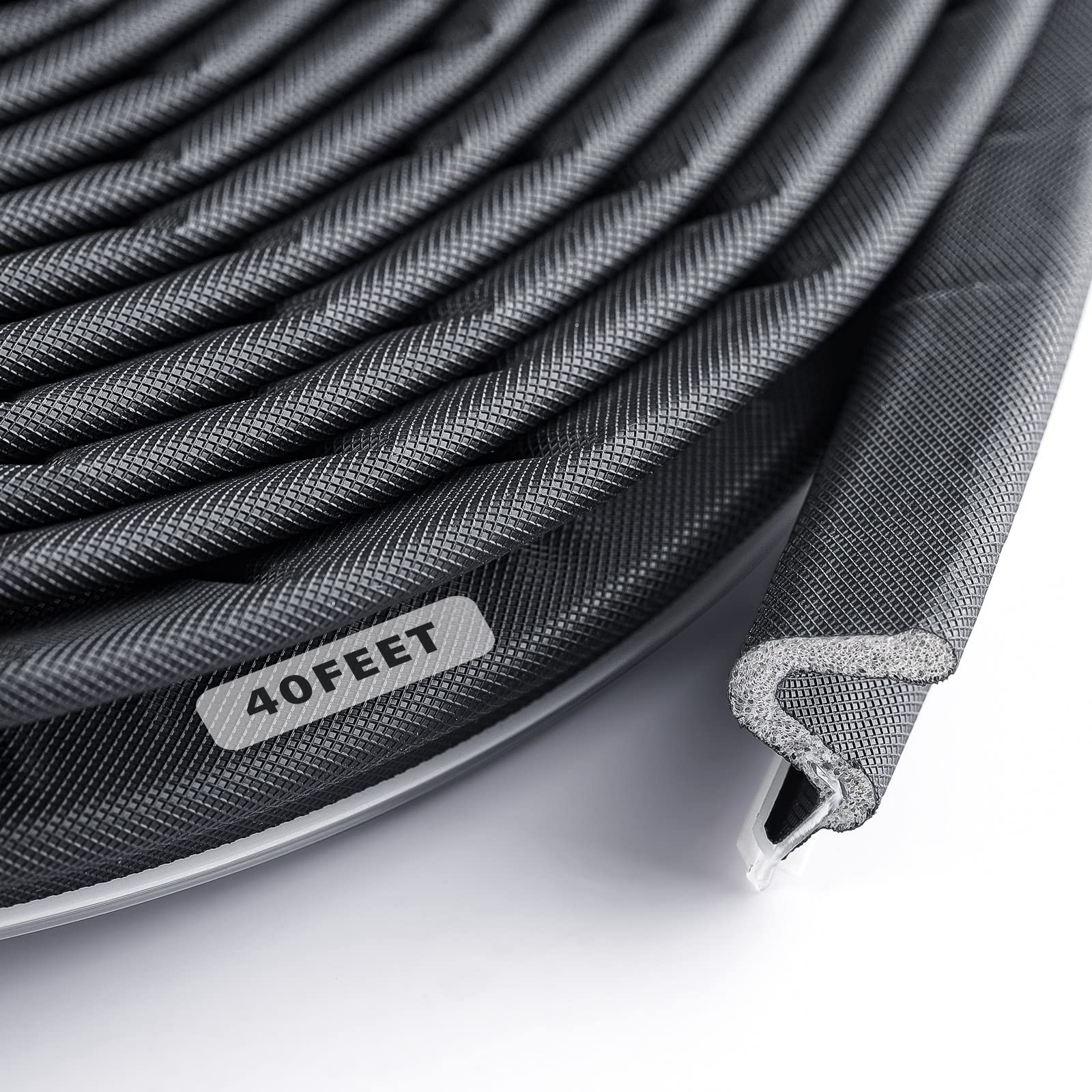
V-shaped polyurethane kerf strip designed to fit slots roughly 0.35"–0.59" with a durable PU cover and resilient foam core.
Why I picked it: Profiles closely match OEM door stripping, so it replaces worn originals cleanly.
Best for: Replacing factory weatherstripping on sliding, screen, or security doors and other grooved frames.
A practical mid-range replacement for worn OEM strips.
Pros
- Profile matches many factory strips
- Durable PU-covered foam
- Good sound insulation
- Easy wedging into slot
Cons
- Ships rolled and can be kinky
- May need time to fully flatten
My take
I replaced the old, cracked stripping on several doors with this V-shaped product and found the fit nearly identical to the originals. Each door took about 10–15 minutes to swap out.
Because it’s rolled for shipping, it arrived a bit kinky; I pushed it into the slot and it relaxed over a few weeks of use. Once seated it cut drafts and reduced noise.
If you’re matching an existing profile, this is the easiest route to a professional-feeling replacement without special tools.
How I Choose Weatherstripping for Doors
Measure the Gap and Door Type First
I always measure the gap height and check whether the door frame has a kerf (groove) before buying anything. That dictates the material and profile I need.
If the gap is less than a quarter-inch, thin foam tape or adhesive flaps usually work. For 1/4"–1/2" gaps, kerf inserts are ideal. Above 3/8" I prefer a metal sweep or an adjustable threshold.
- Small gaps (<1/4") → closed-cell foam or adhesive flap
- Grooved jambs → kerf or V-shaped inserts
- Large gaps (≥3/8") → aluminum sweep or adjustable threshold
Match Material to Use Case
I choose silicone flaps when I want a low-profile, moisture-resistant barrier that’s easy to stick on painted surfaces.
Closed-cell foam is my go-to for sound reduction and damp, low-traffic spots. For heavy traffic or exterior doors, a screw-on metal sweep is what I install.
- Silicone: flexible, moisture-resistant, good for visible frames
- Closed-cell foam: sound dampening and moisture resistance
- PVC/PU kerf: neat, long-lasting in grooved doors
- Aluminum sweep: permanent, heavy-duty sealing
Installation Tips I Use
I clean surfaces with isopropyl alcohol and dry them thoroughly before sticking anything down. That simple step prevents adhesive failures.
When using screw-on sweeps, I pre-drill pilot holes and test the sweep so the rubber only lightly touches the threshold; too much drag will make the door hard to open.
- Clean and dry surfaces before adhesive application
- Press adhesive strips firmly for at least 20–30 seconds
- Pre-drill for screw-mounted sweeps and trim metal carefully
- Allow coiled kerf strips time to relax after installation
Longevity and Maintenance
I check adhesive strips seasonally for peeling and replace foam that compresses over time. Metal sweeps can last years with minimal upkeep.
If a kerf insert gets damaged, it’s usually easy to pop out and replace without repainting or special tools.
- Inspect adhesive edges each season
- Replace compressed foam strips when sealing degrades
- Tighten screws on metal sweeps yearly
Frequently Asked Questions
How do I know which weatherstrip profile to buy?
I measure the gap and check for a groove. If there’s a kerf in the door frame, I pick a kerf or V-shaped insert that matches slot width. For flat jambs and narrow gaps I choose foam tape or an adhesive flap; for larger gaps I go with a metal sweep.
Will weatherstripping eliminate all drafts?
Weatherstripping closes most air leaks at the door perimeter, and I’ve seen dramatic reductions in drafts. It won’t replace insulation or stop airflow through poorly sealed frames or walls, but it handles perimeter drafts very effectively.
Can I install these products myself?
Yes—I installed every product in this roundup myself. Adhesive strips require careful surface prep; kerf inserts slide in quickly; aluminum sweeps need basic tools and a few screws.
How long will weatherstripping last?
In my experience, foam and adhesive strips last a few seasons before showing compression or edge lift; metal sweeps and properly seated kerf inserts can last many years with minimal maintenance.
Final Take
If you want a quick, nearly invisible fix for multiple doors and windows, I reach for the Alien silicone flap for its coverage and strong adhesive.
For heavy use or exterior doors, I prefer the M-D aluminum sweep for a durable, permanent seal.
When a door has a groove, kerf or V-shaped inserts give the neatest, longest-lasting result. Use the buying guide above to match material, profile, and installation method to your door and gap size.
