
I tested four wedge pillows that solved leg elevation, headboard gaps, and knee support. Here are the ones I reached for for sleep, recovery, and everyday comfort.
I tried wedge pillows for different needs—leg elevation after long shifts, keeping my head elevated for reflux, and blocking the gap behind my headboard. Each pillow in this roundup earned a spot because it solved a specific problem in real use.
My testing focused on support, firmness, cover quality, and how well each wedge held shape through a night or multiple uses. I also looked for washable covers and useful extras like pockets or handles.
Read on for the wedges that performed best for elevation, recovery, gap-filling, and knee support, plus what I’d choose depending on how you sleep or recover.
I separated head/upper-body wedges from leg/knee wedges because they solve different problems: head wedges prioritize incline and breathability, while leg wedges focus on circulation, elevation, and a flatter incline under the knees.
1. Kolbs Bed Wedge Pillow – Best Overall
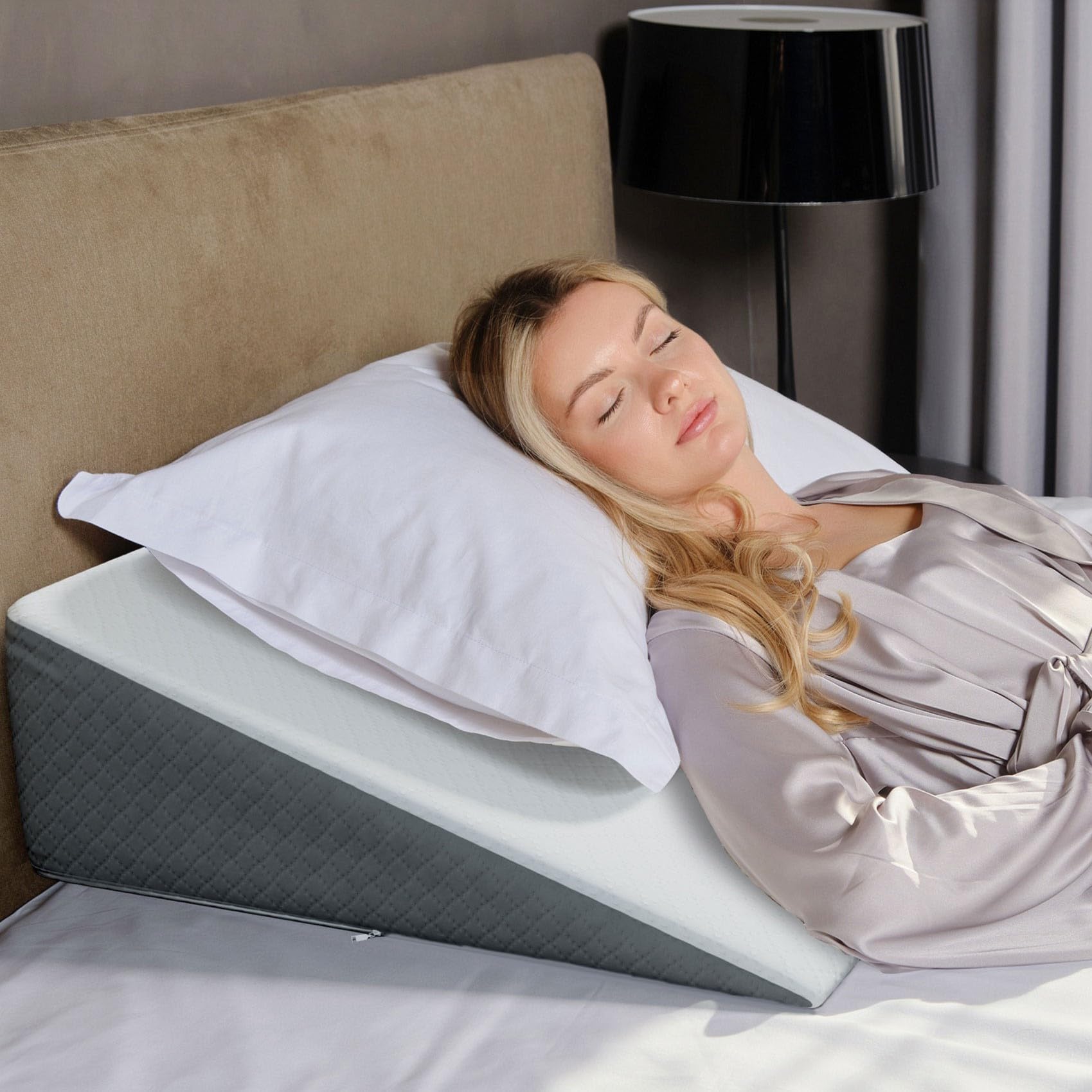
I found the Kolbs wedge to be the most versatile — firm incline for reflux and comfortable for sitting upright in bed.
Why I picked it: Balanced memory foam top and dense core that holds an effective incline.
Best for: Acid reflux, sleep apnea support, and propping up while sitting in bed.
Midrange option with premium-feeling cover and materials.
Pros
- Supportive memory foam top
- Removable jacquard cover
- Wide profile resists rolling
- FSA-eligible for medical use
Cons
- May feel tall for sensitive necks
- Not ultra-soft — firmer feel
My take
I use this wedge most nights to keep my upper body elevated for reflux control, and its two-layer design is exactly what I want: a plush memory foam surface for comfort with a dense core that keeps the incline steady. It expands quickly out of the packaging and kept its shape through the night.
When I sit up to read or work in bed the incline supports my back and neck without creating an awkward angle. The extra-wide footprint gave me confidence that I wouldn’t slide off if I shifted during sleep.
The jacquard cover feels luxe compared with typical medical-looking wedges, and I appreciated that it’s removable and machine washable. Because it’s FSA-eligible I treated it like a medical aid for nighttime symptoms, and the build quality matches that purpose.
2. DMI Leg Wedge Pillow – Best for Recovery
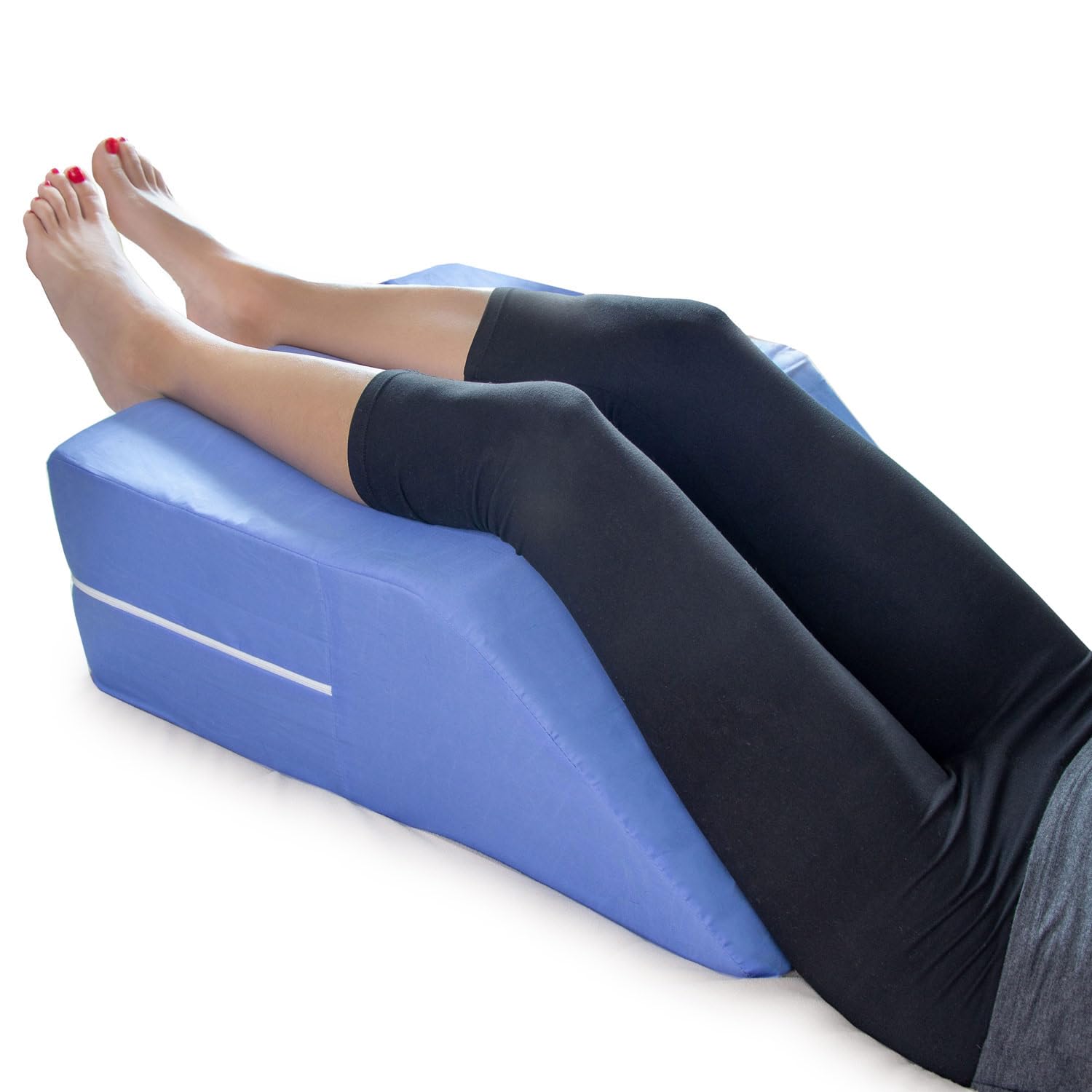
I relied on the DMI wedge when I needed firm leg elevation to reduce swelling and support recovery.
Why I picked it: Very dense foam and a zippered cotton cover designed for post-surgery elevation.
Best for: Post-surgery leg elevation, circulation, and reducing swelling.
Durable, practical option at a reasonable price point.
Pros
- High-density foam holds firm elevation
- Removable zippered cotton cover
- Lightweight and portable
- Multi-purpose for legs or lumbar support
Cons
- Quite firm — may need extra padding
- Firmness can cause numbness if not positioned
My take
I used the DMI wedge for repeated leg-elevation sessions and found it particularly effective at keeping my legs raised above heart level. The foam is noticeably firm, which is exactly what you want for circulation, but I did add a thin pillow on top for surface comfort.
The zippered cotton cover is easy to remove and wash, and the wedge has stayed supportive after regular use. It’s lightweight enough to move between bedrooms or take on a trip when I needed elevation away from home.
Because it’s built to be durable, I felt comfortable relying on it for post-procedure recovery and everyday relief after long shifts. Just be ready for the firmer feel; it’s designed to prioritize support over plushness.
3. Vekkia Headboard Wedge Pillow – Best for Headboard Gaps
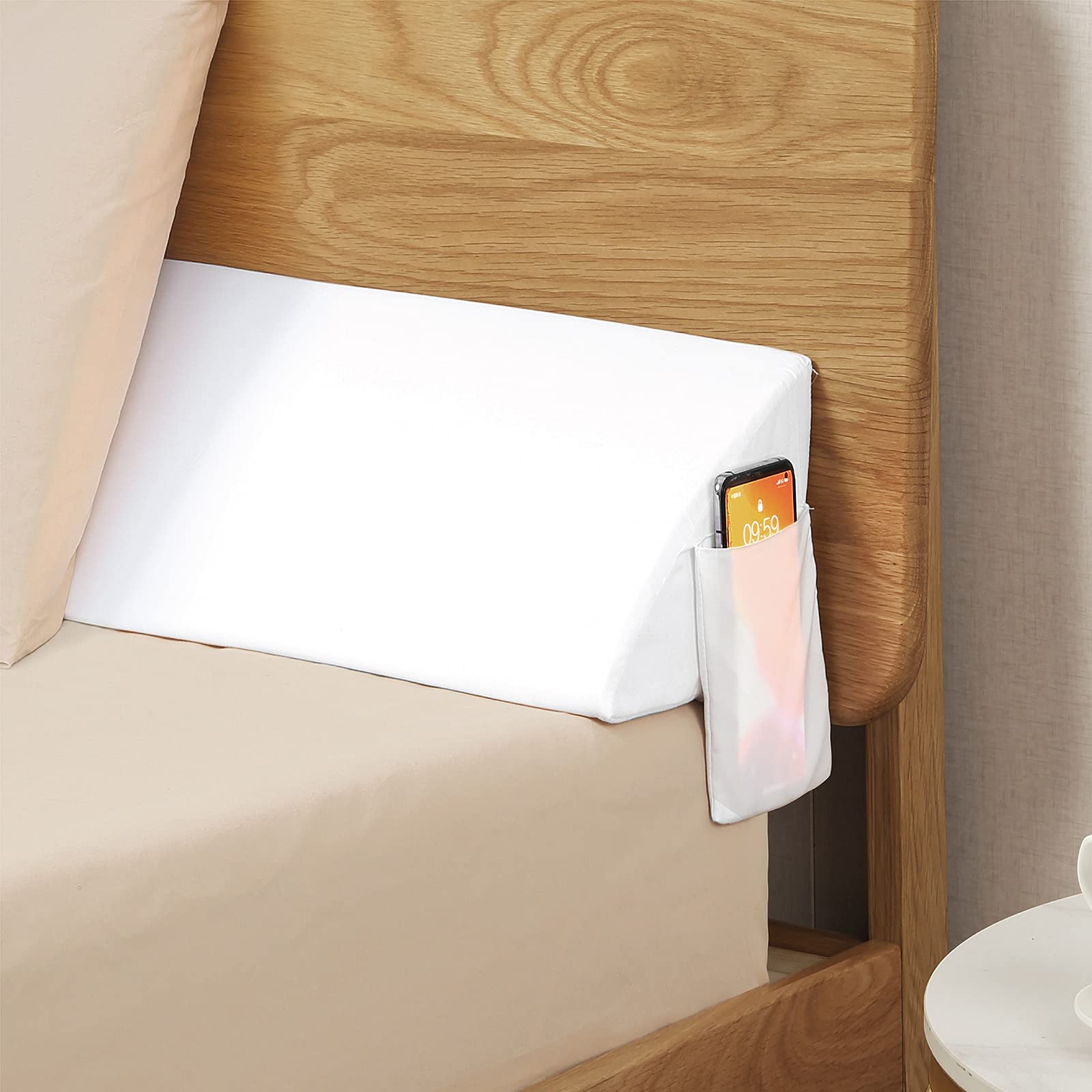
I used this wedge to fill the gap behind my mattress and keep pillows and phones from disappearing into the crack.
Why I picked it: Gap-filling design with side pockets and a washable cover.
Best for: Blocking the mattress-headboard gap and adding gentle head/neck support.
Affordable, functional solution for gap problems.
Pros
- Designed to fit 0–5.5 inch gaps
- Large side pockets for phone or remotes
- Doesn’t slip once in place
- Machine-washable cover
Cons
- Thinner support than tall wedges
- Limited incline for serious reflux
My take
I installed the Vekkia wedge along my headboard gap and it solved the constant problem of pillows and my phone sliding into the crack. The high-density foam filled the space snugly and didn’t slide during the night.
I liked the pockets on both sides — they kept my remote and glasses within reach and cut down on bedside clutter. The cover came out of the vacuum pack and plumped up quickly, and it’s machine-washable for easy upkeep.
If you want a gentle head/neck slope and the convenience of storage pockets, this wedge is a simple, effective choice. For steep elevation needs I still prefer a taller medical wedge, but for gap control this one is the best fit.
4. Vekkia Knee Wedge Pillow – Best for Knee Support
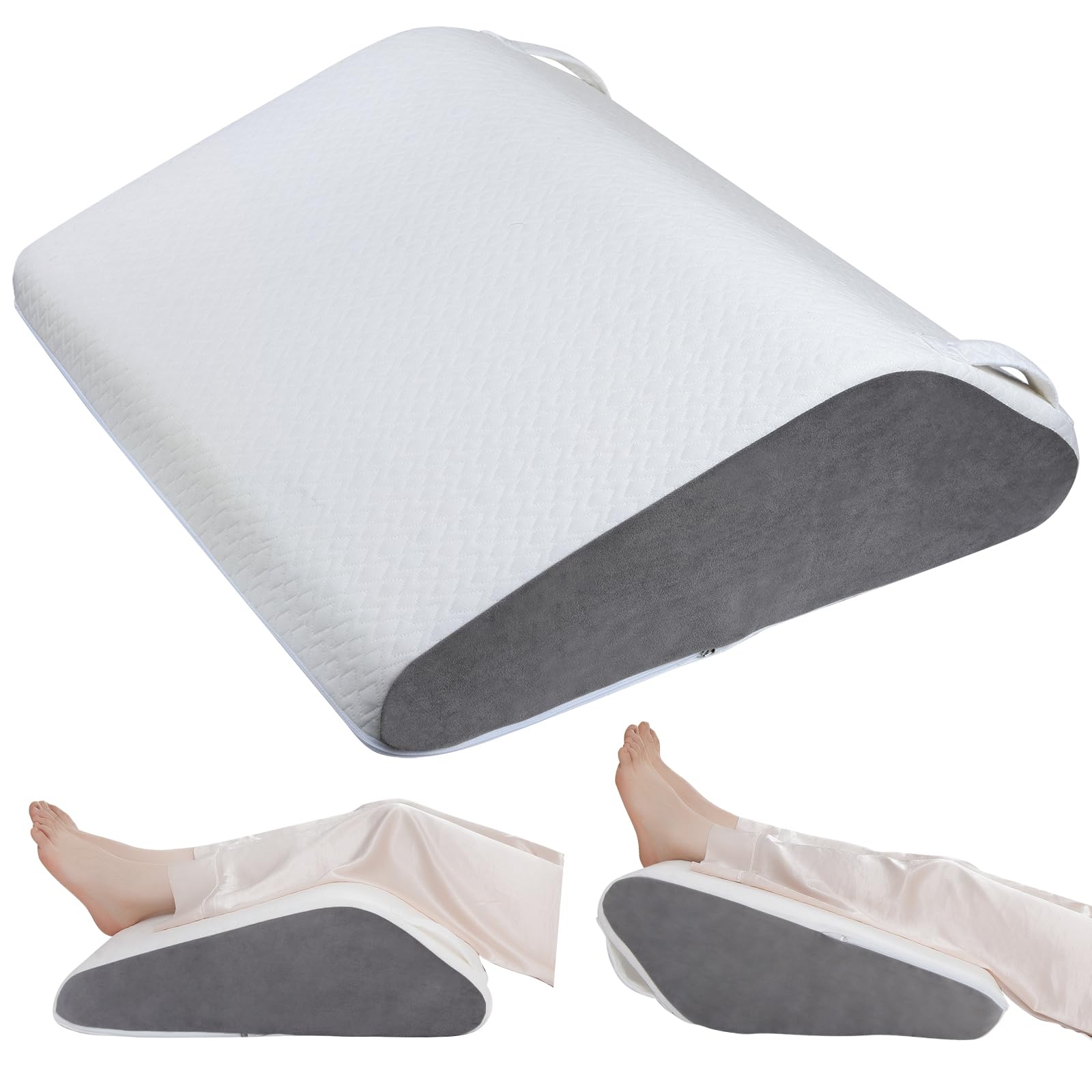
I found this knee wedge comfortable for placing under knees or calves; the ergonomic curve prevents pinching and the handles make repositioning easy.
Why I picked it: Rounded angles, medium-firm foam, and dual handles for adjustment.
Best for: Under-knee support for back pressure relief and improved circulation.
Well-priced for a versatile leg/knee wedge.
Pros
- Ergonomic curve prevents pinching
- Dual handles for easy repositioning
- Medium-firm foam keeps shape
- Machine-washable cover
Cons
- May be small for very tall users
- Not intended for steep elevation
My take
I placed the Vekkia knee wedge under my knees and immediately noticed a reduction in lower-back pressure. The rounded angles match the back of the knees and prevent that pinched feeling that some wedges create.
The handles are a simple but effective detail — I could nudge the pillow closer or farther without having to sit up. The foam felt medium-firm and resilient; it kept its shape during naps and overnight use.
For anyone who wants a versatile wedge to sit under knees or calves, this one balances comfort and stability. It’s not designed for deep leg elevation, but it’s ideal for improving alignment and circulation while lying on your back.
How I Picked and Tested These Wedge Pillows
What I looked for
I focused on four practical traits: support (foam density and core), cover quality (removable and washable), stability (does it hold shape and stay put), and extras (pockets, handles, FSA eligibility).
Different use cases require different shapes: head wedges need a steady incline, leg wedges need firm, flatter elevation, and knee wedges should follow the curve behind the knee.
- Foam density: firmer for circulation and recovery, softer top layer for comfort.
- Size & angle: taller wedges for reflux, lower wedges for leg elevation.
- Cover & cleaning: zippered, machine-washable covers are a must for hygiene.
- Extras: pockets, handles, and gap-filling shapes add real convenience.
- Portability: lightweight wedges are easier to move between rooms or travel with.
How to choose based on need
If you need upper-body elevation for reflux or breathing, pick a wedge with a pronounced incline and a dense core that resists sagging.
For swelling or circulation issues, choose a dense, flatter leg wedge that holds elevation; be prepared to layer thin padding for surface comfort.
If your goal is simply to block the mattress-headboard gap, a lower-profile gap wedge with pockets gives convenience without over-elevating your head.
- Reflux/sleep-apnea: taller wedge with memory foam top and dense core.
- Post-surgery/edema: high-density, firm leg wedge.
- Headboard gap: thin wedge with pockets and anti-slip fit.
- Knee pain/sciatica: ergonomic knee wedge shaped to your leg curve.
Frequently Asked Questions
Will a wedge pillow help with leg swelling?
Yes — when I elevated my legs with a firm, high-density wedge the elevation reduced pressure and felt helpful for circulation. Firmness matters: softer wedges look comfortable but won’t maintain elevation as well.
Can I use a head wedge for acid reflux every night?
I used a head wedge nightly to manage reflux and found a memory foam top with a dense core provided the best balance of comfort and consistent incline. Make sure the wedge height suits your neck comfort.
How do I clean a wedge pillow?
I always remove the cover and machine wash it if the manufacturer allows. For the foam core I spot-clean according to the instructions and let it air out fully before re-covering.
Are wedge pillows good for post-surgery recovery?
I’ve used the firmer leg wedges during recovery periods because they provide reliable elevation and keep the legs positioned without flattening. Check firmness and portability if you’ll move it around the house or take it to appointments.
Final Take
I have one clear takeaway: match the wedge shape and firmness to the problem you’re trying to solve. The Kolbs wedge is my go-to for head elevation and versatility; the DMI wedge is the workhorse for recovery and circulation; Vekkia’s headboard wedge stops the gap problem and adds handy pockets; and the Vekkia knee wedge is the best micro-solution for knee and lower-back relief.
If I had to pick only one for general household use, I’d choose the Kolbs for its balance of comfort and support. For targeted medical needs, I’d reach for the DMI or the knee-specific Vekkia depending on the area I’m treating.
Whichever you choose, pay attention to foam density, cover quality, and whether the wedge keeps its shape — those factors made the biggest difference in my testing.
