
I tested concentrates and ready-to-use weed killers around flower beds, walkways, and larger properties. Here are the products I relied on for fast kills, long-lasting prevention, and heavy-duty vegetation control.
I spend a lot of time treating weeds around flower beds and edges, so I prioritized products that let me protect ornamentals while removing unwanted vegetation.
I evaluated speed of action, residual prevention, how easy each formula is to use around planted areas, and whether the product is better as a spot treatment or for large-scale application.
Below I explain which option I reach for depending on the job — quick touch-ups, seasonal prevention, or wholesale vegetation control.
I compared speed (hours to visible results), residual prevention, glyphosate concentration, and whether the product is ready-to-use or a concentrate to decide which product fits each common yard task.
1. Compare-N-Save 41% Glyphosate Concentrate – Best Value Concentrate
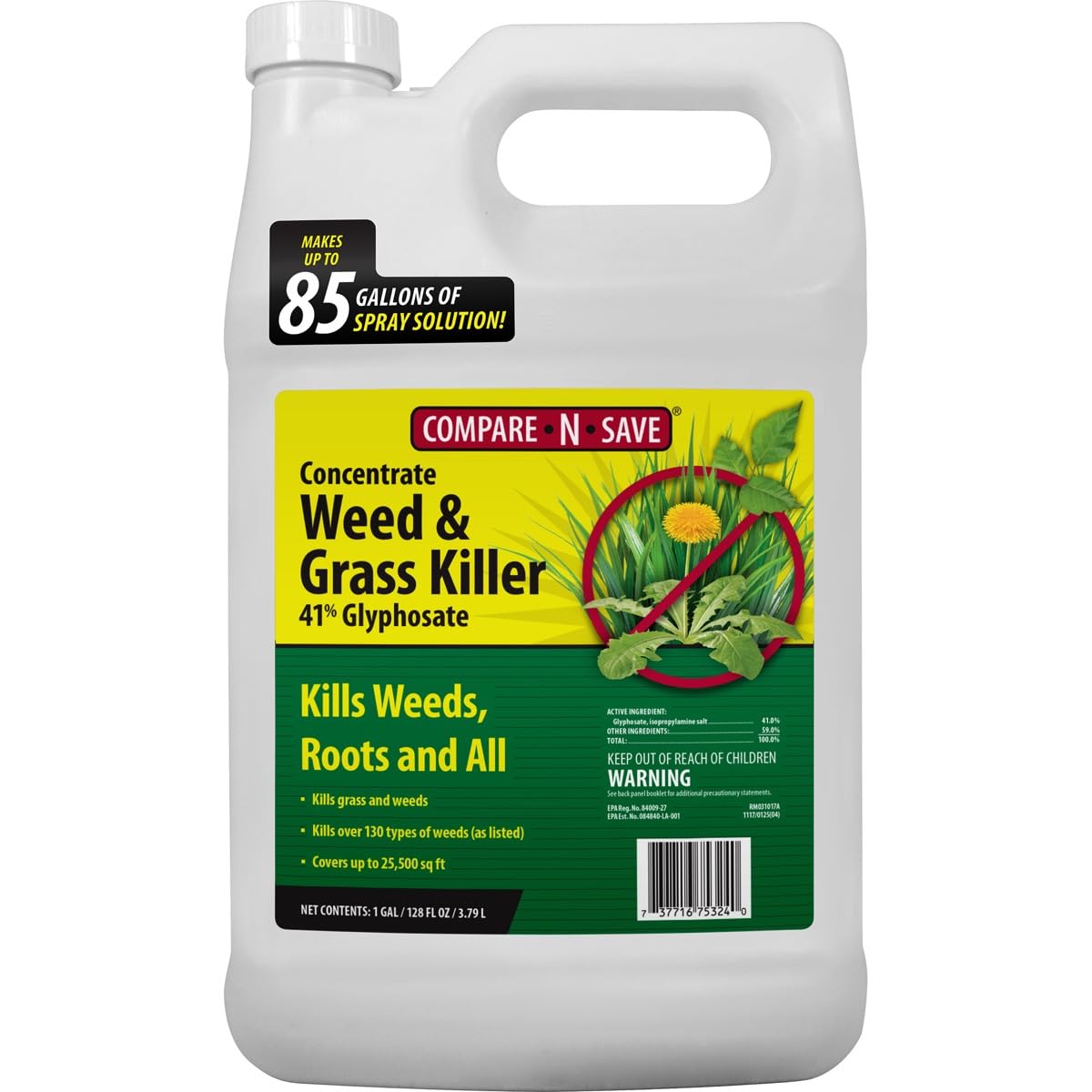
I used this high-concentration glyphosate when I needed to cover very large areas without breaking the bank; it makes many gallons of spray and is rainproof in about two hours.
Why I picked it: Powerful, economical concentrate that stretches across large properties.
Best for: Big yards, fence lines, and places where I need lots of spray volume.
Very cost-effective concentrate for large-area treatments.
Pros
- High 41% glyphosate strength
- Covers a lot of ground
- Makes many gallons of ready-to-use mix
- Rainproof in two hours
Cons
- Requires careful, accurate mixing
- Can be too strong if overmixed
- Full effect can take up to two weeks
My take
When I need to treat large swaths, this Compare-N-Save jug is my go-to because a little goes a long way. The container mixes into many gallons of ready-to-use spray, which is ideal for perimeter work and persistent infestations.
I learned the hard way not to overmix — at maximum strength it killed small saplings. Mixed per the instructions, it delivers reliable results, typically showing visible decline in a few days and continuing to work over the following weeks.
I like that it becomes rainproof relatively quickly, but I also take precautions against drift: I only spray on calm days, keep a close eye on nearby lawns and plantings, and rinse any accidental overspray immediately.
If you plan to use a concentrate for flower-bed edges, mix exactly to the bottle’s table and use a labeled tank sprayer so you don’t accidentally apply a solution that’s too strong for surrounding ornamentals.
2. Roundup Extended Control RTU Weed Preventer – Best for Pre-emergent Protection
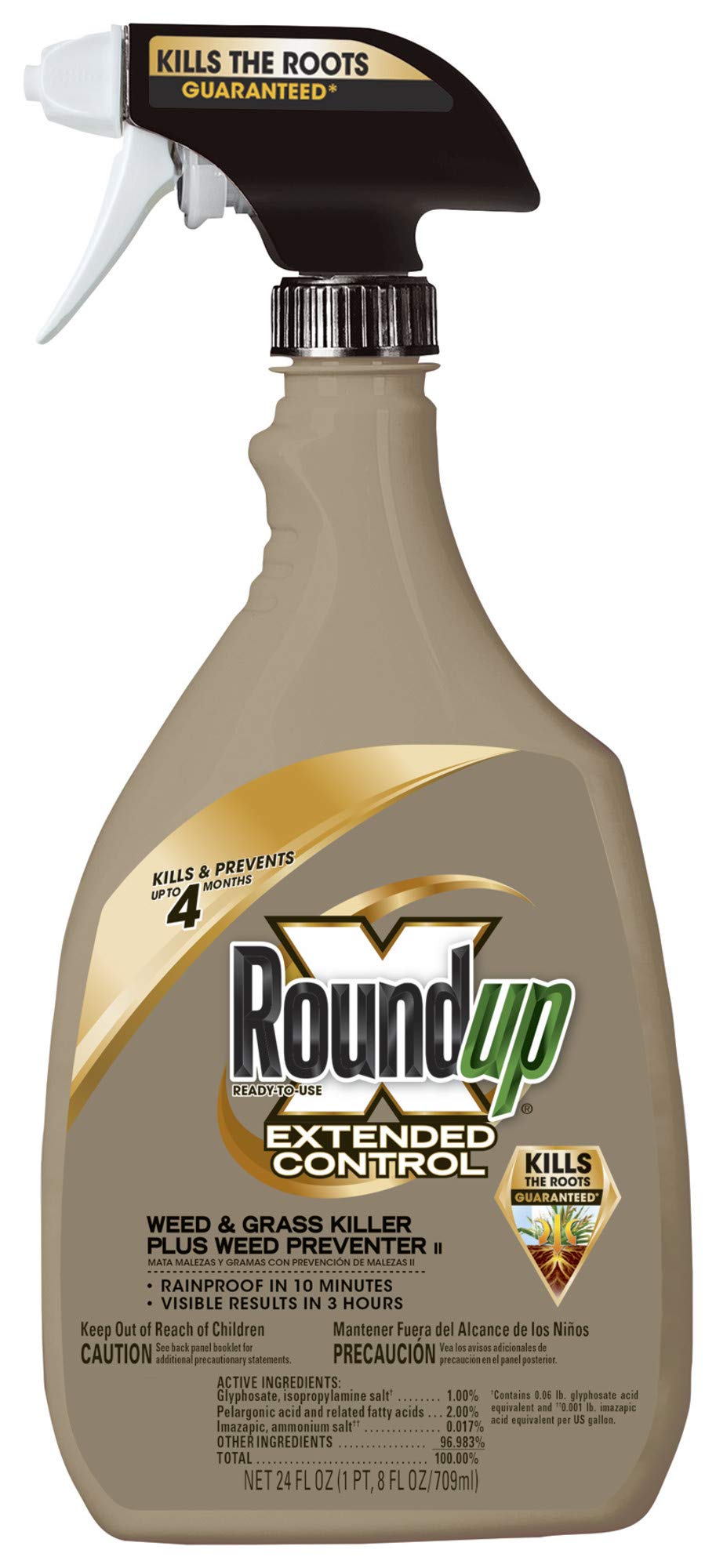
I keep this ready-to-use bottle on hand for hard surfaces and bed edges because it kills what I spray and then creates an invisible barrier that slows new weeds for months.
Why I picked it: Dual-action RTU that kills now and prevents reemergence for weeks.
Best for: Sidewalks, driveways, patios, and beds where I want longer intervals between treatments.
Convenient RTU with built-in prevention, useful for repeat spot treatments.
Pros
- Kills to the root
- Forms a preventive barrier
- Ready-to-use convenience
- Easy applicator
Cons
- Not ideal for heavy brush
- Limited coverage per bottle
My take
For cracks, paver joints, and flagstone areas I want to keep clean, this Roundup Extended Control is the easiest option. I spray the target area liberally and leave the surrounding plantings alone.
The stopping power is noticeable — I can usually go a couple of months before I need to retreat driveways or walkways. That residual prevention is the feature I appreciate most when I want low-maintenance control.
This product is not my choice for thorny vines or dense brush; for those I switch to a concentrate or a brush-specific formula. But for quick spot treatments and preventative edge control, its built-in barrier saves me time.
3. Spectracide Weed & Grass Killer RTU – Best Fast-Acting RTU
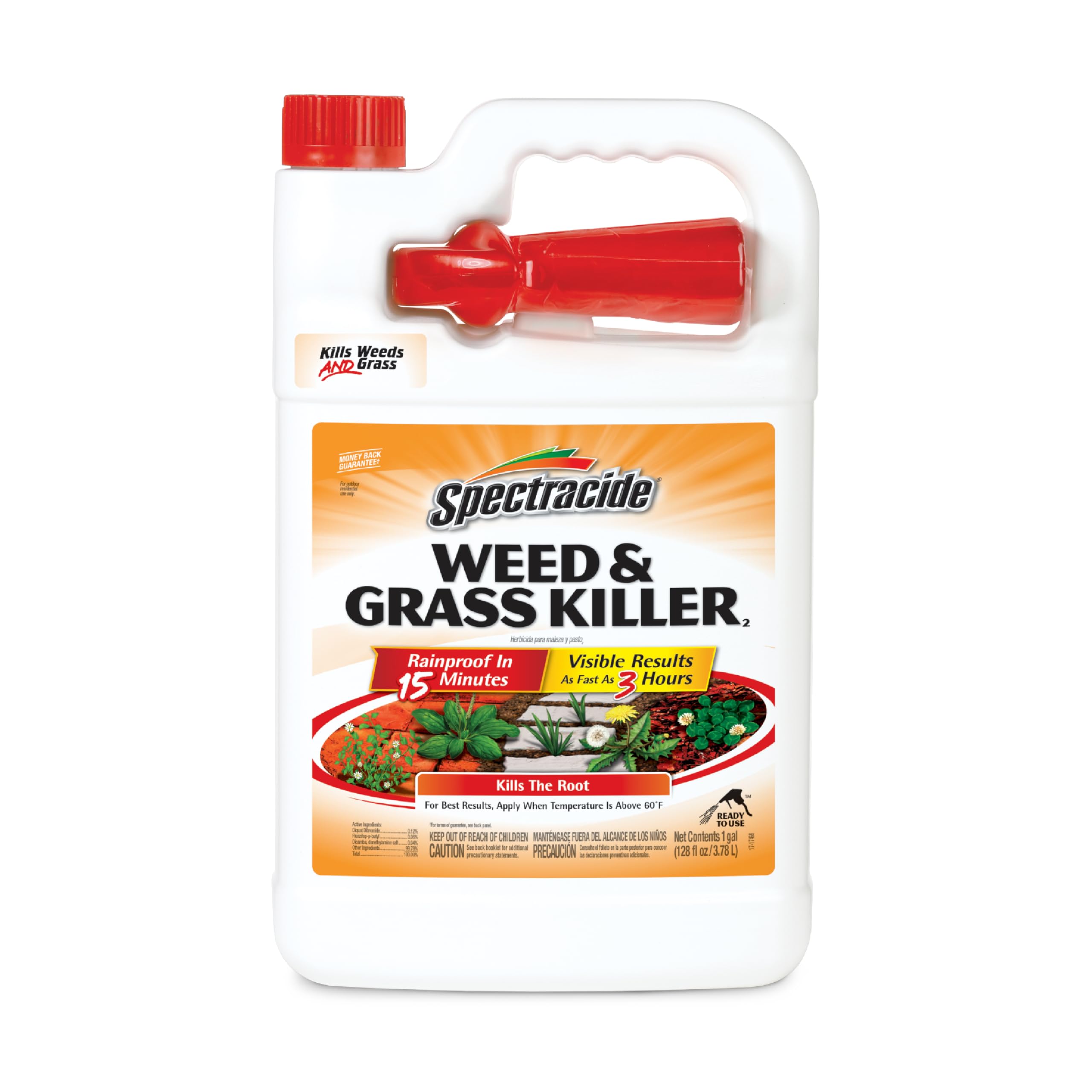
I reach for Spectracide when I need visible results fast; it can start browning weeds within hours and becomes rainproof in about 15 minutes.
Why I picked it: Fastest visible kill with quick rainfast protection.
Best for: Same-day cleanup around beds, driveways, and walkways.
An affordable ready-to-use option that acts quickly.
Pros
- Visible results in hours
- Rainproof in 15 minutes
- Ready-to-use convenience
- Covers many weed types
Cons
- Non-selective—kills any plant it touches
- Sprayer can leak under heavy use
My take
When I need weeds gone fast, Spectracide delivers. I’ve seen browning and wilting within a few hours, which is perfect when I want to replant a spot the same weekend.
Because it becomes rainproof so quickly, I can spray in the morning with less worry about an afternoon shower undoing my work. That speed is a big time-saver for small jobs.
A word of caution: the built-in sprayer on my jug developed a slow leak after extended spraying sessions, so I wear gloves and have a pump wand on hand for bigger jobs. I also protect desirable plants carefully — this formula kills whatever it contacts.
4. Roundup Super Concentrate – Best for Heavy-Duty Jobs
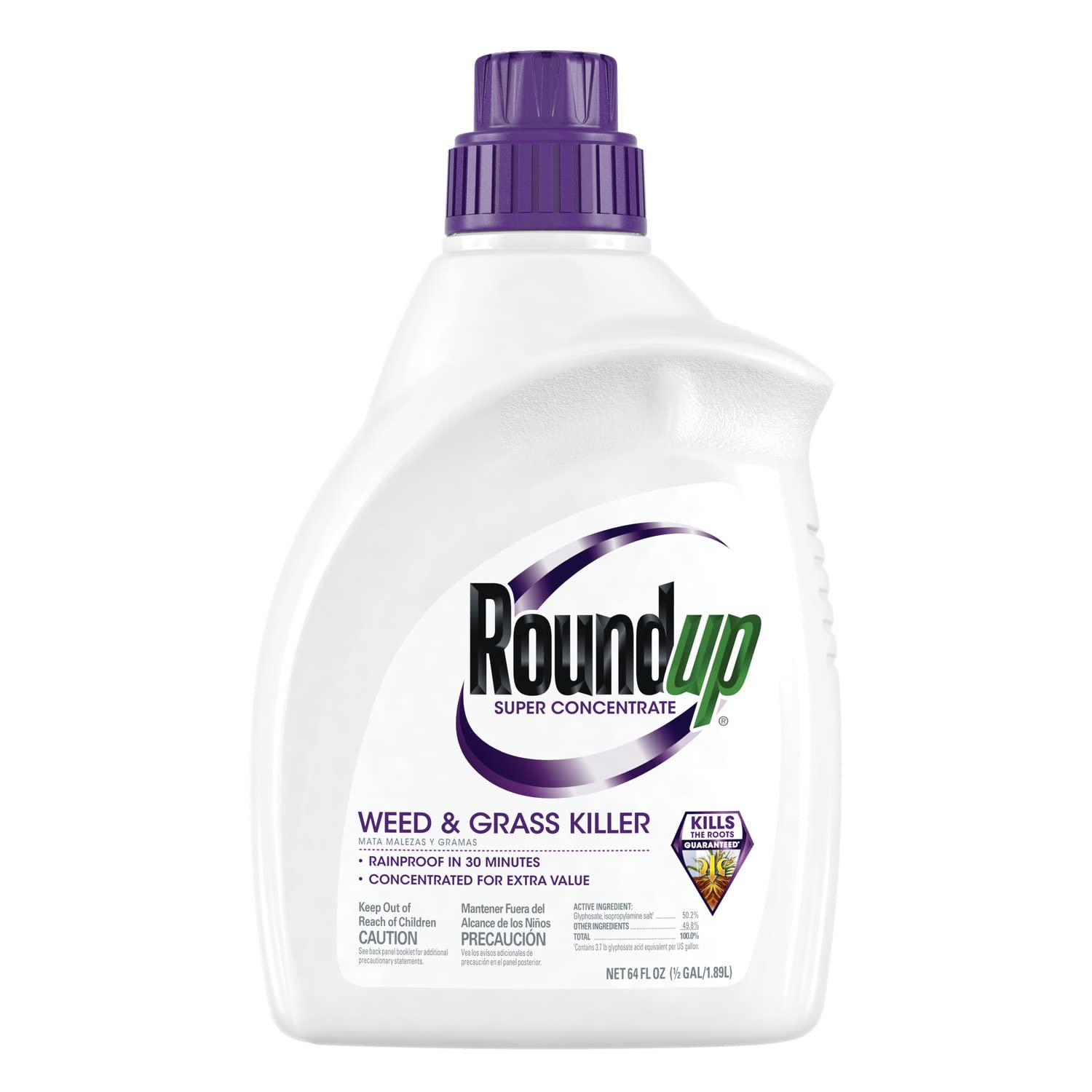
I choose this Roundup concentrate for large, heavy-duty jobs where I want a reliable, tried-and-true result from a brand I trust.
Why I picked it: Trusted brand concentrate that performs on tough, widespread problems.
Best for: Lawn replacement, large plots, and fence-line vegetation control.
Concentrate that’s economical per gallon for large jobs.
Pros
- Concentrate for tank sprayers
- Rainproof in 30 minutes
- Reliable weed yellowing in days
Cons
- Requires proper mixing
- Needs tank sprayer equipment
My take
This Roundup concentrate is what I grab when I have acres or several beds to prep. It mixes into a tank sprayer easily and gives me the control I need for large swaths.
I follow the label mix rate carefully; there’s no benefit from mixing stronger and doing so risks harming unintended plants. Mixed correctly, weeds usually yellow and wilt within a few days.
For long perimeters and stubborn groundcovers I value the product’s consistency. It’s not a same-hour miracle, but it’s dependable and economical for heavy-duty use.
5. RM43 43% Glyphosate Concentrate – Best Long-Term Control
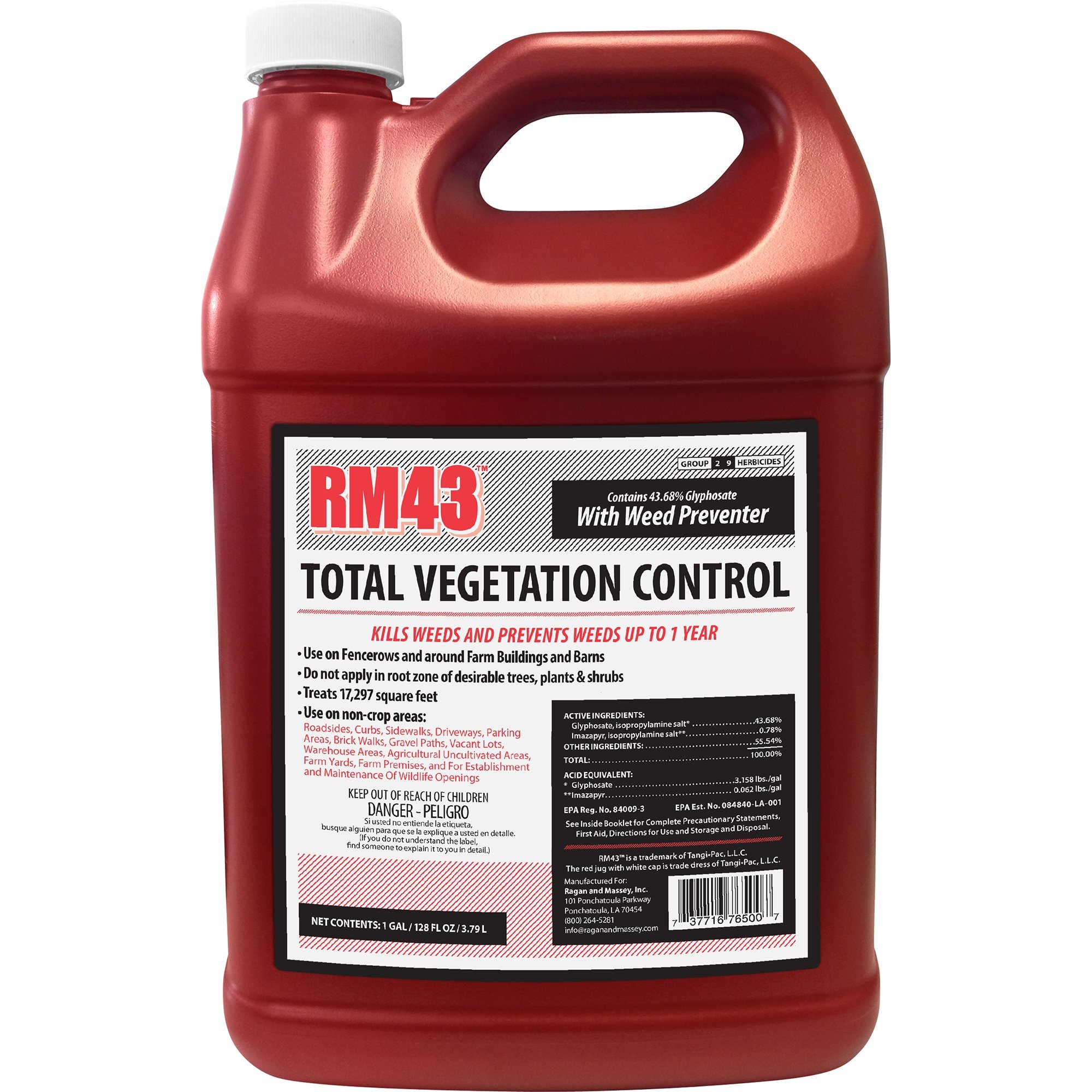
I use RM43 when I want aggressive, season-long suppression; it’s a high-concentration formula that the team trusts for difficult, persistent weeds.
Why I picked it: Very concentrated formula that provides extended, root-targeted control.
Best for: Persistent infestations and areas where I want long residual protection.
Premium concentrate — higher cost but stretches far and lasts longer.
Pros
- Very high glyphosate concentration
- Targets roots for lasting control
- Long residual control potential
Cons
- More expensive up front
- Takes several days to act
My take
RM43 is the product I reach for on the worst spots. A little in a large sprayer covers a surprising area, and I’ve watched tough weeds collapse over the course of a week or two.
I find it especially useful where regular formulas failed me year after year. The higher concentration attacks the root systems and reduces regrowth through the season.
Yes, it’s pricier than basic concentrates, but I value the reduced need to reapply. For areas where I want near-season-long control, this has been worth the investment.
How I Choose a Weed Killer for Flower Beds
RTU vs Concentrate: When I use each
I keep both types on hand. Ready-to-use (RTU) is my choice for quick spot treatments and around delicate plantings because there’s no measuring. Concentrates are what I use for large areas because they stretch farther and are more economical.
- Use RTU for small patches, walkways, and immediate results.
- Use concentrate for acres, perimeter lines, and recurring infestations.
- Always follow the label mix rates for safe, effective results.
Speed vs Residual Control
If I need visible results fast, I choose a fast-acting RTU. If I want prevention that reduces trips to the yard, I opt for an extended-control formula or a high-concentration glyphosate product.
- Fast-acting products can show browning in hours.
- Extended-control formulas can prevent new weeds for weeks to months.
- High-concentration glyphosate reaches roots and limits regrowth.
Application tips around flower beds
I always protect desirable plants with cardboard or spray shields and apply on calm days to prevent drift. For concentrated mixes I mark my sprayer with the exact ratio and rinse equipment after use.
- Spray at low wind speeds to reduce drift.
- Keep spray off trunks, stems, and leaves of desired plants.
- Rinse accidental overspray from foliage immediately.
Safety and storage I follow
I store concentrates out of reach, keep original labels, and wear gloves and eye protection while mixing and spraying. For any herbicide I follow the label’s PPE and reentry instructions.
- Wear gloves, eye protection, and long clothing.
- Store concentrates in their original container.
- Keep pets and people away from treated areas until dry.
Frequently Asked Questions
Can I use these products right next to my flower beds?
Yes, but I take precautions: I shield desirable plants, use a targeted wand, and choose a formula with the right control window. For immediate replanting I favor fast-acting RTU options and protect nearby flowers from drift.
How soon can I replant after applying a weed killer?
It depends on the product. I’ve replanted the same weekend after using a fast-acting RTU like Spectracide, but with stronger glyphosate concentrates I wait until the vegetation has fully died back and the soil is dry—usually several days to a couple of weeks.
How much area will one gallon of concentrate cover?
Coverage varies with the mix rate. For example, some concentrates advertise enough mix for dozens of gallons of spray; I calculate coverage by following the label’s tablespoon/ounce-to-gallon table and matching that to my sprayer capacity to know exactly how far one jug will go.
Final Take
For quick touch-ups around flower beds I favor fast RTU sprays because they act fast and are easy to control.
For large properties or persistent infestations I prefer concentrates — they’re economical and more effective at reaching roots.
Choose a product that matches the job: quick kill, seasonal prevention, or heavy-duty control — and always apply with shields and care around your ornamentals.
