
I tested four jar styles over months of canning, fermenting, and pantry storage. Here are the jars I reach for most—each earns a spot for a specific task, from everyday meal prep to maintaining an active sourdough.
I spent weeks using each jar for canning, freezing, fermenting, and day‑to‑day storage so I could recommend specific winners for different needs. I focused on build quality, sealing performance, ease of filling and cleaning, and how the jars handled temperature changes.
If you want jars that actually make preservation, sourdough care, or bulk storage easier, I’ll walk you through the practical strengths and tradeoffs of the four options I tested.
I compared mouth opening, lid system, glass thickness, measurement features, and practicality for canning, fermenting, freezing, and pantry use so you can match a jar to how you actually use it.
1. SEWANTA Wide Mouth Mason Jar — 16 oz – Best for Meal Prep
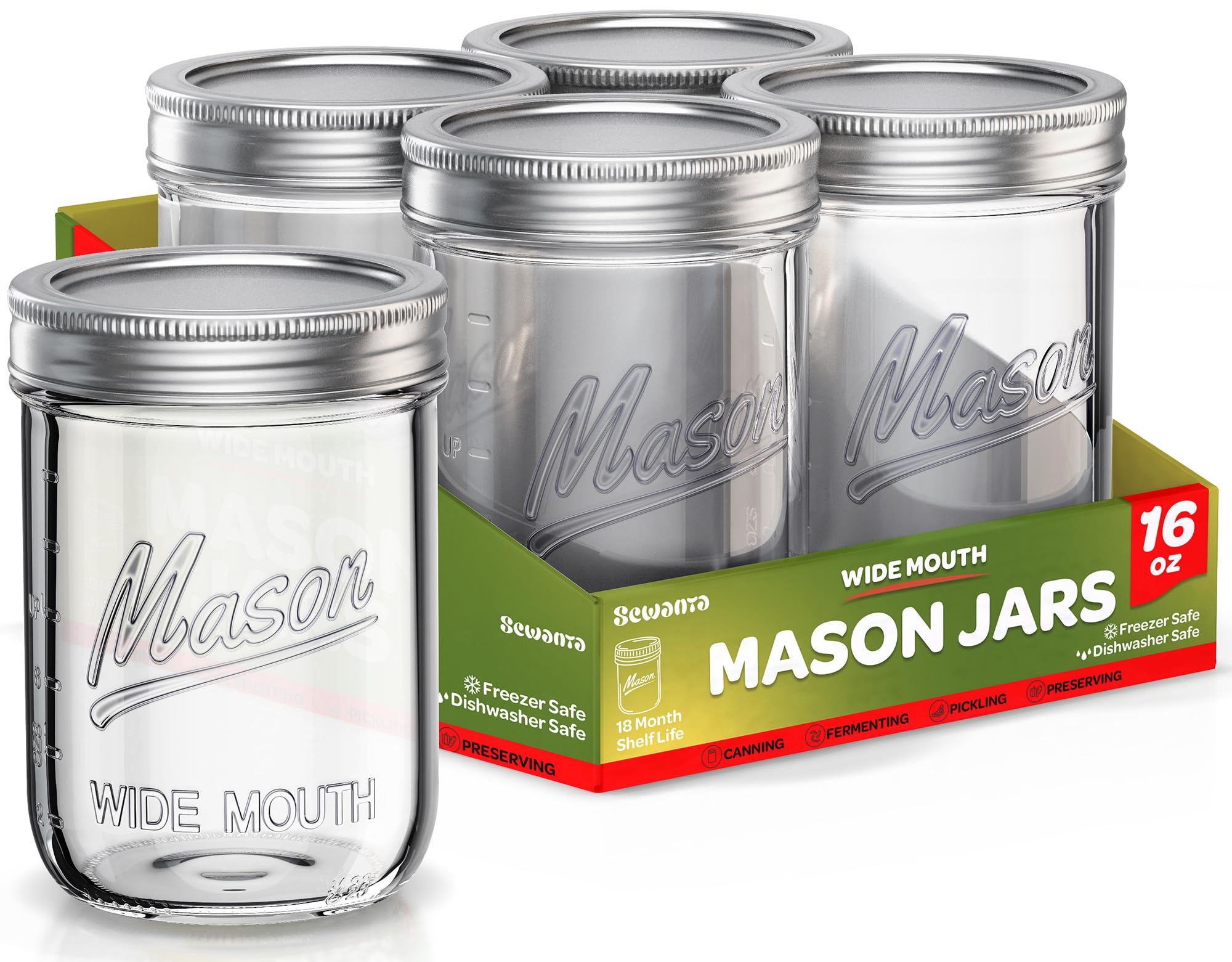
A five‑pack of 16‑ounce wide‑mouth mason jars with embossed measurement markings, heat‑tempered glass, and two‑piece lids that seal for short‑ and medium‑term storage.
Why I picked it: I chose these for everyday prep because the embossed measurements and wide mouth speed up filling and cleaning.
Best for: Meal prep, freezing single portions, salads, overnight oats, and gift jars.
Affordable, good value for a 5‑pack.
Pros
- Embossed measurement marks
- Easy filling and cleaning
- Dishwasher and microwave safe
- Reliable two‑piece lids
Cons
- Lids dent if pried too roughly
- Not specialized for large batches
My take
These 16‑ounce wide‑mouth jars became my go‑to for single‑serve meals and freezing soups. The wide opening makes topping off soups or layering salads effortless, and I can scrape the sides clean with a spoon without fuss. The embossed measurement lines speed up portioning when I’m batching recipes.
The glass feels sturdy and is heat‑tempered, so I’m comfortable using them for water‑bath canning and reheating in the microwave. I test seals by listening for the dull pop after cooling—the two‑piece lids form a reliable airtight seal for refrigerated storage and short‑term preservation.
I froze batches of chili and bone broth in these and found they handled freezer-to-fridge transitions well when I followed the fill guidelines. The main annoyance I ran into was occasionally dented lids when I used a pry tool; otherwise these are practical, versatile jars I keep on rotation.
2. Weck Tulip Jar — 1 L – Best for Sourdough
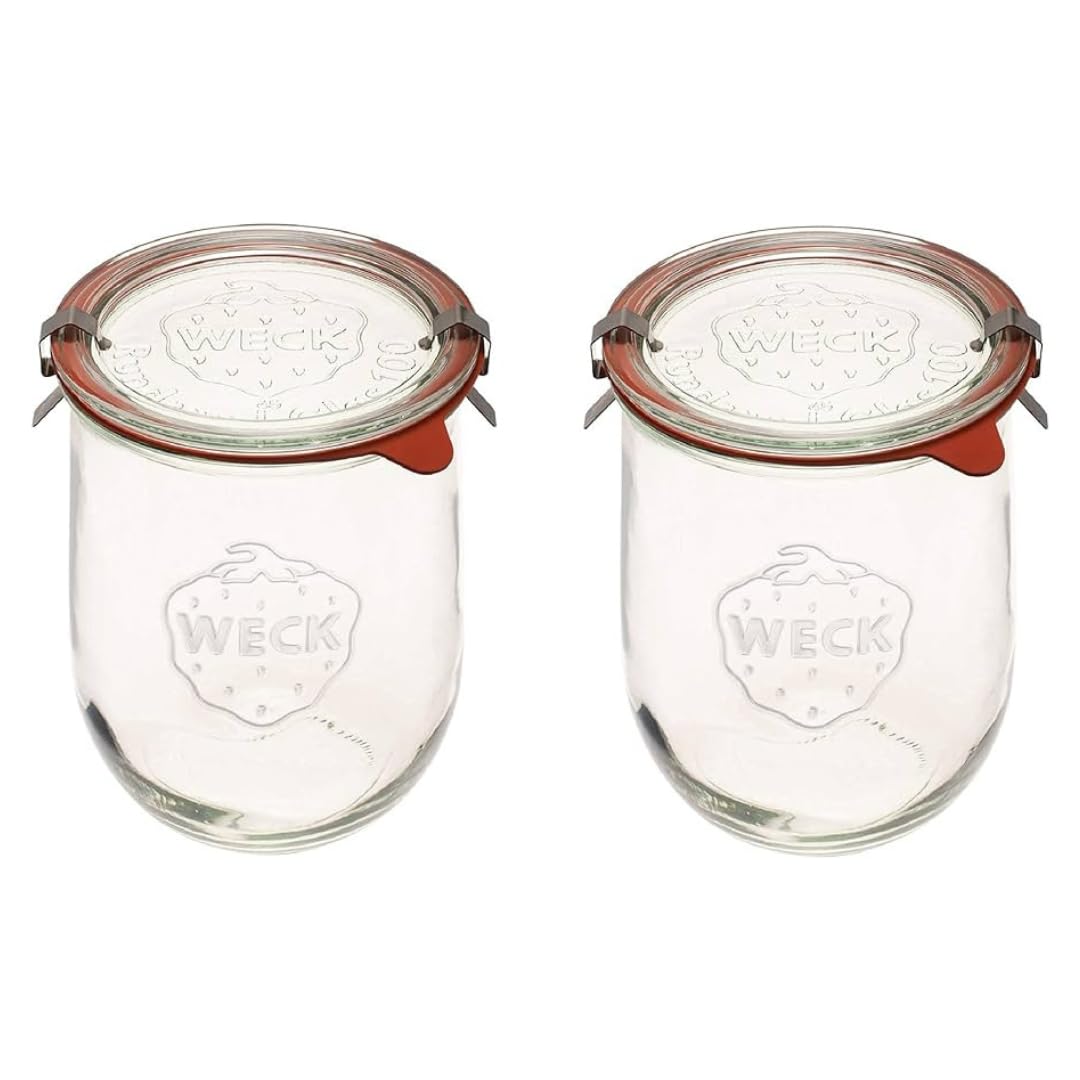
A 1‑liter tulip jar with separate glass lid, rubber gasket, and stainless clips that offers both airtight clamping and a loose lid option for fermenting starters.
Why I picked it: I recommend Weck for sourdough because the wide, smooth mouth and removable gasket make feeding and cleaning the starter much easier.
Best for: Sourdough starters, fermenting, and elegant countertop storage.
A pricier, durable option that I consider an investment for sourdough bakers.
Pros
- Thick, sturdy glass
- Glass lid + gasket + clips
- Wide, smooth opening
- Attractive countertop presence
Cons
- Heavier when filled
- Higher cost than basic jars
My take
For maintaining active sourdough I preferred the Weck tulip jar. The lack of threaded ridges and the wide mouth let me stir and scrape down starter easily without creating sticky seams, and the clear sides make it simple to watch activity and rise.
I like that I can choose how to lid it: clamp the glass lid with the rubber gasket and clips for airtight storage, or set the lid loosely to let CO2 escape during active fermentation. The glass is noticeably thick and durable; the jar feels premium on the counter.
The only tradeoff is weight—once full the jar is heavier than my mason jars, so I keep filled starters on a lower shelf. Overall, this is my preferred container when I want a dedicated, easy‑to‑manage sourdough jar.
3. Ball Regular Mouth Mason Jar — 16 oz – Best Standard Option
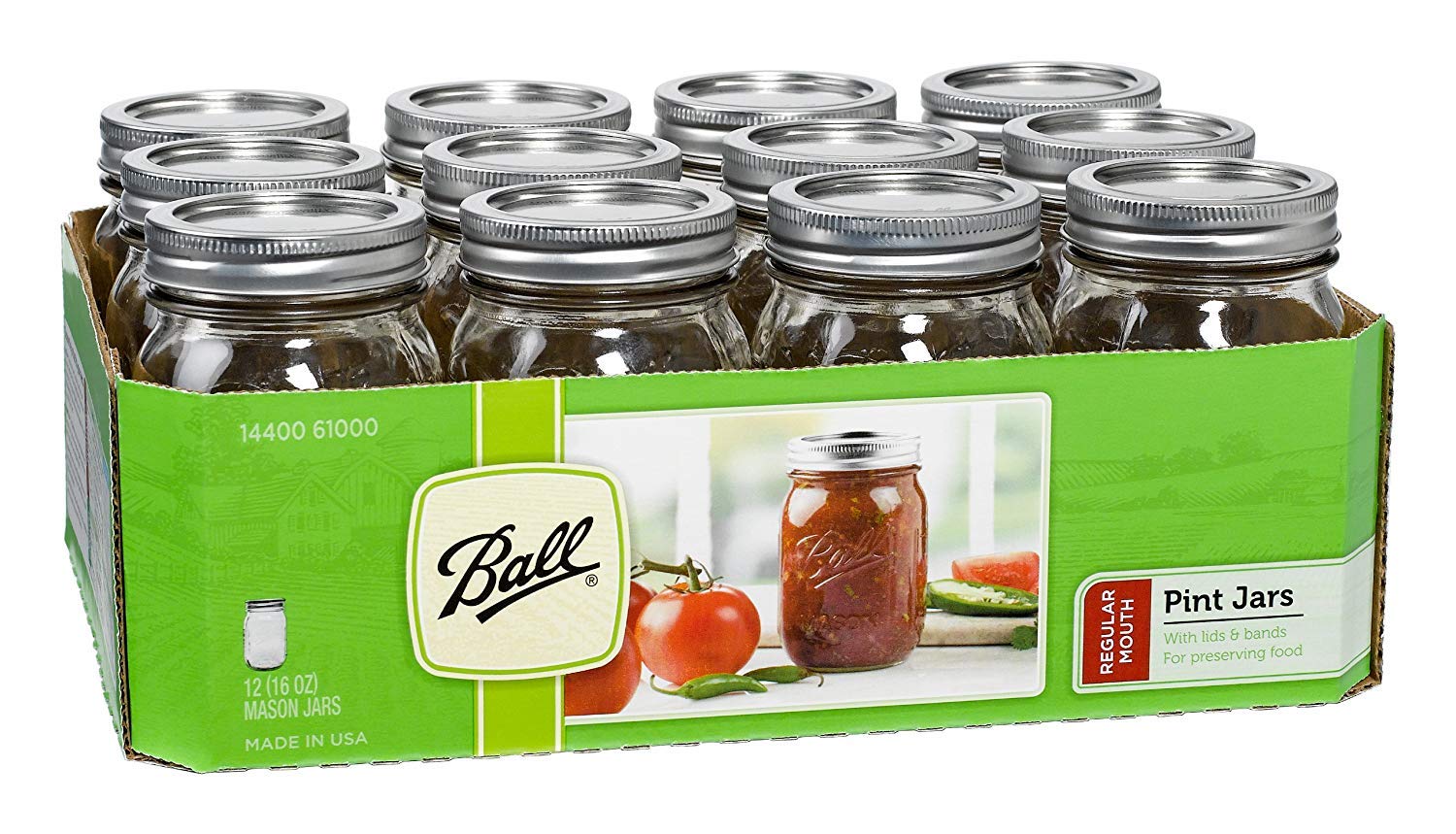
A classic 16‑ounce Ball jar with regular mouth lid and band, BPA‑free glass, and an improved lid design intended to keep canned food sealed up to extended periods.
Why I picked it: I include the Ball regular mouth because its versatile profile performs reliably for pourable preserves and everyday storage.
Best for: Jams, sauces, jellies, and general pantry storage.
A dependable, mainstream pick—good balance of quality and versatility.
Pros
- Classic, familiar design
- Great for pourable foods
- BPA‑free glass
- Proven sealing system
Cons
- Regular mouth less convenient for chunky items
- Not a wide‑mouth model
My take
Even though it’s a regular mouth, I keep a set of these Ball jars around because they excel with pourable preserves like jellies, sauces, and salsas. The narrower opening helps when transferring liquids and reduces spills when filling from a ladle.
The glass feels durable and the lid design gives me confidence for medium‑term sealed storage. I’ve used them for pantry staples and decorative storage, and they pair well with recipes where I want a classic canning jar profile.
If you specifically need a wide mouth for scooping or thick contents, these aren’t ideal—but for many canning tasks and storage roles they’re the most straightforward, no‑nonsense choice I reach for.
4. Square Super Wide Mouth Airtight Glass Jar — 1.1 Gal – Best for Bulk Storage
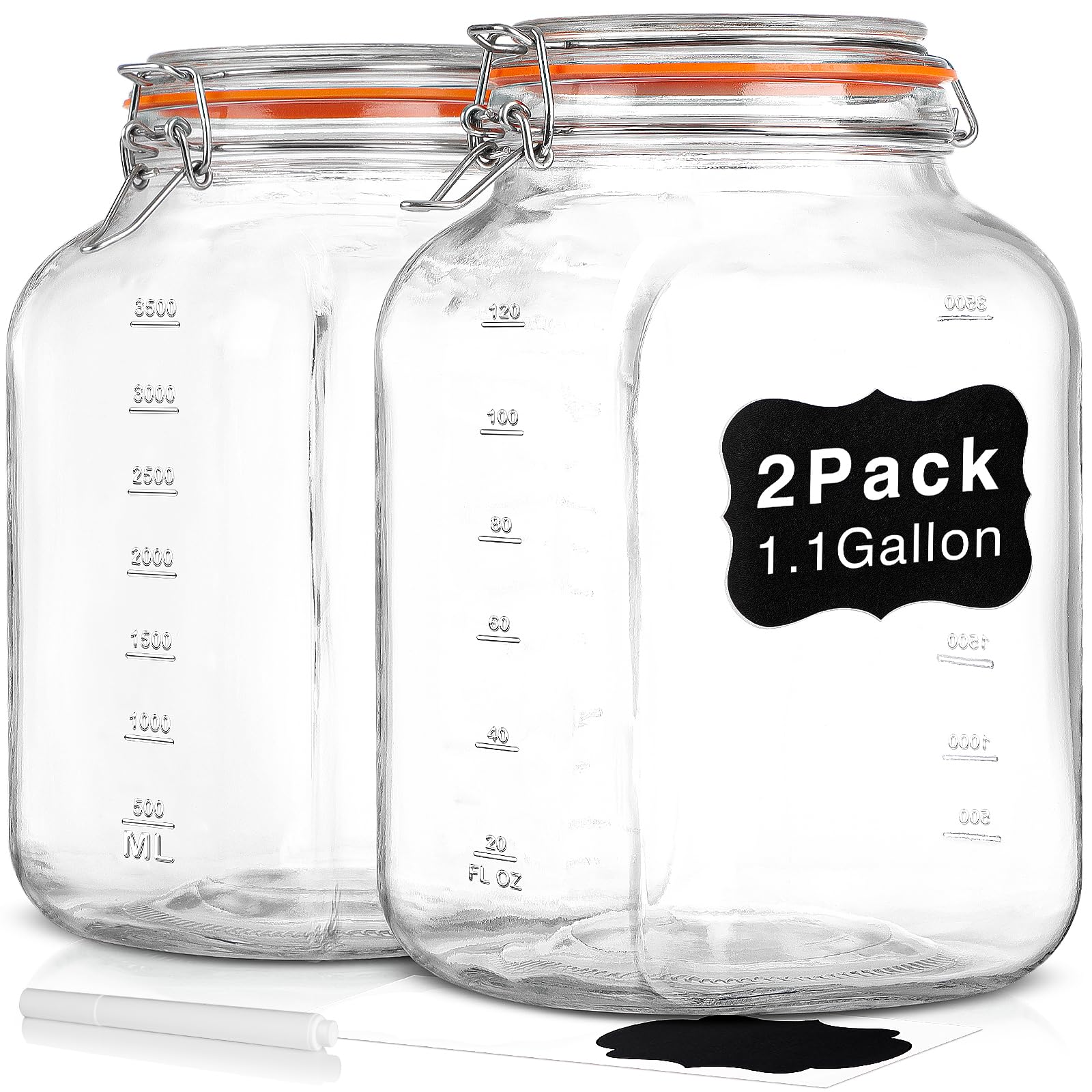
A large square jar with a very wide 4.3‑inch opening, measurement marks, thick glass walls, and a hinged silicone‑gasket lid that clamps airtight for pantry and bulk storage.
Why I picked it: I recommend this jar when you need one container that holds large amounts and gives easy scoop access with an airtight hinged lid.
Best for: Flours, grains, bulk pantry staples, and countertop storage.
Larger and heavier—worth it for bulk pantry organization.
Pros
- Very wide mouth for scooping
- Thick, stable glass
- Hinged airtight lid
- Handy measurement marks
Cons
- Heavy when full
- Takes more shelf space
My take
When I switched to milling my own flour, this square, super wide‑mouth jar became indispensable. The 4.3‑inch opening lets me scoop large measuring cups straight into the jar without spills, and the hinged clamp lid seals tightly with the silicone gasket to keep flour fresh.
The thick glass gives the jar a reassuring heft and stability on the counter; it also resists tipping when I’m reaching for the scoop. I appreciated the printed measurement marks for quick volume checks, and the extra gaskets in the package are a thoughtful inclusion.
This isn’t a jar I move around much—it’s built for stationary bulk storage. If you want a heavy‑duty pantry jar that doubles as a countertop display, this one delivers.
How I Choose Canning Jars
Mouth size and use
I always match mouth size to the job: wide mouths make filling, scooping, and cleaning much easier for chunky preserves, freezing, and meal prep. Regular mouths are better for pourable preserves and sauces because they reduce splash and are easier to ladle into.
- Wide mouth: best for scooping, freezing, and chunky contents
- Regular mouth: better for pourable jams and sauces
Lid systems and sealing
Different lids mean different performance. Two‑piece screw lids seal well for most home canning. Glass lids with gaskets and clips give flexibility for fermenting or airtight clamping. Hinged silicone gaskets offer fast access and a good seal for pantry items.
- Two‑piece lids: reliable for canning and storage
- Glass lid + gasket + clips: great for fermenting and flexible sealing
- Hinged gasket lids: quick access, excellent for dry goods
Glass quality and temperature use
I look for heat‑tempered or thick glass if I plan to water‑bath can. Thicker glass also resists chips and handles heavy use. For freezing, leave headspace per the jar’s recommendations to avoid breakage.
- Heat‑tempered glass for canning
- Thicker glass for durability and bulk storage
- Follow fill limits when freezing to prevent cracks
Capacity, markings, and extras
I prefer jars with measurement markings when batch cooking—those lines save time. Extras like spare gaskets, markers, and labels make organization and long‑term use easier.
- Measurement marks speed up portioning
- Spare gaskets and labels extend usefulness
- Consider weight and shelf footprint for large jars
Frequently Asked Questions
Can these jars be used for fermenting and sourdough?
Yes. I use Weck tulip jars for sourdough because the removable gasket and clips let me seal or leave the lid loose during active fermentation. Other jars with two‑piece lids work for fermenting too if you allow gas to escape during peak activity.
Are these jars safe for the freezer and microwave?
Several of the jars I tested are microwave and dishwasher safe and heat‑tempered for water‑bath canning. For freezing, I always leave headspace—follow each jar’s fill guidance to avoid cracking.
Which lid type gives the best airtight seal for pantry staples?
Hinged lids with silicone gaskets and properly clamped glass lids create the most reliable airtight seals for dry goods. Two‑piece canning lids also seal well for long‑term preserved foods.
Final Take
I kept reaching for different jars depending on the task: SEWANTA for meal prep and freezing, Weck for sourdough, Ball for classic canning and sauces, and the square super wide‑mouth jar for bulk pantry storage. Each has a clear role in an organized kitchen.
If you only want one versatile option, go with wide‑mouth mason jars; if you bake sourdough regularly, the Weck tulip jar earns its place on the counter. Choose based on what you’ll actually do with the jar—that’s how I organize mine.
