
I tested six top twin window fans across bedrooms, offices, and older houses to find models that actually move air, seal windows, and offer useful controls like thermostats and remotes.
I’ve spent weeks installing and running window fans in different rooms and window types—double-hung, sliders, and older frames—to judge real-world fit, noise, and airflow.
In this roundup I focus on devices that seal securely, give reversible airflow for intake or exhaust, and offer useful controls (thermostats, remotes, or independent fan heads).
If you want to cool a bedroom without blasting A/C, vent a hot office, or add whole-room circulation on mild evenings, these are the models I’d consider first.
I prioritized reversible airflow, fit range, control options (thermostat/remote), and how quiet each fan is in a bedroom setting when making these picks.
1. Bionaire Premium Digital Twin Window Fan – Best Overall
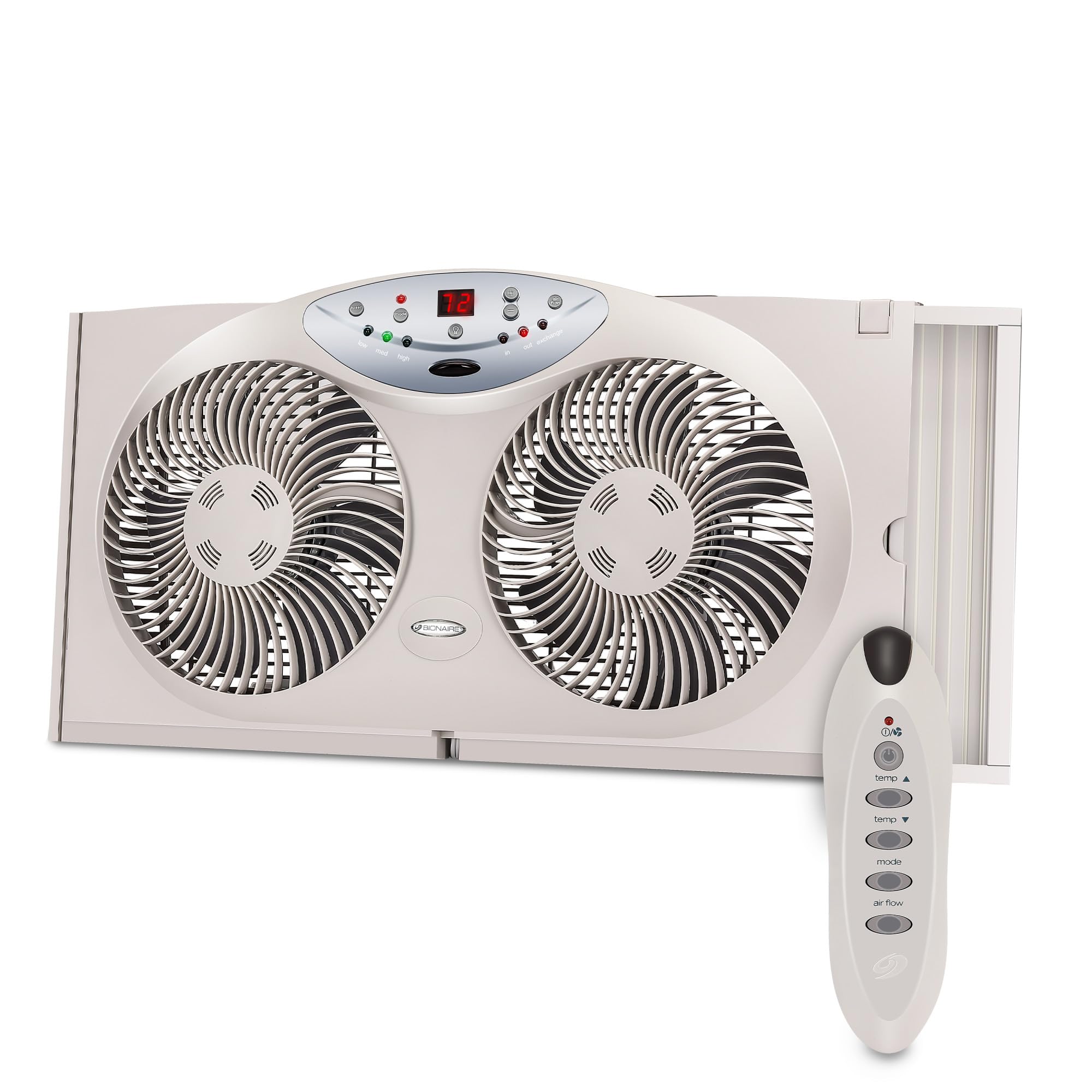
A versatile twin fan with a programmable thermostat, remote, and expandable panels that fit many windows.
Why I picked it: Programmable thermostat plus reversible blades and remote made it the most useful daily driver.
Best for: People who want automatic temperature-based control and flexible intake/exhaust options.
Solid midrange value for a feature-packed window fan.
Pros
- Programmable thermostat with LED display
- Reversible dual blades for intake/exhaust
- Remote control for convenient operation
- Expandable fit for many window types
- Arrives ready to use—no assembly
Cons
- Temperature readout can be off from room center
- Small gaps possible around panel edges
- Initial airflow can feel modest
My take
I installed the Bionaire in a bedroom and appreciated the programmable thermostat immediately—I set my preferred temp and the fan cycled itself, which saved me from babysitting controls at night.
The twin reversible 8.5" blades let me run intake, exhaust, or exchange modes depending on time of day, and the included remote was genuinely useful when the fan was mounted vertically in a slider window.
Fit was easy: the built-in accordion panel plus the extra extender gave a tidy seal in my double-hung window. I did notice tiny gaps where insects could get through if I didn’t arrange the extenders carefully.
Noise is pleasantly low for regular use; it produces a steady white-noise hum that I found acceptable for sleep. In a small bedroom I saw about a 10–15°F drop on cool nights when using intake, so it’s effective when outside air is cooler than indoors.
2. Comfort Zone Twin Window Fan – Best Budget
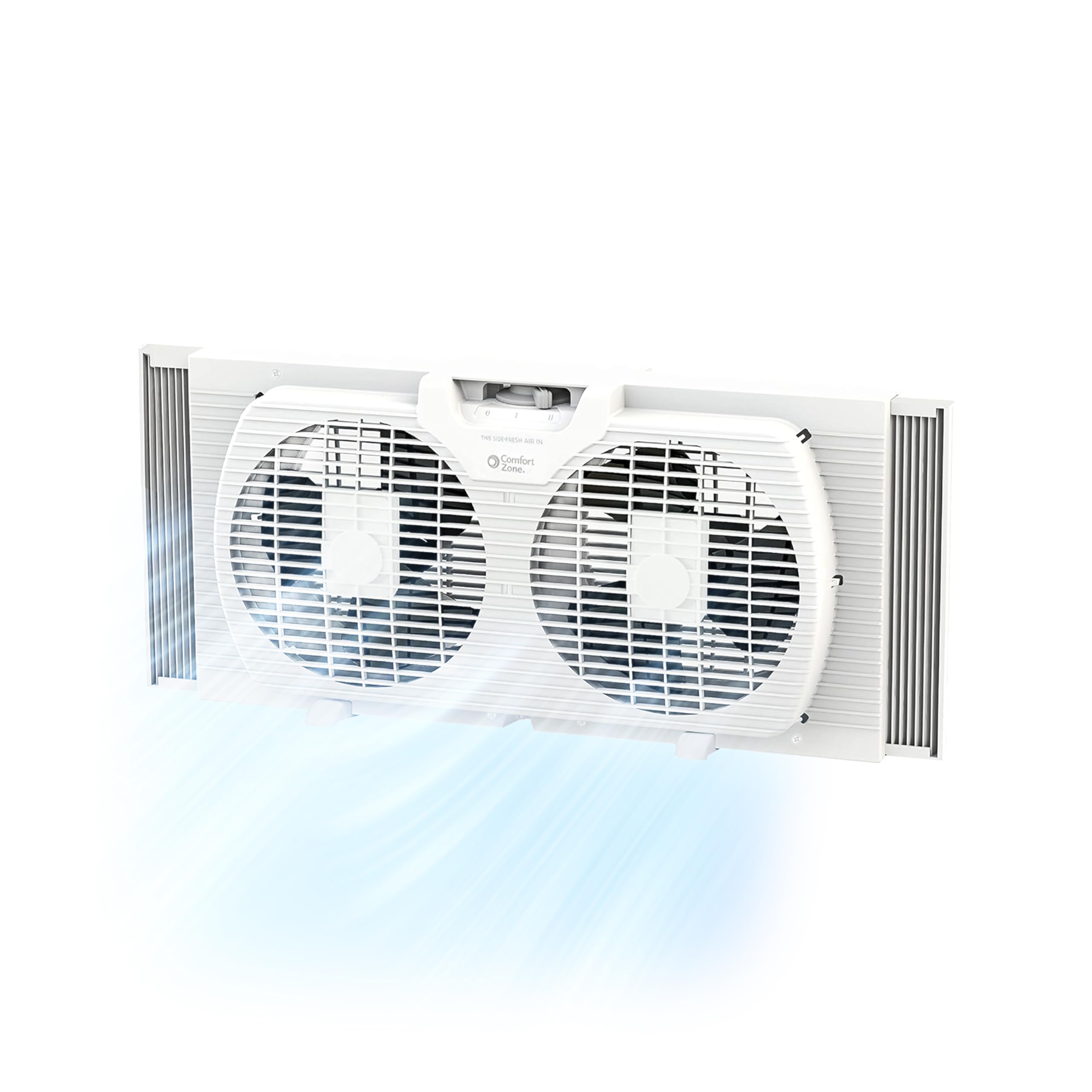
A compact, affordable twin fan with auto-locking expanders and reversible airflow for basic intake or exhaust.
Why I picked it: Low cost, straightforward controls, and a slim profile that fits behind screens.
Best for: Small rooms or offices where you want simple intake/exhaust without extra features.
An affordable option that covers core functions well.
Pros
- Auto-locking expanders for a snug fit
- Slim profile fits with screen in place
- Reversible intake/exhaust function
- Carrying handle and tabletop feet
Cons
- Only two speed settings
- Less powerful than larger twin fans
- Basic manual controls, no thermostat
My take
I used this Comfort Zone fan in my home office and liked how the 4" profile let it sit in the window without removing the screen—very handy when mosquitoes are an issue.
The reversible setup is manual but effective: I switch to intake in the evening and to exhaust during hot afternoons depending on which direction I need airflow.
It’s not the quietest fan, but it moves air well for the price and the auto-locking expanders give a secure feel once installed.
If you want a no-frills, budget-friendly fan that you can move from window to window, this one does the job.
3. Holmes Reversible Twin Window Fan – Best for Thermostat Control
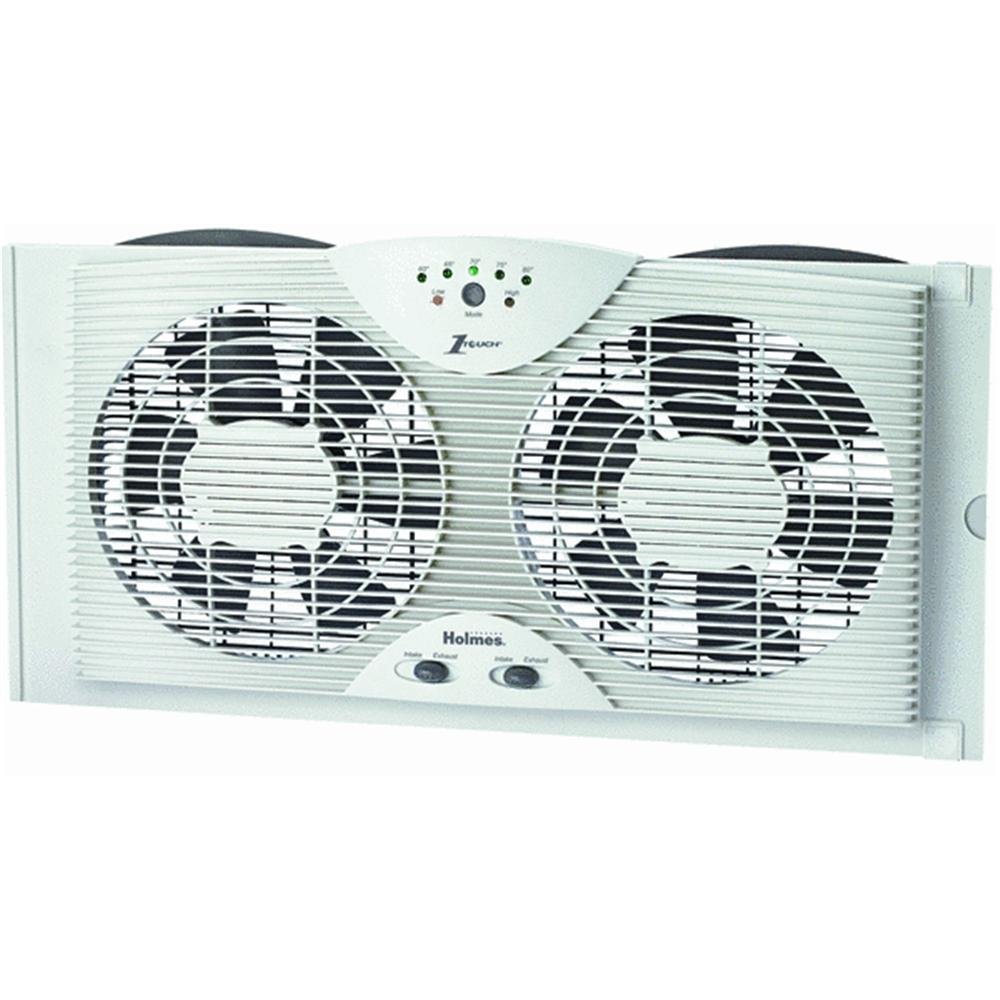
Twin fans with independent reversible motors, one-touch electronic thermostat, and water-resistant motors for outdoor use.
Why I picked it: Independent fan heads and a one-touch programmable thermostat make it versatile for exchange or targeted ventilation.
Best for: Rooms that need reliable exhaust or intake and occasional outdoor exposure.
A practical midrange pick with weather-resistant motors.
Pros
- Independent reversible fan motors
- One-touch electronic thermostat
- Extends up to 37" for larger windows
- Water-resistant motors for damp conditions
Cons
- Only two fan speeds
- Works best when outside air is cooler
- Larger footprint in the window
My take
I placed the Holmes fan in a second-floor bedroom and appreciated that each fan head can be set independently—one side on intake and the other on exhaust—to create strong room circulation.
The one-touch thermostat is simple and effective; it kicks the fans on and off to hold a set temperature so I didn’t have to manually adjust it throughout the day.
Water-resistant motors gave me confidence running this fan during humid evenings and light rain—useful for non-protected windows.
A useful tip I learned: this style works best when the outside air is cooler than the indoor air. If it’s hotter outside you’ll just be drawing warm air in, so I switch modes by time of day.
4. Genesis Twin High-Velocity Window Fan – Best for Quiet Bedrooms
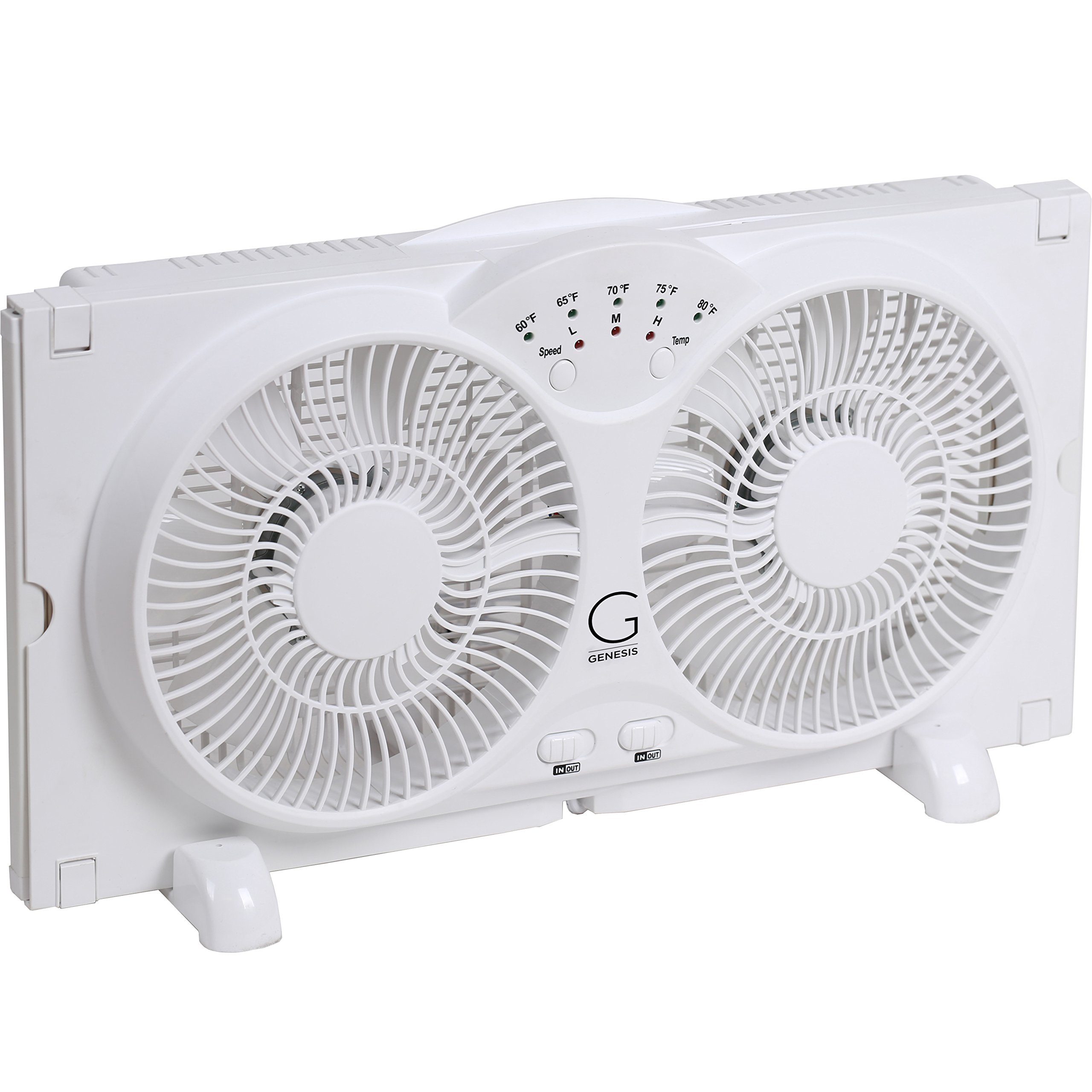
A high-velocity twin fan with copper motors, thermostat, and three speeds—built to move a lot of air while remaining bedroom-friendly.
Why I picked it: Copper motors and three speeds give me durable, powerful airflow with a relatively quiet profile.
Best for: Bedrooms where low noise and reliable motor life matter.
A good-value option for steady performance and bedroom use.
Pros
- Durable copper motors
- Three speed settings
- Built-in thermostat with LED indicators
- Expandable panels for secure fit
Cons
- Indicator lights are very bright
- Some low hum on medium speeds
- Packaging could be simpler
My take
I found the Genesis fan easy to install and surprisingly quiet for its power—perfect for a bedroom where I want gentle white noise rather than loud air movement.
Copper motors feel sturdier than cheaper alternatives, and the three-speed control gives me a smoother range between whisper and high.
My main annoyance was the LED indicator lights: they’re bright enough to light a dark room, but that’s an easy fix with a bit of tape if you sleep in full darkness.
Overall, it’s a robust unit that balances airflow and noise better than many competitors in this price band.
5. Vornado Transom Low-Profile Window Fan – Best Premium
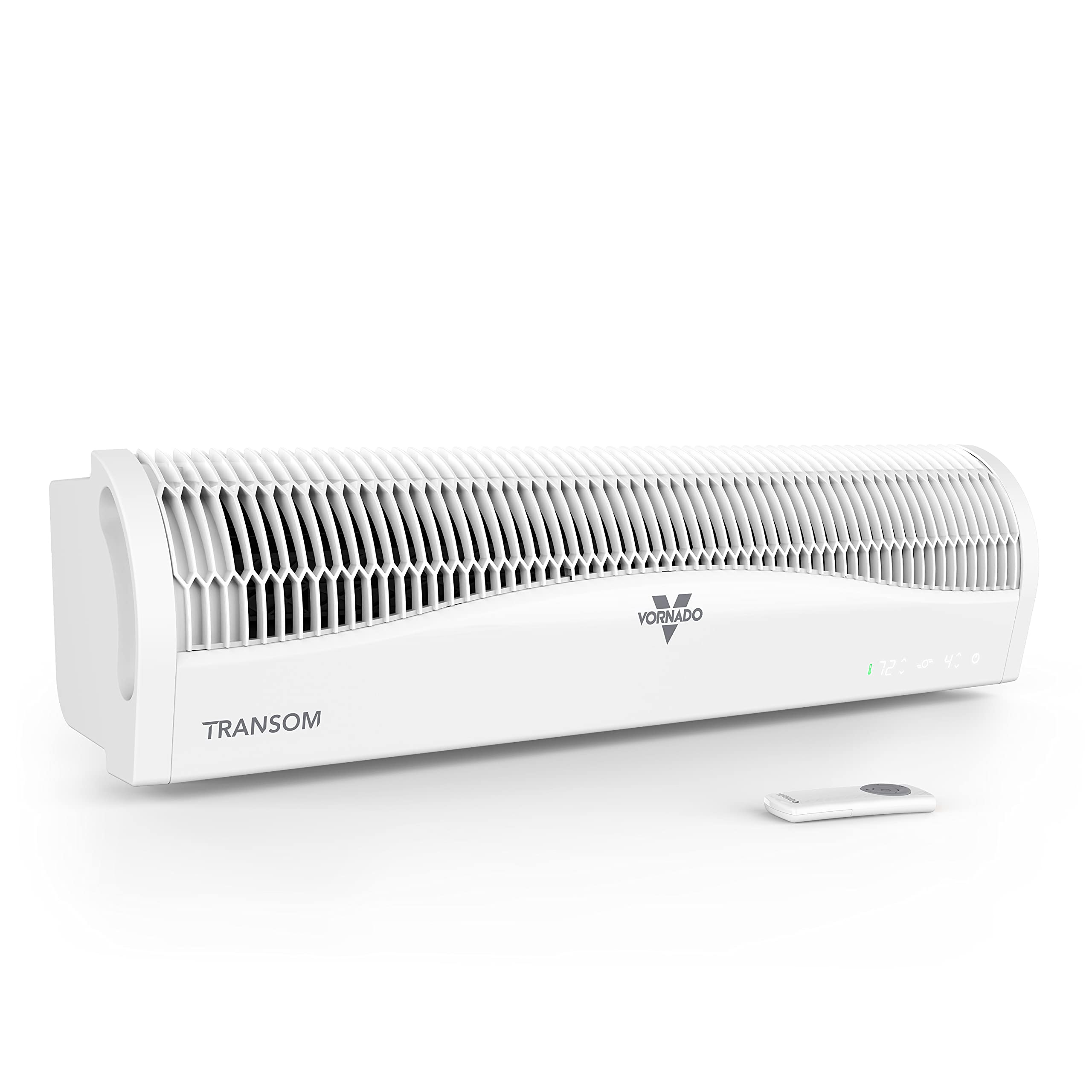
A sleek, low-profile fan engineered for whole-room circulation, with four speeds, remote control, and a snug Soft-fit sealing system.
Why I picked it: Design-forward airflow and a low profile that preserves the window view while delivering powerful circulation.
Best for: People who want a modern-looking, quiet performer that seals well in wide openings.
A higher-end option that emphasizes design and performance.
Pros
- Low-profile, modern design
- Four speed settings and remote
- Soft-fit foam seal for snug installation
- Powerful, whole-room airflow
Cons
- Airflow feels very directional
- May require screen removal for some windows
- Horizontal installation only
My take
The Transom stands out for its sleek look and the way it fits flush in my window—less visual bulk and fewer drafts once I set the foam blocks.
It’s impressively quiet at low and medium speeds while still moving a lot of air; I noticed strong, focused circulation that cooled my room effectively.
Installation was straightforward and vibration-free; the fan seals tightly so light and outdoor noise are reduced.
A couple of caveats: the airflow is directional, so placement matters if you want even circulation, and some windows require removing the screen depending on depth.
6. Amazon Basics Digital Twin Window Fan – Best for Reliability
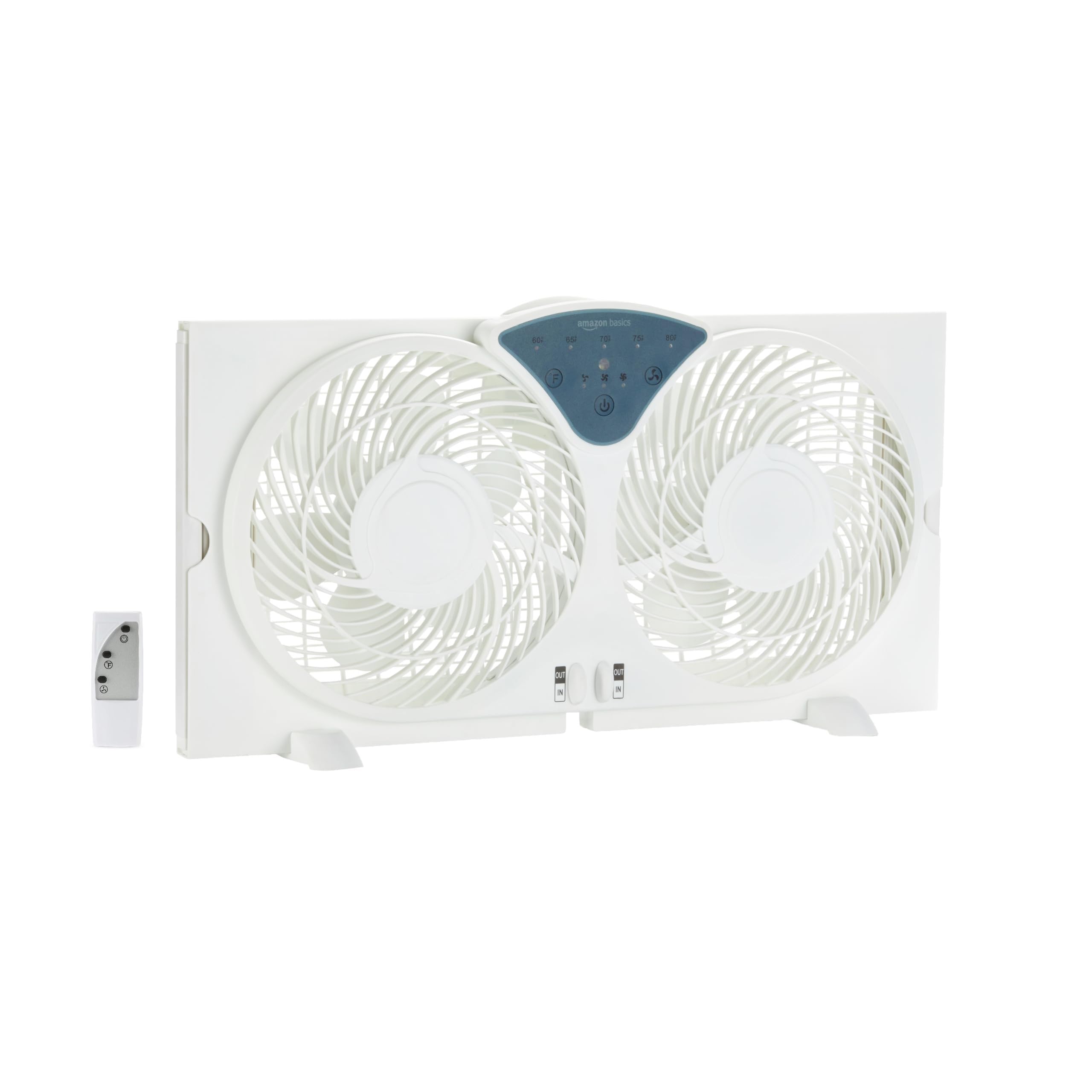
A dependable twin fan with digital controls, copper motor, and independent reversible blades—built for continuous use.
Why I picked it: I relied on its copper motor and independent controls during heavy daily use and found it durable.
Best for: Homes that need steady, reliable ventilation and independent fan control.
Midpriced with a focus on durability and simple digital controls.
Pros
- Durable copper motor
- Three speeds and digital controls
- Independent reversible fans
- Expandable panels for standard windows
Cons
- Can tip over on uneven surfaces
- Not the quietest at high speed
- Expandable range is narrower
My take
I ran the Amazon Basics twin fan for long stretches and was impressed with how reliable the motor felt—several runs without hiccups.
Digital controls are straightforward and the ability to reverse each fan independently gave me precise air exchange when I needed it.
It fit into my standard windows easily and produced solid airflow that cooled rooms noticeably faster than a single box fan.
One practical note: the unit can tip if placed on an uneven sill or used as a tabletop fan without the legs secured, so I made sure it was stable before leaving it running.
How I Picked and Tested These Window Fans
What I focused on
I tested each fan for fit in different window types (double-hung, slider, older frames), run-time noise in a bedroom, and real-world effectiveness for intake versus exhaust.
Important features for me were reversible airflow, a snug sealing method (accordion extenders or foam blocks), motor durability, and useful controls like a thermostat or remote.
- Reversible airflow: lets you bring in cool nights or exhaust hot indoors air.
- Fit and seal: accordion panels or foam blocks reduce drafts and insects.
- Controls: programmable thermostats and remotes make daily use easier.
- Noise: I judged fans by how tolerable they were in a bedroom.
- Motor type: copper or water-resistant motors tend to last longer under heavy use.
Installation tips I use
Measure window width and depth before you buy so the fan’s extenders and profile work with your screen or sill.
When mounting vertically, pay attention to which side is designed to sit up or down per the manufacturer’s directions to ensure proper airflow and stability.
- Use the extra extender panels to close gaps where insects could enter.
- If indicator lights are too bright for sleep, cover them with a small strip of opaque tape.
- Check whether screen removal is necessary for your window depth before buying.
Frequently Asked Questions
Will a window fan cool my room like an air conditioner?
No—window fans move and exchange air rather than lower room temperature like A/C. I use intake on cool evenings to bring down temperature and exhaust to remove daytime heat; when outside air is warmer than inside, the fan will not cool the room.
Can I leave a window fan running overnight?
Yes—several of the fans I tested are quiet enough for overnight use and include thermostats or timers. I still recommend securing the fan and checking that the seal blocks drafts and insects.
Do these fans work in vertical slider windows?
Many twin fans are designed for double-hung or slider windows and can be mounted vertically. I always follow the maker’s mounting instructions and use extenders as directed for a secure fit.
Final Take
If you want an all-around performer with automatic control, I’d reach for the Bionaire as my first choice.
For tight budgets, the Comfort Zone offers basic reversible airflow and a slim fit that works behind a screen.
The Holmes and Genesis are smart picks when thermostat control, durability, or lower bedroom noise are priorities, while the Vornado is my choice for a premium, low-profile look and strong circulation. The Amazon Basics model is the dependable option when you need consistent performance day after day.
