
I tested four blackout curtain sets across bedrooms and living areas to find the best options for true darkness, insulation, and style.
I spent time hanging and living with each of these blackout curtains so I could judge how well they block light, reduce noise, and help with temperature control.
In the rooms where I installed them I evaluated fabric weight, construction (sewn-in black liners or triple weave), hardware compatibility, and how they held up after washing.
Below I list the specific strengths and trade-offs of each set so you can pick what matters most: maximum darkness, long panels for tall windows, heavy insulation, or decorative appeal.
If you need absolute darkness, choose curtains with a sewn-in black liner and heavier fabric. For tall windows pick longer panels and more grommets. If style matters, look for printed or weighted hems that dress a room while still offering good blackout performance.
1. NICETOWN Blackout Curtains (White) – Best Value Blackout
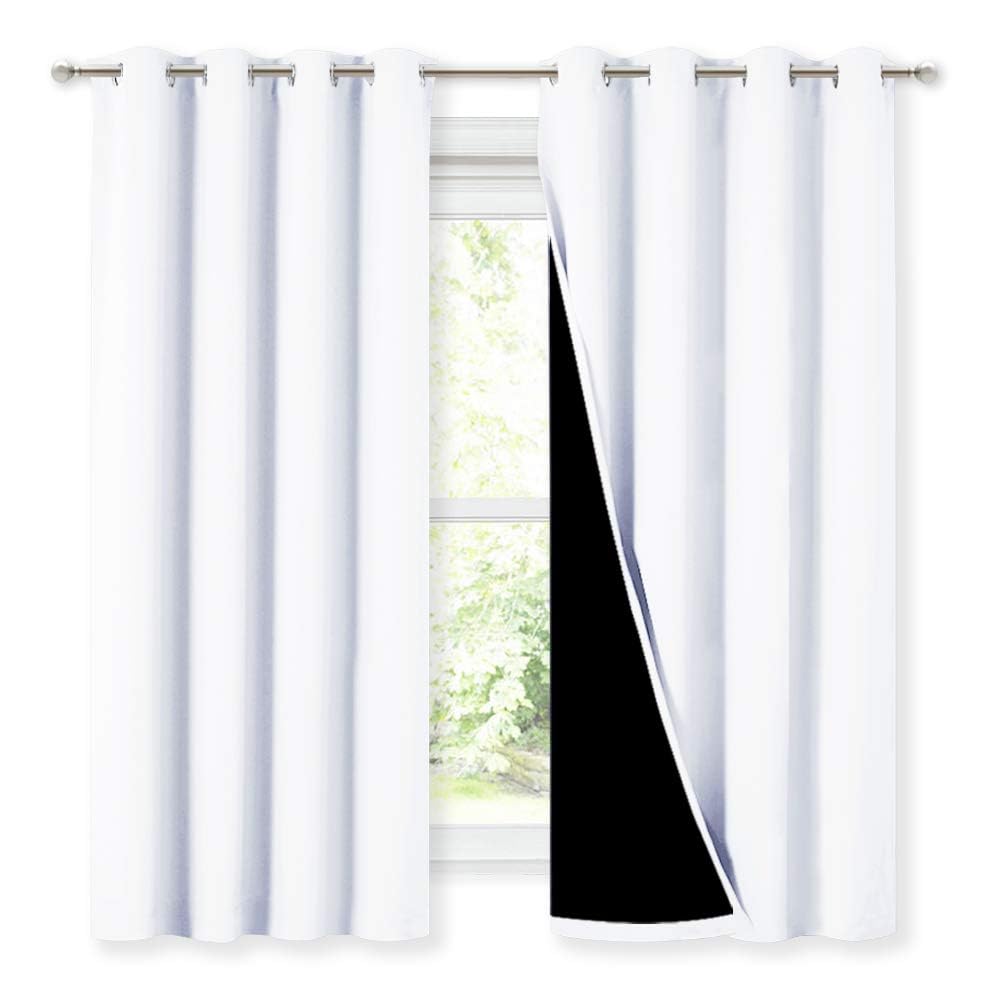
Two-panel set with sewn-in black liner, silver grommets, triple-weave polyester that blocks light and adds thermal and noise reduction.
Why I picked it: I chose these for delivering true blackout performance at a budget-friendly level.
Best for: Bedroom windows and sliding doors where darkness and insulation matter.
One of the most affordable true-blackout options I tested.
Pros
- Sewn-in black liner for real blackout
- Thick triple-weave fabric
- Easy-to-hang silver grommets
- Helps insulate rooms
- Noticeably reduces noise
Cons
- White fabric shows dirt more easily
- Hand-wash recommended to preserve finish
My take
I installed the NICETOWN panels in my bedroom and immediately noticed a much darker room—these are genuine blackout curtains thanks to the sewn-in black liner. Light from street lamps and early morning sun disappeared when I closed them.
The fabric feels substantial and the triple-weave construction helps with temperature control; my room stayed cooler during sunny afternoons and held heat better on cold nights. The grommets (1.6-inch inner diameter) made installation quick and the curtains slide smoothly on a standard rod.
Care is straightforward if you follow the label: I avoided frequent machine washing to prevent fading and hand-washed when necessary. For the price and performance, these delivered the best balance of darkness and insulation in my tests.
2. BGment Blackout Curtains (Beige) – Best for Tall Windows
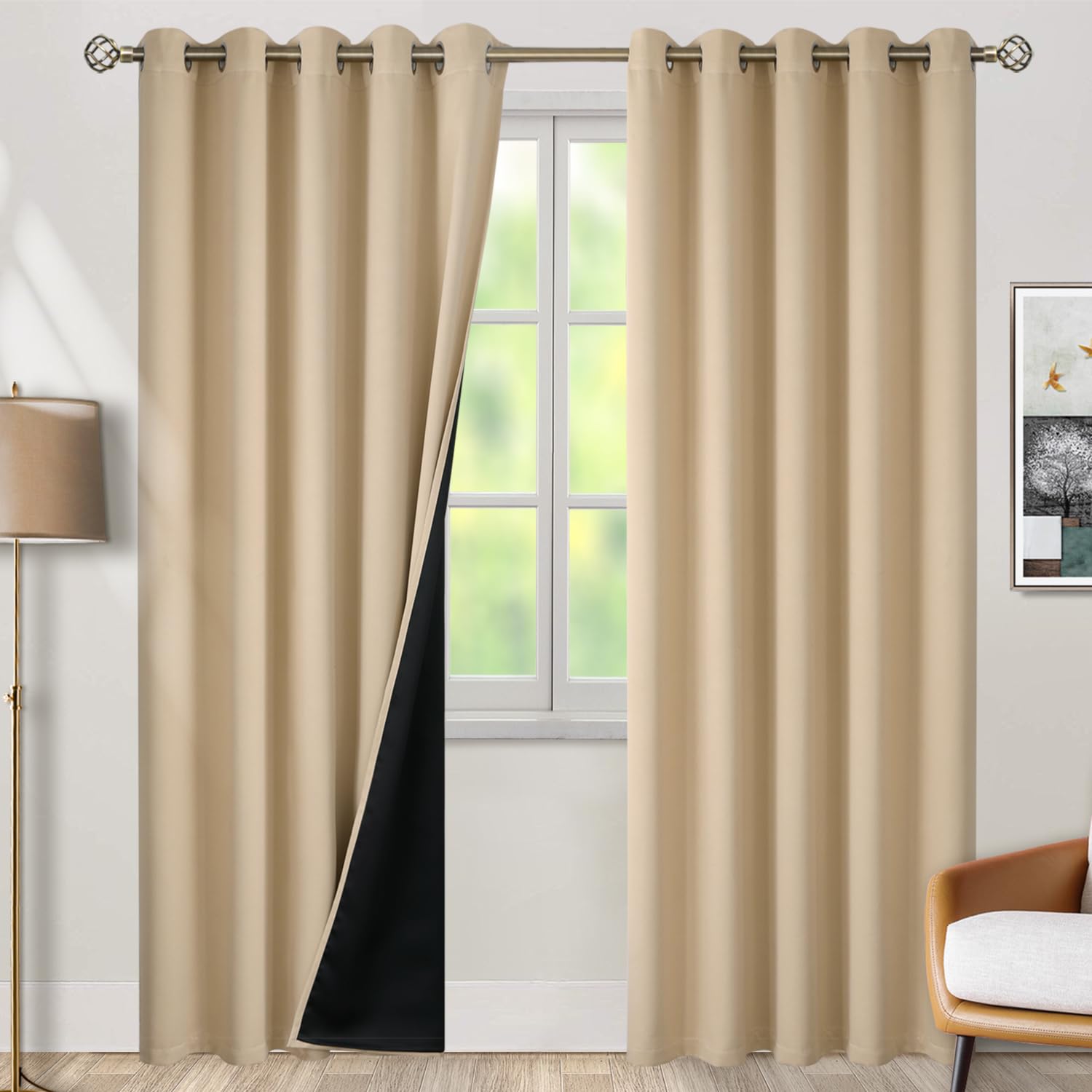
Two long panels (60 x 84 in) with a black lining, ten metal grommets per panel, machine-washable fabric, and energy-saving insulation.
Why I picked it: I picked these for their full-length coverage and extra grommets that keep panels hanging evenly.
Best for: Floor-to-ceiling windows and tall rooms that need complete coverage.
A solid mid-range choice for longer panels.
Pros
- Long 84-inch panels for full coverage
- Black lining provides full blackout
- Ten metal grommets for even hanging
- Machine washable for easy care
- Energy-saving insulation
Cons
- Heavier fabric needs a sturdy rod
- Can feel heavy when wet after washing
My take
I used the BGment set on a tall living-room window and appreciated how the 84-inch length eliminated the need for extras. The ten grommets per panel keep the fabric falling in tidy folds and prevent uneven draping.
When closed these make a room feel truly dark; the black lining coupled with the dense weave blocks daytime sun effectively. I also noticed a small but useful improvement in thermal comfort—the room felt less drafty when the panels were drawn.
Washing was easy: I ran them on a gentle cold cycle and air-dried to avoid extra weight in the fabric. Because they’re heavier than thin sheers, I recommend installing on a solid rod rated for the weight.
3. Yakamok Blackout Curtains (Black) – Best for Insulation
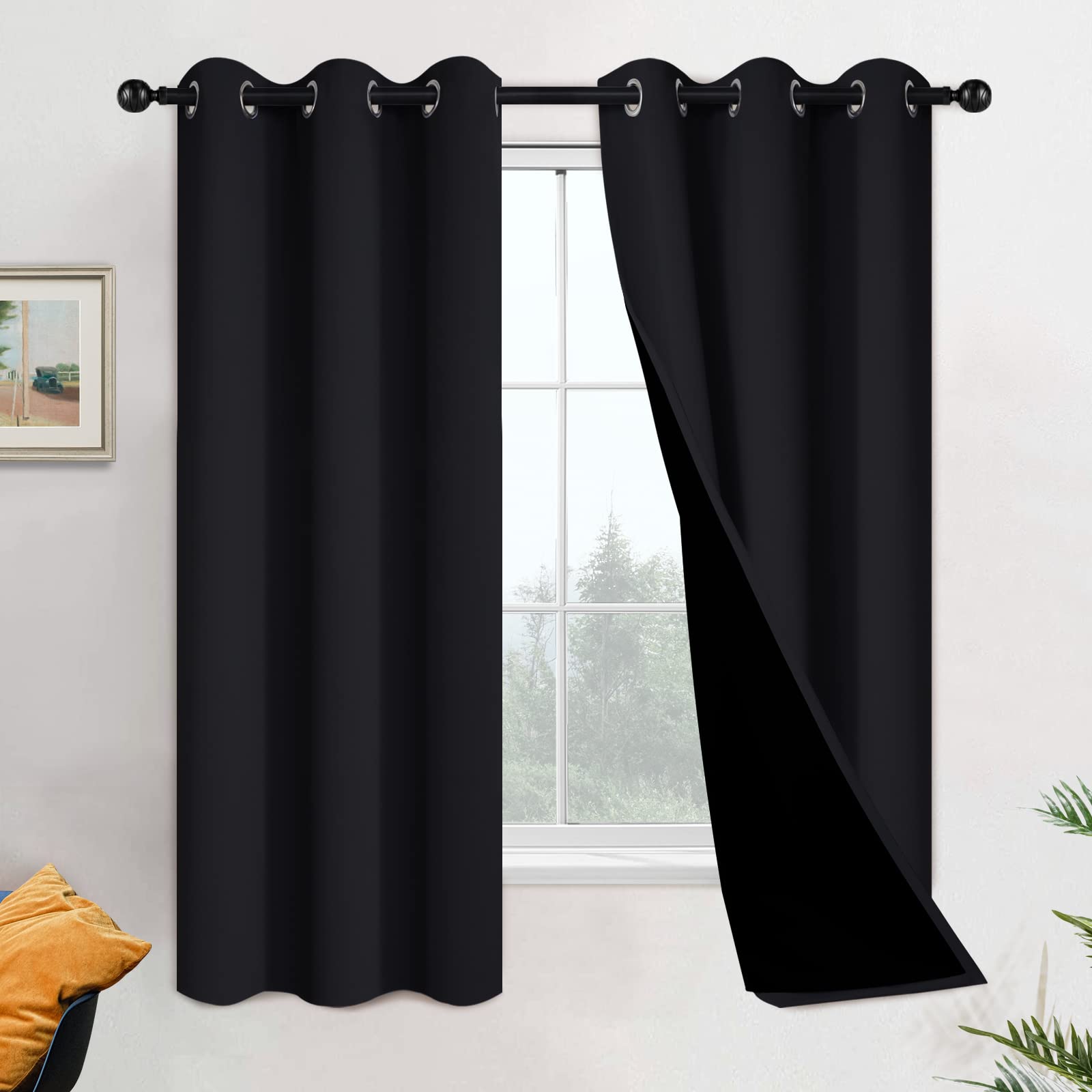
Two-panel set (42 x 63 in) made of polyester with a sewn black liner, six grommets per panel, triple-weave construction for 100% blackout and added thermal benefits.
Why I picked it: I valued the true 100% blackout and durable polyester construction for rooms where energy savings matter.
Best for: Smaller windows and bedrooms where tight blackout and insulation are priorities.
A practical mid-priced option with strong blackout performance.
Pros
- Truly 100% blackout with sewn liner
- Sturdy polyester construction
- Noise-dampening benefits
- Machine washable in cold water
Cons
- Narrower panels may need multiples
- Heavy fabric can require extra support
My take
I installed Yakamok panels in a handful of rooms where I wanted tight darkness and noticed immediate results—they live up to the 100% blackout claim thanks to the sewn black backing.
The polyester feels durable and washes well; I machine-washed on cold and the panels came out with minimal wrinkling. For small windows the 42-inch width is fine, but I ended up using additional panels on a wide patio door to restore the gathered look.
These curtains also help with temperature control and noise reduction; in my experience they contributed to a quieter, more stable indoor temperature over the course of the day.
4. Anjee Moroccan Print Blackout Curtains – Best Decorative Blackout
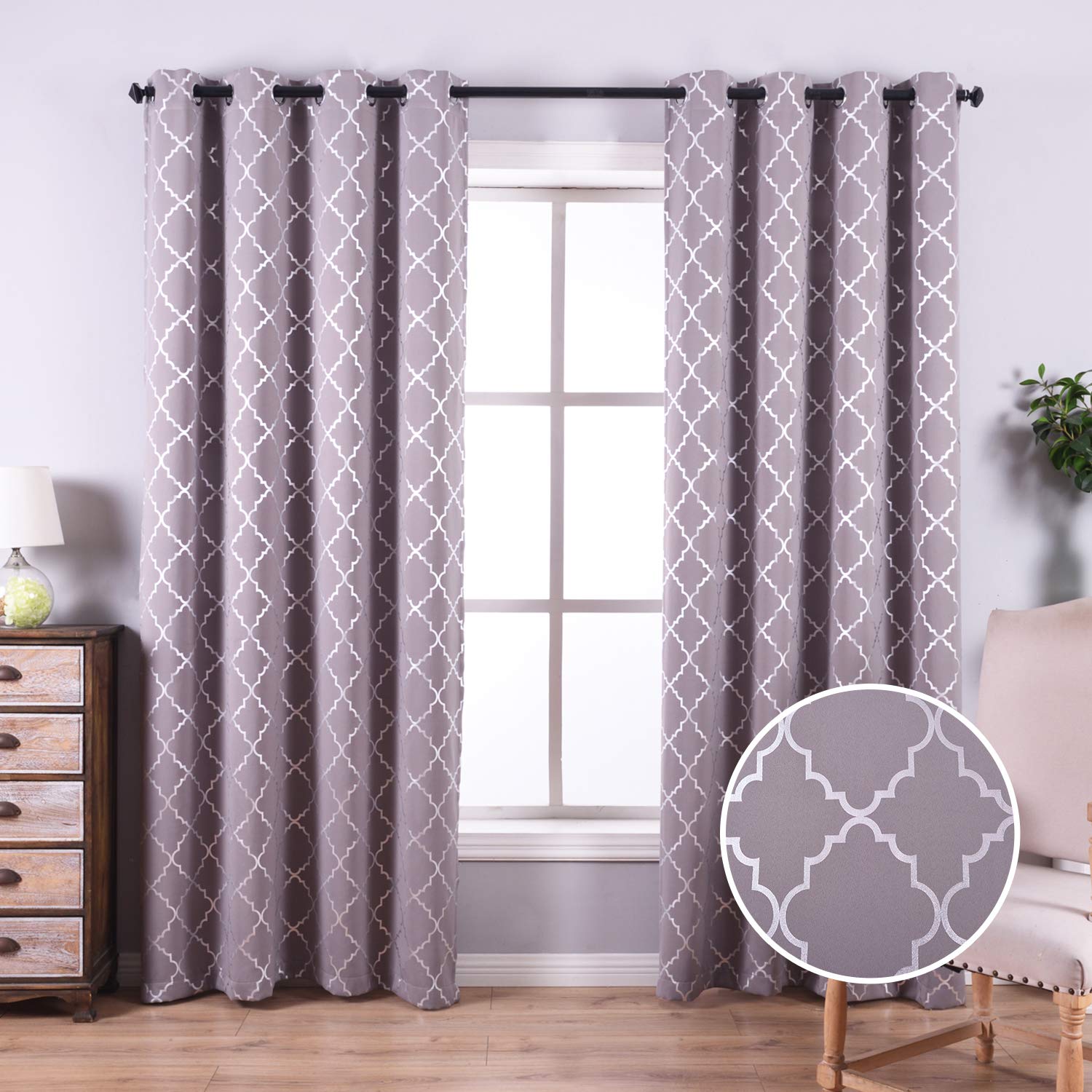
54-gram microfiber panels with foil Moroccan print, weighted hems, grommet top, and triple-weave construction that blocks most light while adding visual interest.
Why I picked it: I picked these when I wanted blackout performance without sacrificing pattern and room decor.
Best for: Living rooms or bedrooms where style and blackout capability both matter.
A decorative option that still delivers strong blackout performance.
Pros
- Attractive Moroccan foil print
- Weighted hems for neat drape
- Good light-blocking performance
- Machine washable on gentle cycle
Cons
- Foil print needs gentle care
- Small gap at the rod can let light in
My take
I chose the Anjee panels for a room that needed both style and function. The silver foil Moroccan pattern immediately elevated the space while the 225gsm fabric provided serious heft.
The 12 lead pendants at the bottom of each panel keep the curtains hanging straight, which makes a noticeable difference in how polished the window looks. They reduce most incoming light—though I did notice a tiny sliver of light right at the rod on direct sun, so I paired them with a blackout liner in areas where absolute darkness was essential.
Care is simple when treated gently: I used a cold gentle cycle and air-dried to preserve the foil print. For rooms that need a decorative touch without giving up blackout, these are my go-to.
How I Choose Blackout Window Treatments
Key features I look for
I prioritize a sewn-in black liner or true triple-weave fabric for consistent darkness.
I check panel length and width so a single set covers the window with enough fullness for proper draping.
Hardware compatibility matters: I make sure grommet inner diameters fit my curtain rod and that the rod can handle the weight.
- Sewn-in black liner = best blackout
- Longer panels (84 in) for floor-to-ceiling windows
- More grommets = neater hang
- Heavier fabric improves insulation and noise reduction
- Machine-washable fabrics save maintenance time
Sizing and installation tips I use
I measure twice: width should be 1.5–2 times the window width for good fullness; height depends on whether I want floor puddling or a crisp finish.
I install on a rod rated for the curtain weight—heavier blackout panels need sturdier hardware.
If I need absolute darkness I use a wrap-around rod or add a liner to block light at the rod.
- Measure window and add fullness
- Use a rod rated for heavyweight panels
- Consider wrap rods or liners for zero light gaps
Material and care I recommend
Polyester and microfiber hold up well and provide good thermal properties; I avoid chemically coated fabrics when possible.
I follow care instructions: many blackout panels are machine-washable in cold water, but I air-dry or tumble-dry low to prevent extra weight or damage.
For patterned or foil-printed curtains I always use a gentle wash and air-dry to protect the finish.
- Cold gentle wash for blackout panels
- Air-dry patterned/foil curtains
- Avoid bleach to protect liners and prints
Frequently Asked Questions
Will blackout curtains completely block sunlight?
In my experience, curtains with a sewn-in black liner or dense triple-weave block nearly all sunlight. The only place light sometimes leaks is at the rod or along the edges unless you use a wrap-around rod or a liner to seal gaps.
Can blackout curtains help with energy bills?
Yes—I saw measurable effects in rooms where I installed heavier, insulated panels. They slow heat transfer in both summer and winter, which helps room temperature stay steadier and can reduce HVAC runtime.
How do I care for blackout curtains without ruining the blackout layer?
I wash most blackout curtains on a cold gentle cycle and air-dry when possible. For panels with a foil print or weighted hems I always use a gentle setting and avoid bleaching or high heat drying.
Final Take
After testing these sets across different rooms, I recommend choosing based on the primary need: NICETOWN for overall value, BGment for tall windows, Yakamok for tight insulation and blackout, and Anjee when pattern and finish matter.
Measure carefully, pair heavy panels with sturdy hardware, and follow gentle care steps to keep blackout performance consistent.
Pick the option above that matches your priorities and you’ll get a noticeable improvement in darkness, comfort, and room appearance.
