
I tested a range of wood dining tables in different sizes and styles. This roundup highlights what worked in real homes, which tables I’d pick for small spaces, family dinners, or outdoor-ready setups, and the trade-offs
I put several wood dining tables through everyday use — meals, homework sessions, crafts, and hosting. I focused on construction, finish, footprint, and how each table performed once assembled in a real home.
If you need compact, rustic, heavy-duty, or outdoor-capable wood tables, I explain which options stood out and why so you can match a table to your space and routine.
In comparing these tables I weighed material (solid wood vs. engineered board), tabletop thickness, seating capacity, and how easy each piece was to assemble and maintain. I also looked for honest downsides like limited chair tuck-under space or outdoor maintenance needs.
1. Winsome Groveland Square Dining Table – Best for Small Spaces
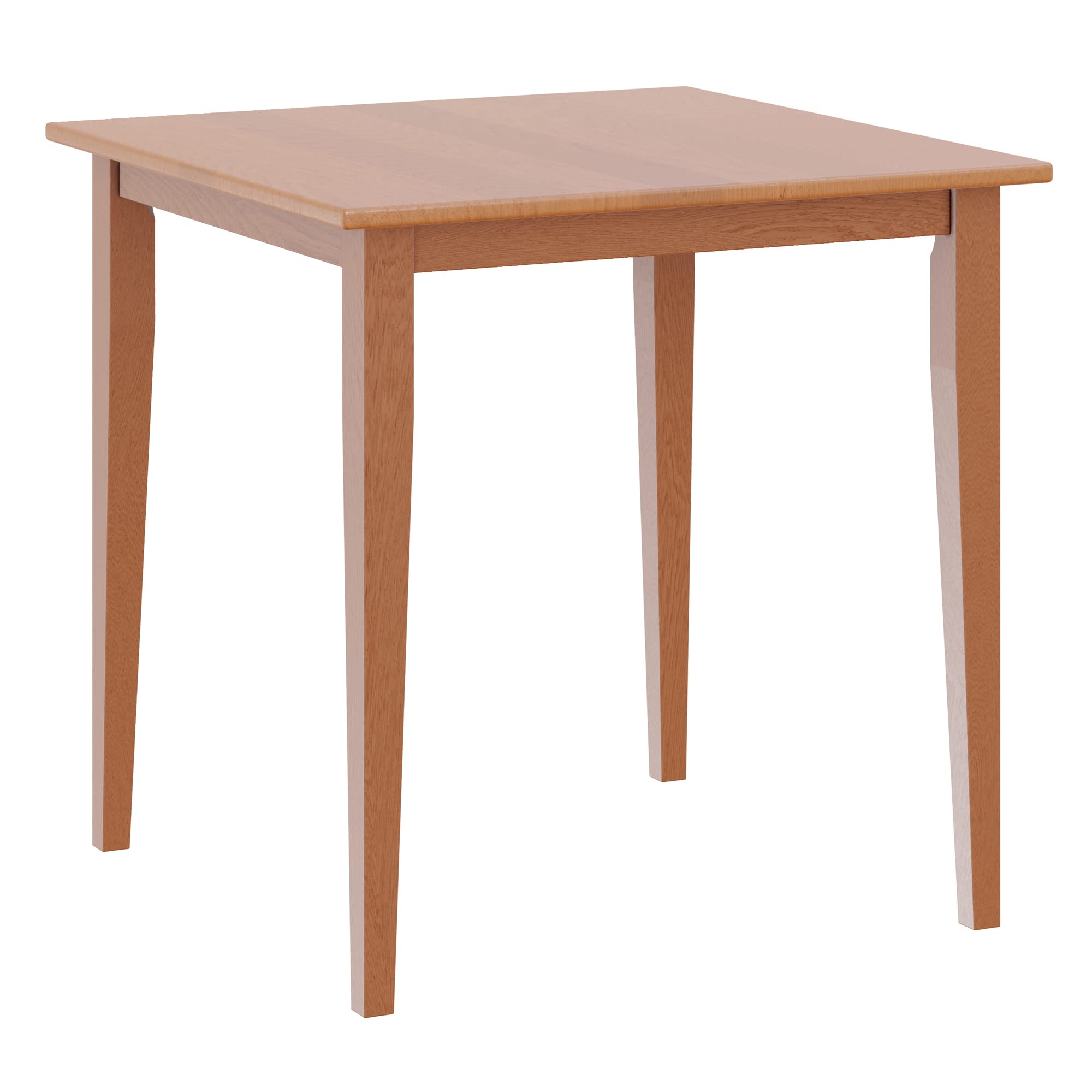
A compact, all-wood square table that brings a warm oak finish and sturdy, everyday functionality to tiny kitchens and apartments.
Why I picked it: Compact solid-wood square that fits tight kitchens without feeling flimsy.
Best for: Two-person dining, studio apartments, breakfast nooks, and multipurpose use.
Affordable, solid-wood option.
Pros
- Solid wood construction, not veneer
- Warm, inviting finish
- Easy, straightforward assembly
- Lightweight enough to move for cleaning
Cons
- Too small to fully tuck four chairs
- Not heirloom-grade fine furniture
My take
I brought this square table into a small apartment where it immediately felt right-sized. The oak finish gives a warm, lived-in look and the tapered legs add subtle style without fuss.
Assembly took no time — the hardware and instructions are simple — and once tightened the table stayed steady. I appreciated that the top is real wood rather than a thin veneer; it feels durable and cleans up well with a damp cloth.
The biggest trade-off is size: I can seat four people, but two chairs tuck in fully and two sit slightly out. For intimate meals or as a multiuse surface for crafts and laptop work, this table is ideal. If you need full four-person seating with chairs pushed in, choose a larger top.
2. Christopher Knight Della Acacia Dining Table – Best for Rustic Dining Room
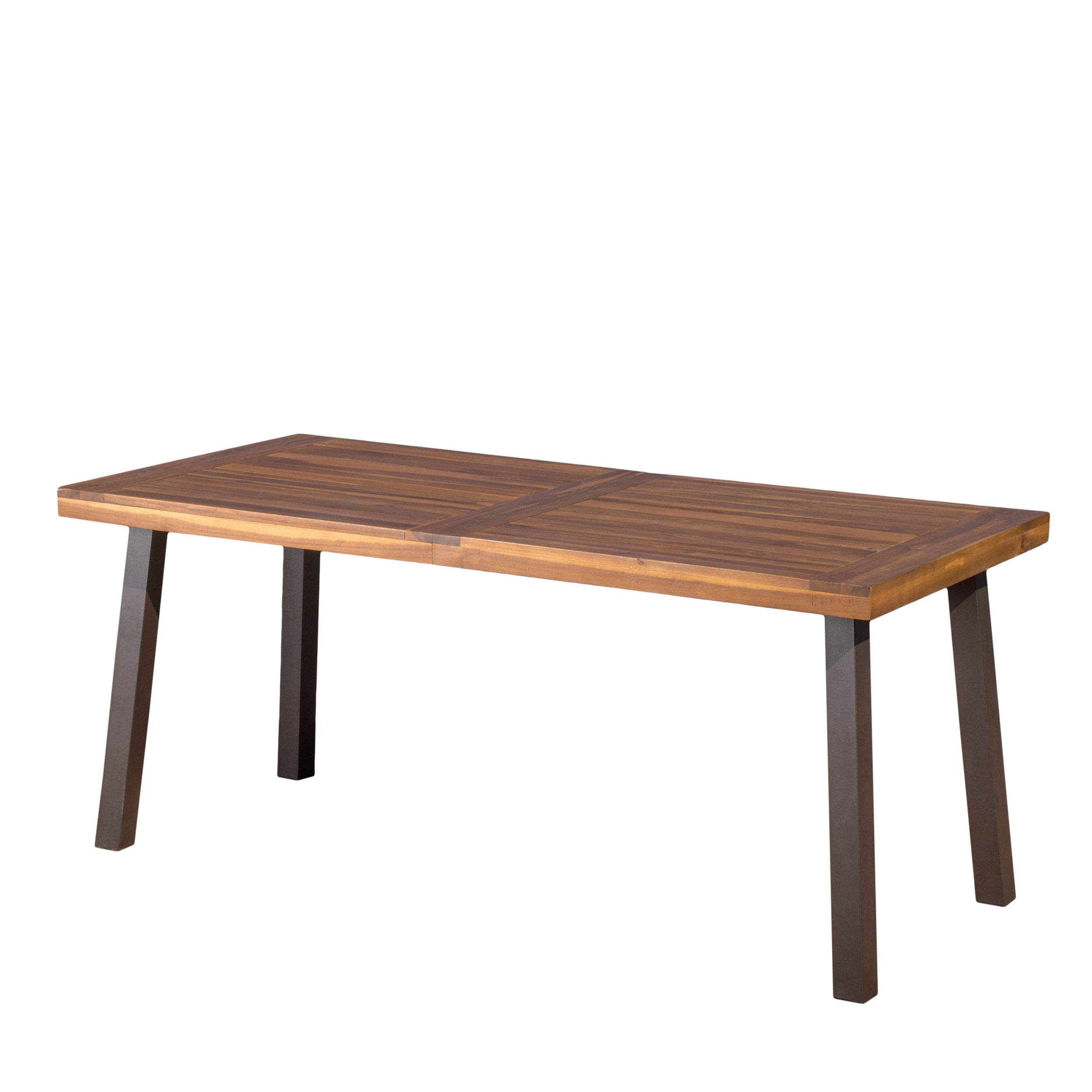
A long, sturdy acacia table with a thick tabletop and rustic metal legs that gives a high-quality farmhouse feel to a dining room.
Why I picked it: Thick acacia top and solid construction deliver an impressive, grounded presence.
Best for: Family dining rooms that need a substantial solid-wood table with farmhouse character.
A solid investment mid-priced solid-wood choice.
Pros
- Very thick acacia tabletop
- Sturdy, heavy construction
- Preassembled slat top halves speed setup
- Farmhouse look with metal legs
Cons
- Heavy to move once assembled
- Minor gaps can appear between slats
My take
Bringing this table into my dining room instantly raised the room’s presence. The tabletop is chunky and substantial — noticeably thicker than many competitors — and the metal legs add the right industrial contrast.
Assembly is mostly straightforward: the top comes in sections that you join, add support braces, and then attach legs. I finished it by myself with some effort; two people make positioning and fastening the heavy parts easier.
The surface is smooth and feels elegant, though I did notice small gaps between the top slats on my unit. They weren’t a functional problem, but if you want a perfectly seamless top you might need to fill or sand them. Overall, this table feels like something that will last.
3. MUUOKY 71-inch Wood Dining Table with Metal Legs – Best for Big Gatherings
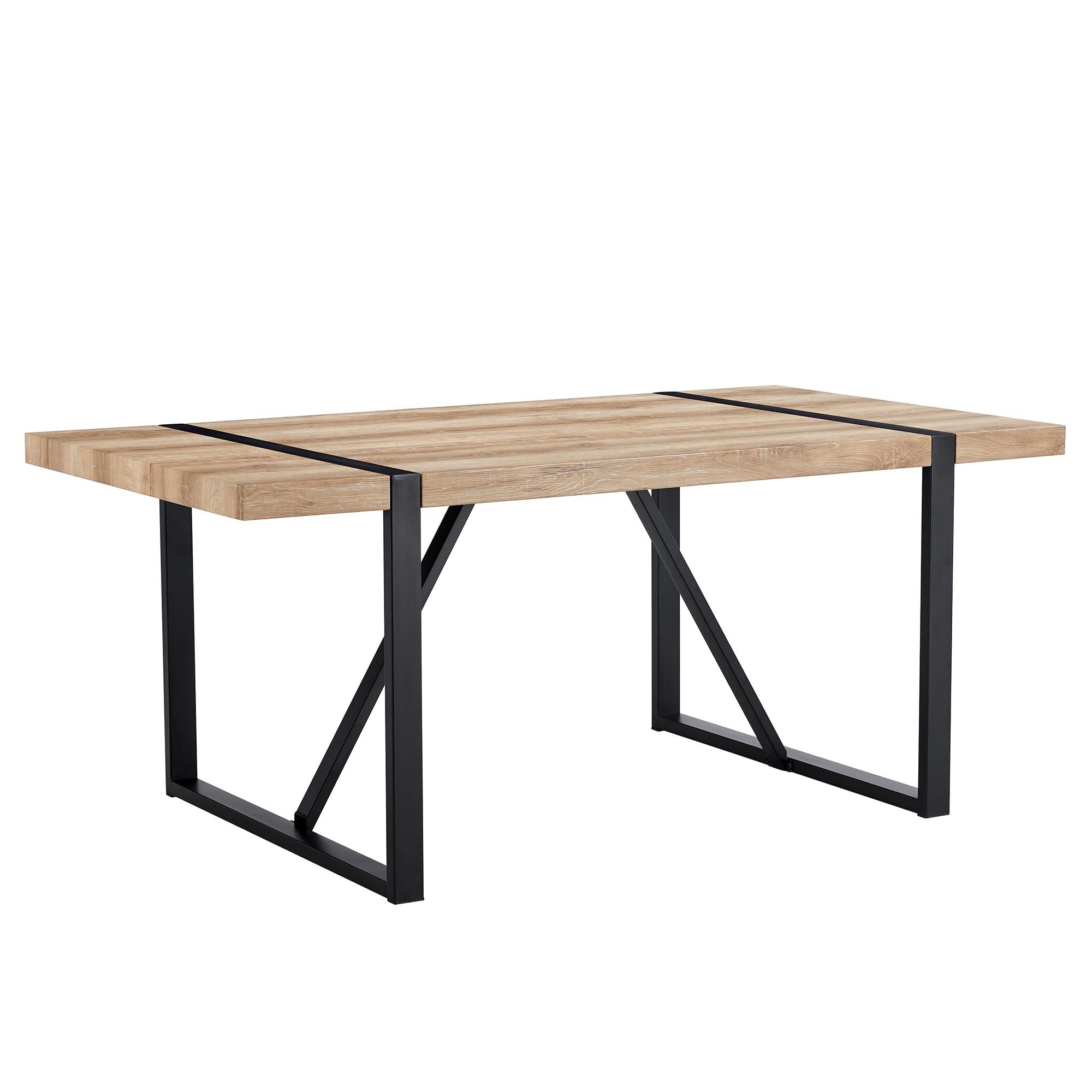
A big, sturdy table built for seating 6–8, with a thick high-density top and black metal legs for an industrial-modern look.
Why I picked it: Large footprint and thick tabletop make it ideal for family dinners and gatherings.
Best for: Homes that need seating for 6–8 and a forgiving, easy-to-clean surface.
Higher-priced, value-focused option for large tables.
Pros
- Seats 6–8 comfortably
- Thick, 2.3-inch tabletop
- Scratch-resistant, easy to clean
- Stable metal leg base
Cons
- Heavy and bulky to maneuver
- Tabletop is engineered board, not solid timber
My take
I set this table up in a busy dining area where it handled meals, homework, and projects without complaint. The thick top gives a solid feel under plates and laptops, and the black metal legs hold everything steady.
Assembly was clear and the pieces fit together well; the table arrived packed carefully in two shipments. Once in place it looks more expensive than it costs and resists everyday marks — a quick wipe removes spills.
Keep in mind the tabletop is a high-density board rather than a single slab of hardwood, so if you’re after a pure solid-wood aesthetic you’ll notice the difference. For durability, seating capacity, and a modern industrial look, this table delivers.
4. Devoko Acacia 6-Person Dining Table – Best Indoor/Outdoor Option
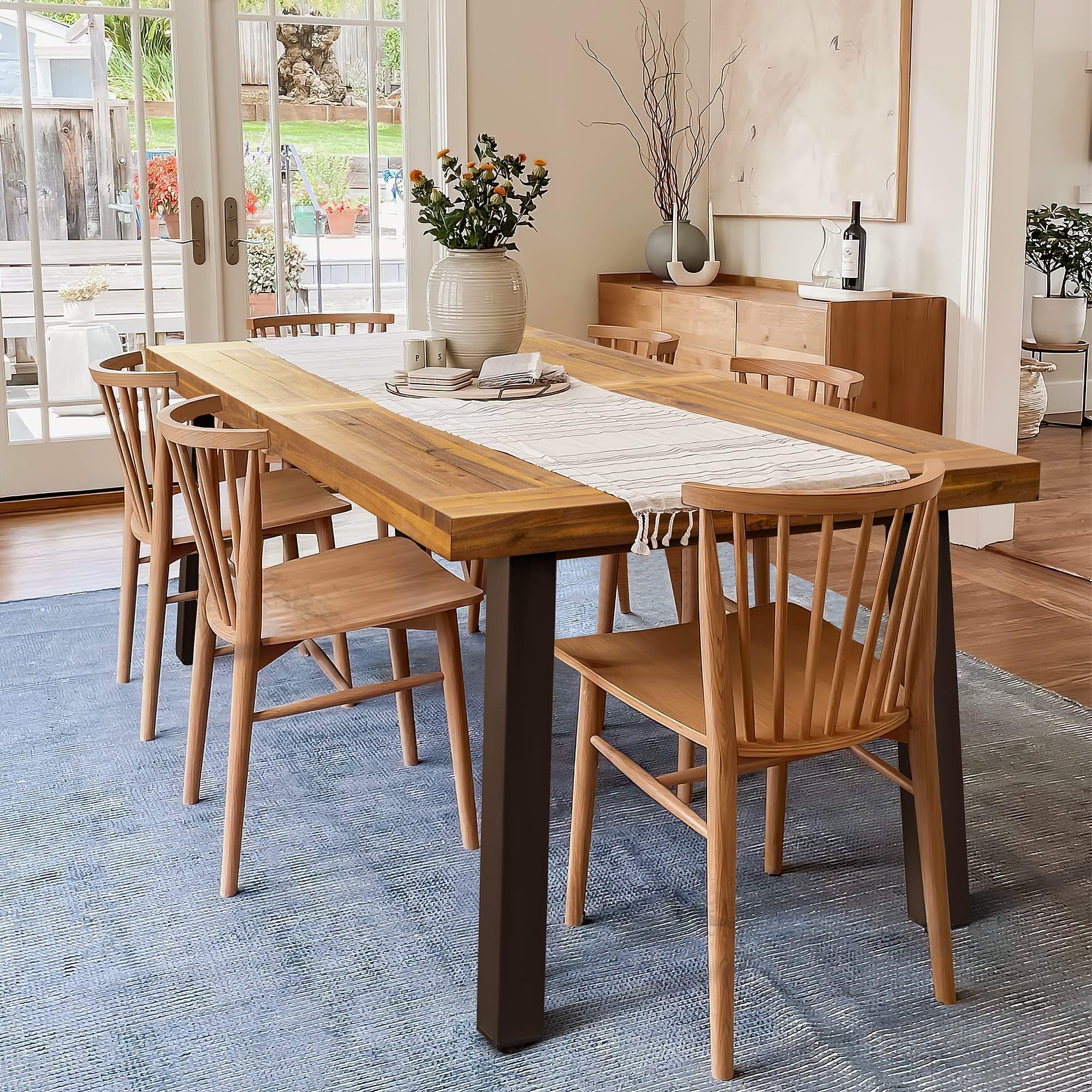
A roomy acacia table with a thick top and painted steel legs designed to work indoors and on covered patios with simple maintenance.
Why I picked it: Solid acacia top and corrosion-resistant legs for flexible indoor/outdoor use.
Best for: Families who want a rustic solid-wood table that can also live on a covered patio.
Affordable solid-acacia alternative.
Pros
- 2.16-inch solid acacia top
- Seats six comfortably
- Rust-resistant painted steel legs
- Quick, one-person assembly
Cons
- Needs oil/covering if left outdoors long-term
- Table is heavy to reposition
My take
I used this table inside and tested its tolerance to humid, semi-outdoor conditions. The acacia top is thick and has a pleasing rustic texture after the sandblast finish, and the steel legs felt robust once bolted tightly.
Assembly was straightforward — I completed it solo in about ten minutes by following the instructions — but the final product is heavy. For outdoor use I followed the care advice: cover or oil the surface periodically to preserve the finish.
If you want a large table with a strong, natural wood presence and fewer worries about leg corrosion, this is a sensible pick that balances looks and practicality.
5. Powell Pewter Round Side Table – Best Accent Side Table
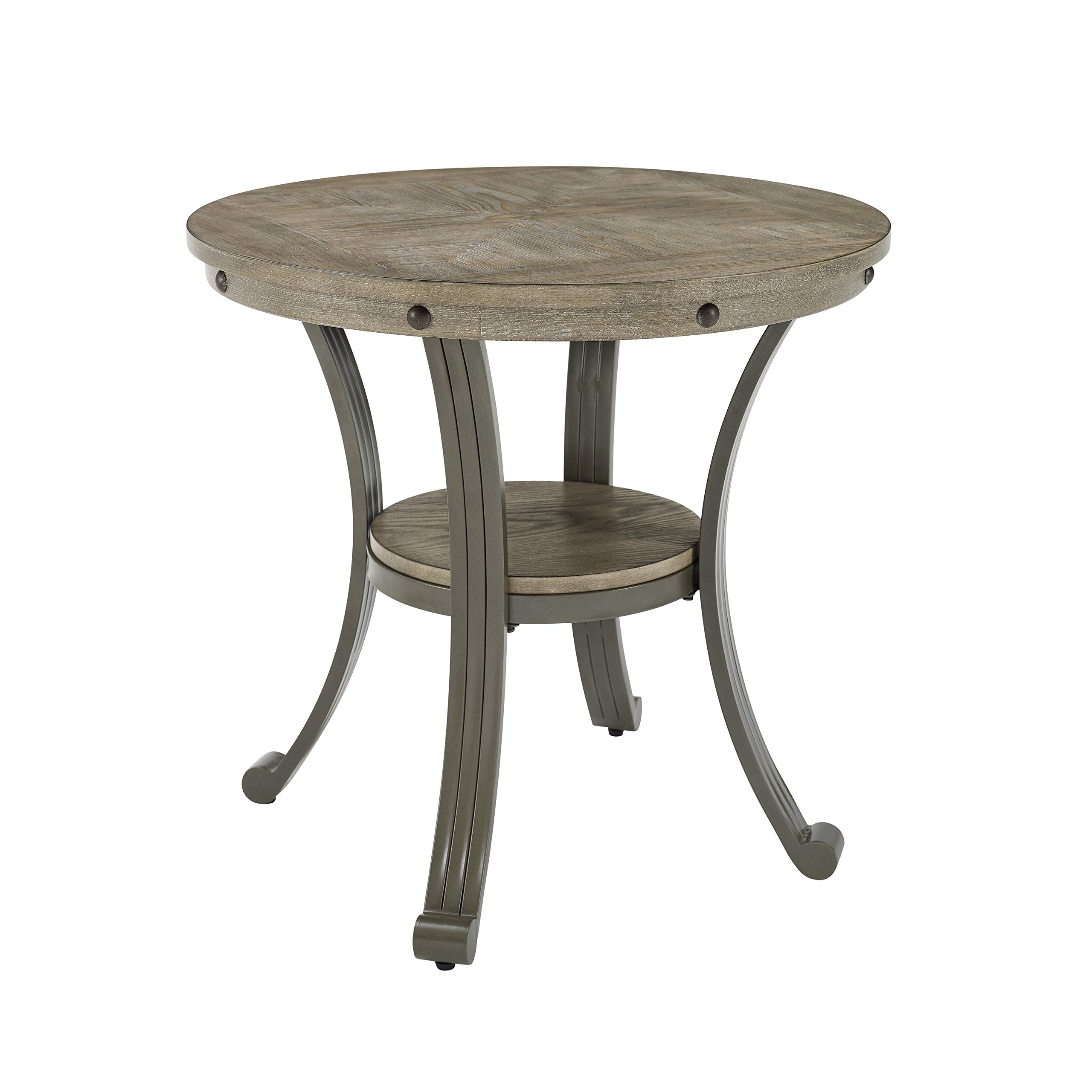
A compact round accent table that mixes rustic woodgrain with a matte black metal base and nailhead detailing for a refined industrial look.
Why I picked it: Stylish end table with useful shelf and solid construction.
Best for: Living rooms and corners where a lamp and a few decor items need a sturdy perch.
Affordable accent table with premium looks.
Pros
- Elegant nailhead trim detailing
- Sturdy matte-black steel base
- Built-in circular shelf for storage
- Simple, fast assembly
Cons
- Top is a veneered finish, not solid wood
- Instructions need careful sequencing
My take
I placed this table beside my sofa and it immediately felt like a more expensive piece. The pewter ash top shows a convincing woodgrain and the nailhead trim adds personality without being fussy.
Assembly took about twenty minutes. A small trick I use is to loosely attach legs and the lower shelf before tightening everything — that sequence prevents binding and keeps the table square.
The metal base is solid and supports heavier lamps and decor comfortably. If you expect a 100-percent solid-wood top, note that the finish is a stylish veneer, but the construction and appearance punch well above the price point.
6. East West Eden Round Pedestal Dining Table – Best Small Round Table
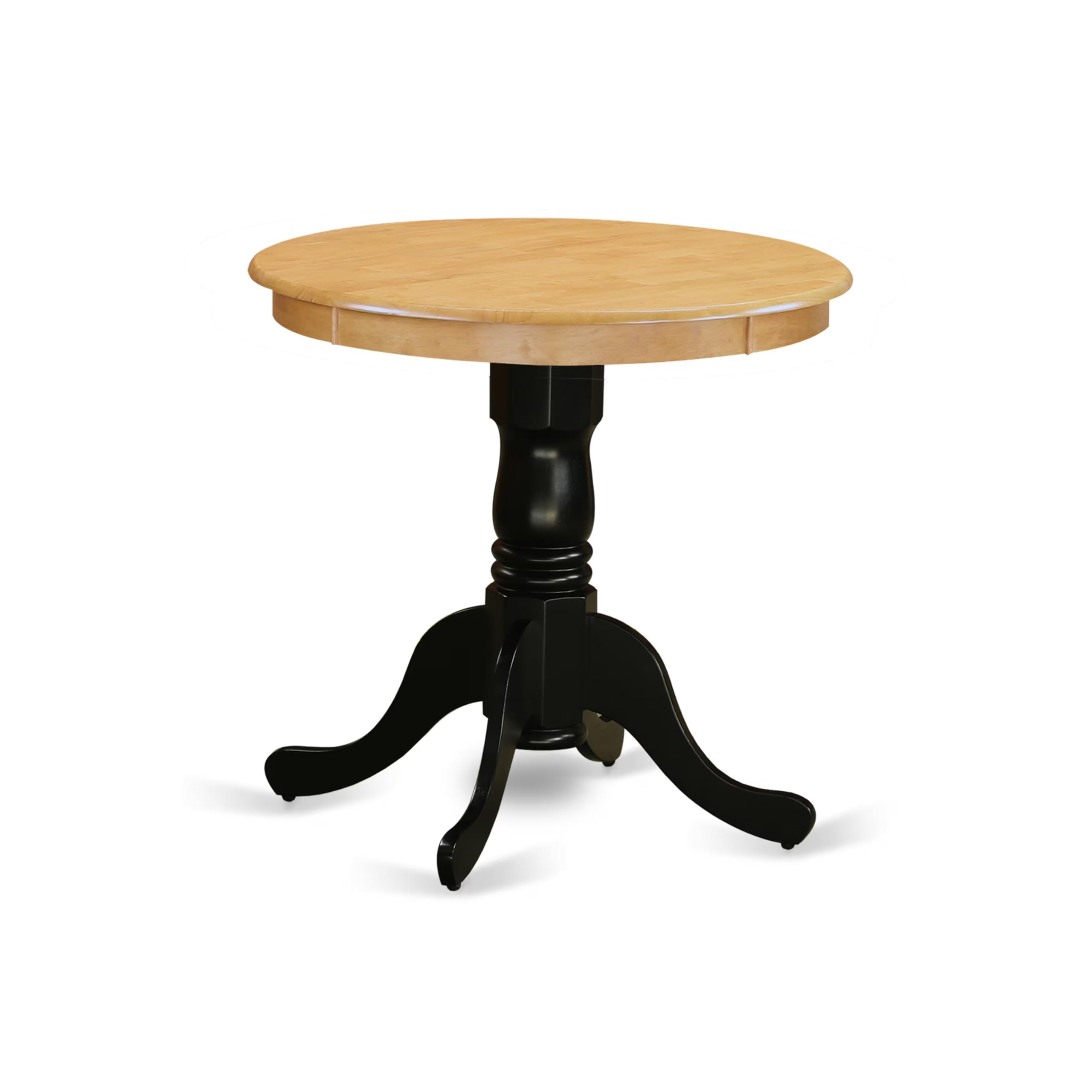
A mid-century inspired 30-inch round table with an oak top and black pedestal base — compact, stable, and perfectly sized for two.
Why I picked it: Compact round footprint with a sturdy pedestal base for small dining areas.
Best for: Small kitchens, breakfast nooks, and two-person dining setups.
Budget-friendly small round table.
Pros
- Compact 30-inch round top
- Solid wood pedestal construction
- Classic mid-century styling
- Quick, straightforward assembly
Cons
- Very small for more than two diners
- Delivered in two boxes can confuse timing
My take
This round pedestal table found a natural home in a tiny kitchen corner where square and rectangular tops felt too bulky. The oak surface paired with a black pedestal gives a clean, mid-century look.
I received the top and base in separate boxes; the second box arrived the day after the first, which was a small surprise but nothing the instructions couldn’t handle. Once assembled it was steady and pleasant for two-person meals and morning coffee.
If you need a compact, stylish table that doesn’t dominate a small space, this one works nicely. Just be realistic about seating — it’s perfect for two, less so for larger groups.
How I Choose a Wood Dining Table
Materials and Construction
I prioritize the tabletop material first. Solid hardwood tops (oak, acacia) handle wear and can be refinished; engineered or high-density boards offer durability and lower cost but won’t sand like a solid slab.
Leg and support construction determines long-term stability. Metal bases add modern industrial strength, while well-built wooden aprons and braces keep large tops flat and steady.
- Solid hardwood: refinishes well, ages nicely.
- Engineered board: scratch-resistant, consistent surface.
- Metal legs: stable, modern look, heavier to move.
- Pedestal bases: better for compact round tables and legroom.
Size, Seating, and Room Fit
I measure the room and include clearance for chairs and circulation. A 30-inch round table suits two people; 48–60 inches accommodates four to six; 70+ inches suits six to eight.
Consider whether chairs tuck fully under the apron — some compact tables don’t allow full tuck-in for four chairs.
- Leave 36 inches clearance from table edge to wall or obstacle.
- Confirm chair width and ability to tuck under the table.
- Think about multipurpose use: craft surface, laptop station, or formal dining.
Finish and Maintenance
I look for finishes that match my lifestyle. Matte or sandblasted surfaces hide scratches better; glossy finishes show spills but wipe clean easily.
Outdoor or semi-outdoor use requires oiling and covers; even treated acacia benefits from periodic maintenance.
- Matte/sandblast: hides wear.
- Sealed/varnish: easy cleanup.
- Outdoor exposure: plan for oiling and covers.
Assembly and Delivery
I factor in how a table ships — heavy tops often arrive in multiple boxes and can require two people to set up. Clear instructions and included hardware speed the process.
If a table is very heavy, I arrange help for final positioning to avoid scratches and strain.
- Check if tabletop arrives in sections.
- Reserve help for heavy pieces.
- Follow loose-then-tighten assembly sequence for best fit.
Value and Longevity
I balance up-front cost against expected lifespan. Solid-wood tables that can be refinished often outvalue cheaper engineered tops over time.
Consider whether the table’s style and finish will still fit your space in five to ten years; classic tones and simple lines age best.
- Solid wood: longer-term value.
- Engineered tops: lower initial cost, good durability.
- Classic styles resist design changes over time.
Frequently Asked Questions
Can I use an acacia table outdoors?
I use acacia tables on covered patios; they tolerate humidity well but I recommend oiling and covering if the piece will see prolonged direct weather to maintain the finish.
How do I decide between a pedestal and four-leg table?
I choose a pedestal for small round tables because it frees up legroom; for rectangular or large tables I prefer four legs or trestles for extra stability.
What do I need to know about assembly?
I always read the hardware list first, loosely fasten legs and braces, then tighten everything in sequence. Heavy tops often require two people to lift and align.
Final Take
My picks cover compact squares, heavy farmhouse slabs, large gathering tables, outdoor-capable acacia, and handy accent pieces so you can match a table to the way you live.
If you need something for daily small-space dining, the Winsome square is a reliable choice; for a dramatic solid-wood centerpiece pick the thick acacia options; and for big dinners the 71-inch industrial table balances size and durability.
Choose the table that fits your room, your maintenance tolerance, and how many people you want to seat — I used these criteria while testing and they made the decision straightforward.
