
I tested a range of wood pellets for smoke flavor, burn consistency, ash, and value. These are the ones I reach for depending on the cook.
I smoke everything from salmon to 12-hour briskets, and the pellets I use determine the final flavor and how much fuss I have to deal with. Over many cooks I evaluated burn consistency, ash production, flavor profile, hopper and auger friendliness, and package convenience.
In this roundup I share the pellets I keep stocked: a go-to all-rounder, economical bulk bags for long cooks, a few blended mixes for balanced flavor, a premium option for when I want top-end results, and a variety pack for experimenting. Everything below comes from hands-on use.
If you want reliable, everyday performance pick a blended pellet that burns clean and has low ash. For long cooks or frequent use choose a bulk bag. Use single-wood pellets (hickory, oak, cherry, alder) when you want a specific smoke character. Don’t use small specialty packs intended for grill tubes in hopper-fed pellet grills—those are made for direct-add or smoker-tube use.
1. Traeger Signature Blend Wood Pellets – Best Overall
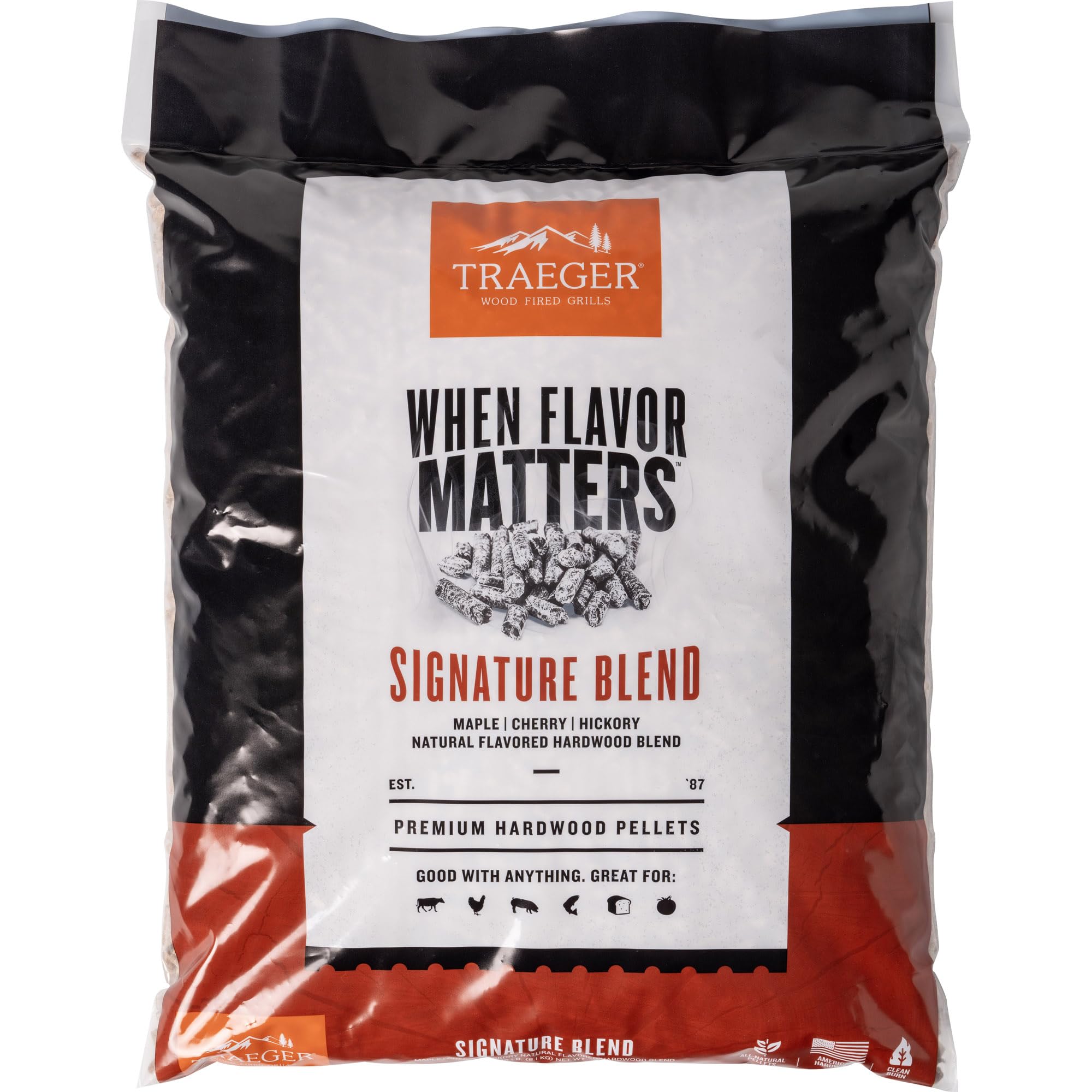
I turn to this Traeger blend when I need a single pellet I can use for everything—from delicate fish to a long brisket.
Why I picked it: Versatile flavor, consistent burn, made in USA.
Best for: Everyday grilling and long smokes where versatility matters.
Solid midrange option with dependable value for a bag this size.
Pros
- Balanced hickory, maple, cherry mix
- Consistent, low-ash burn
- Made in the USA
Cons
- Can be slightly sweet for very bold smoke lovers
- Traeger-branded packaging may be targeted to Traeger users
My take
I use this Signature Blend when I want one pellet that does it all. The hickory gives me backbone on beef, maple adds a gentle sweetness on pork, and cherry delivers that deep color and fruity lift on poultry. Over multiple cooks the bag produced a steady burn and very little ash, which made cleanup easy.
On a 10-hour brisket these pellets held a reliable temperature and left a nice mahogany bark without overpowering the meat. For fish and vegetables I dial back the amount and the mix stays subtle and clean. I also appreciate that Traeger tuned moisture content so the pellets feed and burn without erratic smoke spikes.
2. Bear Mountain Hickory Pellets (40 lb) – Best Value Bulk
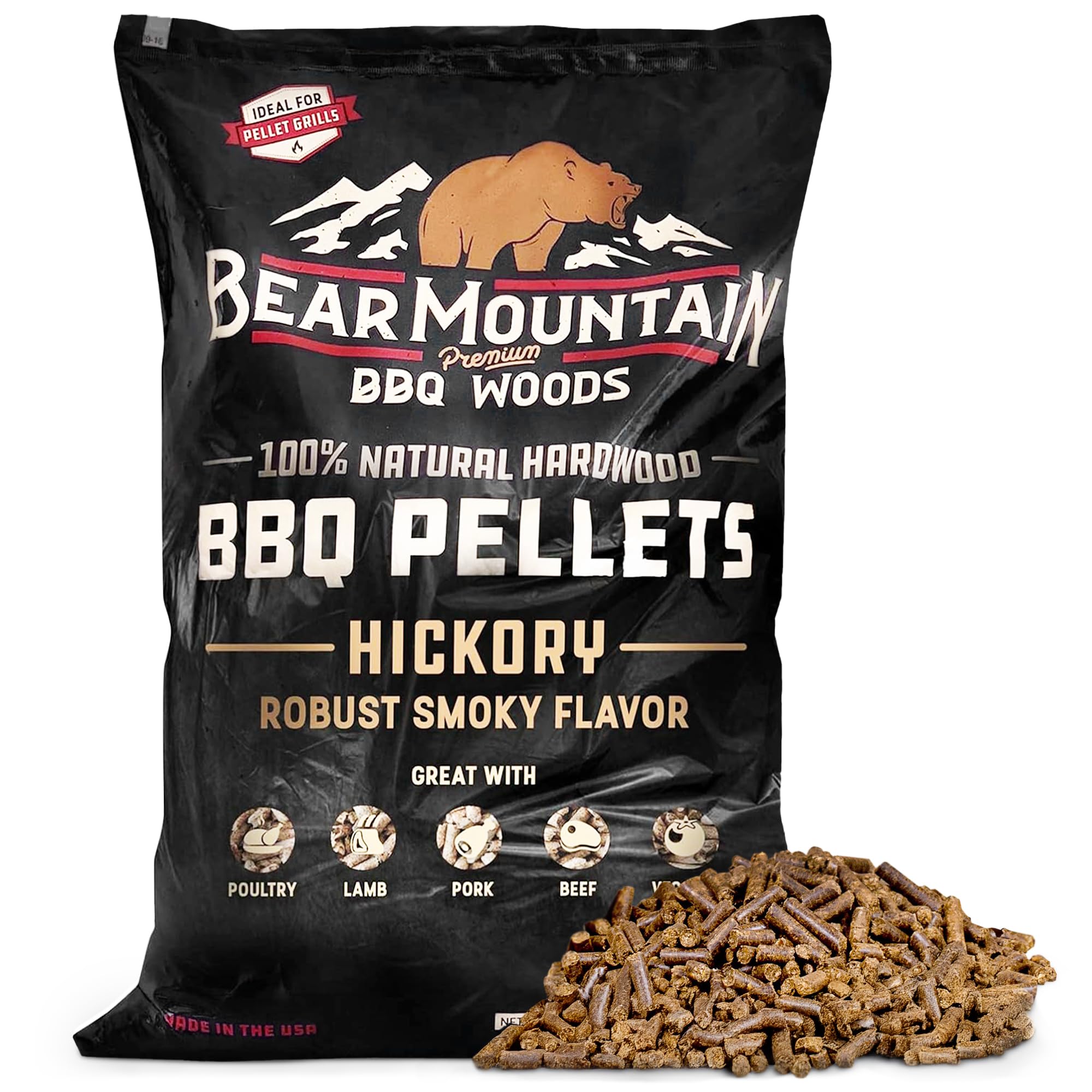
When I need a lot of smoking time at a good value, this 40 lb hickory bag keeps my hopper and backup buckets full.
Why I picked it: Large bag, consistent hickory flavor, low moisture for steady burns.
Best for: Long smokes and frequent grilling where economy matters.
Great bulk value for cooks that burn through pellets quickly.
Pros
- Generous 40 lb supply
- True hickory flavor
- Low moisture, steady burn
Cons
- Flavor can be milder on very long smokes
- Needs dry storage to avoid crumbling
My take
I buy this Bear Mountain 40 lb bag when I’m preparing multi-day or frequent cooks. The low moisture content produces a clean, consistent burn that keeps temperature steady over long sessions, and I saw minimal ash buildup.
The hickory character is present and works well across pork, ribs, and steaks. On very long smokes the smoke penetration was a touch lighter than I expected, but the bag’s convenience and performance make it my go-to when I need bulk fuel.
3. CookinPellets Perfect Mix – Best Mix
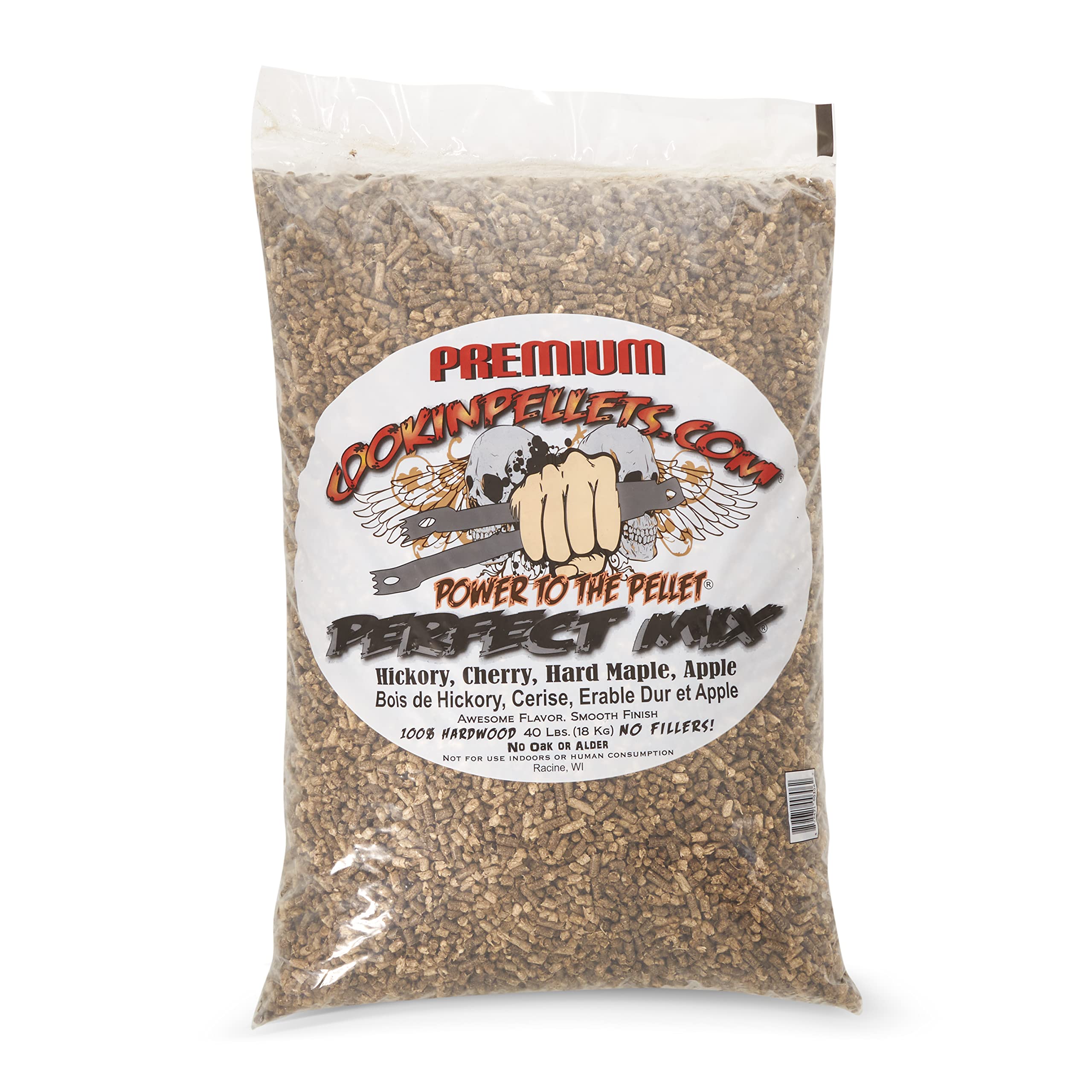
I reach for this four-wood mix when I want a layered, classic BBQ smoke—hickory, cherry, maple, and apple in one bag.
Why I picked it: Complex blended flavor for balanced results.
Best for: Cooks where nuanced smoke and versatility matter.
40 lb format gives good value for a specialty mix.
Pros
- Four-wood flavor complexity
- Consistent heat output
- Feeds hoppers reliably
Cons
- Occasional long pellets can jam some augers
- Slightly variable pellet length
My take
I’ve used this Perfect Mix for years when I want complexity without swapping bags. It gives me rich hickory backbone with fruity cherry and sweet maple/apple highlights—ideal for brisket and pork shoulder.
One caveat: on older or sensitive auger systems I once saw a feed jam caused by a few longer pellets. I solved it by screening the hopper or breaking up long pieces before loading. Aside from that, these pellets burn consistently and deliver excellent, layered smoke.
4. Pit Boss Hickory Blend Pellets – Best for Bold Smoke
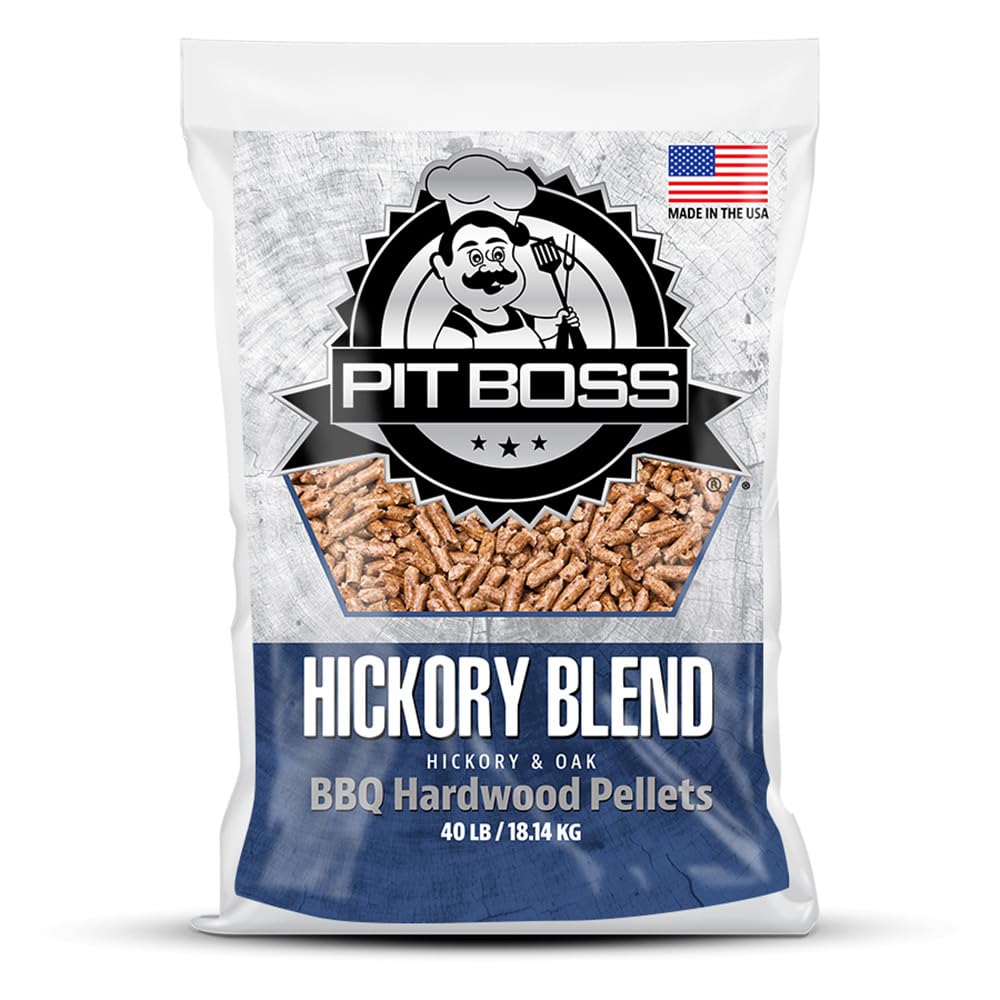
I pull Pit Boss when I want that pronounced, bacon-like smoky character—great for beef and hearty cuts.
Why I picked it: Bold hickory profile and hot, clean burn.
Best for: Brisket, short ribs, and cooks that need assertive smoke.
Economical for bold-flavor cooks.
Pros
- Strong hickory flavor
- Burns hot and clean
- Low ash
Cons
- A bit dusty out of the bag
- May be too bold for delicate foods
My take
I use Pit Boss when I want a strong, smoky result. It produces that robust, bacon-like smoke that elevates brisket and short ribs, and it lights fast and holds temperature well.
The pellets can be a touch dusty right out of the bag, so I sometimes sift or top off my hopper to avoid excess fines. For heavier proteins this blend is exactly what I want—fast heat, steady smoke, and a classic hickory bite.
5. recteq Ultimate Blend Pellets – Best Premium Blend
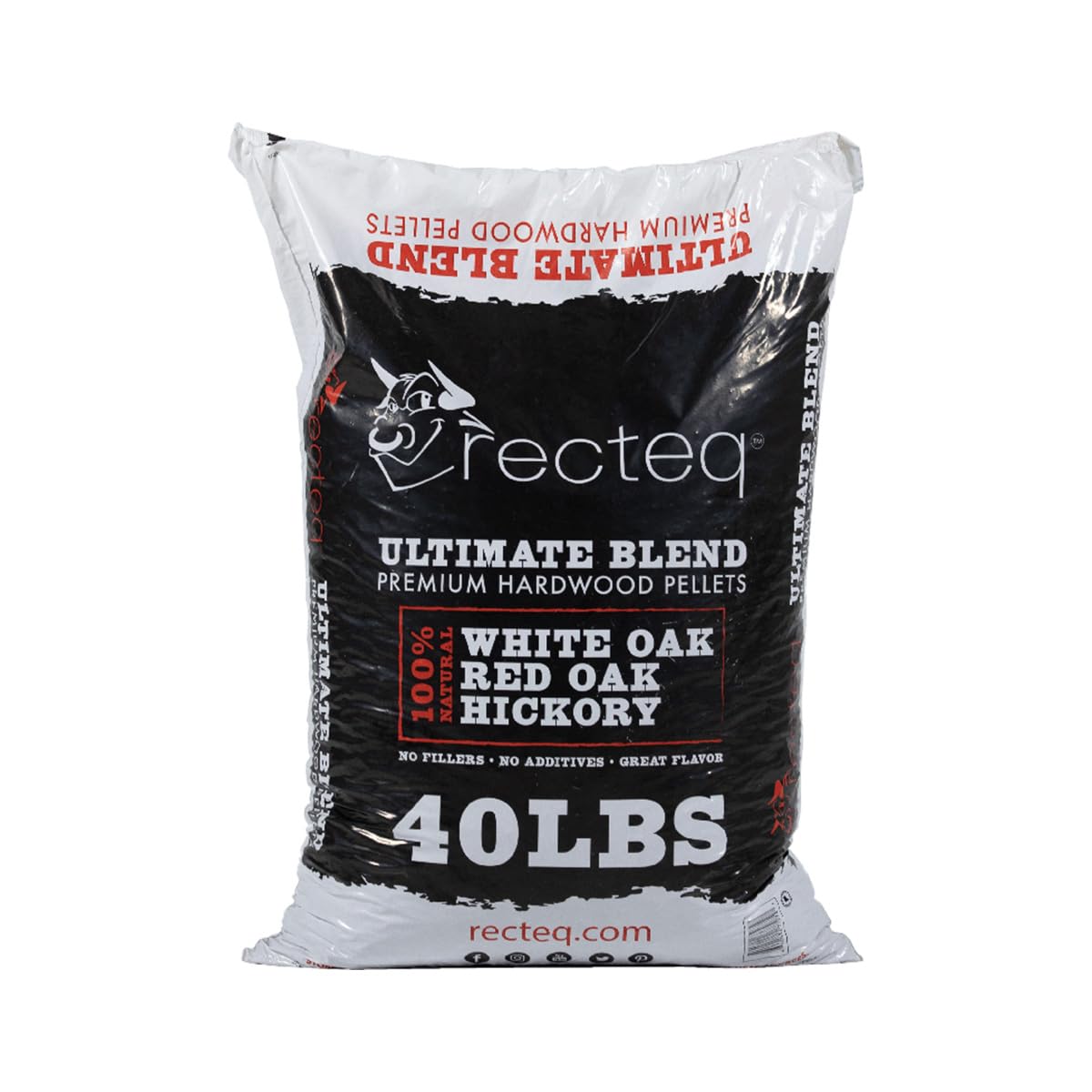
When I want top-tier flavor and long, low-ash burns, this recteq blend is my priority choice for special cooks.
Why I picked it: Premium woods, slow burn, minimal ash.
Best for: Championship-style cooks and finishing high-value meats.
Premium price, premium performance.
Pros
- Rich smoke, low ash
- Slow, long burns
- Consistent start-up
Cons
- Pricier than standard blends
- May be overkill for quick weeknight cooks
My take
I reserve recteq for when I want exceptional smoke control and flavor—its oak and hickory mix gives a deep, refined character that lifts everything from salmon to brisket.
These pellets burn slower and leave less dust, which matters on large smokers where efficiency and minimal refill frequency are priorities. I accept the higher cost because I get cleaner combustion and a fuller smoke profile on demanding cooks.
6. Kona Variety Pack Pellets (8 x 1 lb) – Best Variety Pack
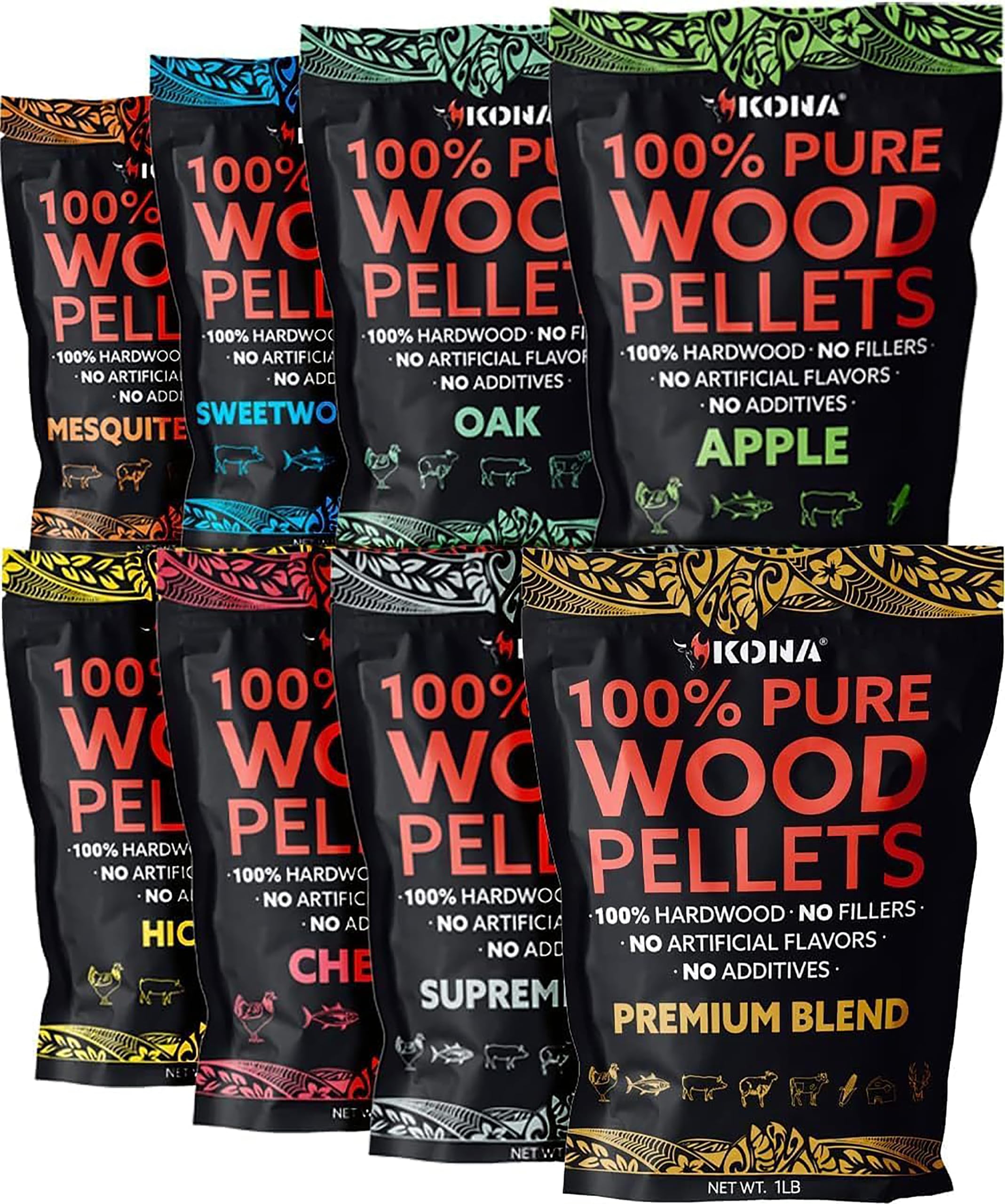
I use Kona’s small resealable packs to experiment with woods and to feed a smoker tube or add directly to charcoal.
Why I picked it: Convenient sampler packs for trying many woods quickly.
Best for: Experimenting on small grills and Ninja Woodfire units.
Smaller, convenient portion sizes—good for sampling.
Pros
- Eight distinct 1 lb flavors
- Resealable, convenient packs
- Ideal for smoker tubes
Cons
- Not intended for hopper-fed pellet grills
- Limited quantity per pack
My take
I appreciate Kona when I want to test which wood I prefer without committing to a large bag. The individual resealable pouches make it simple to try hickory, oak, cherry, apple, mesquite, and blends.
These pellets are great in a smoker tube or sprinkled on charcoal—especially useful on a Ninja Woodfire. They burn hot with a clean smoke and I only need a fraction of a cup per use, so the pack lasts a long while for sampling.
7. Bear Mountain Alder Pellets (20 lb) – Best for Delicate Foods
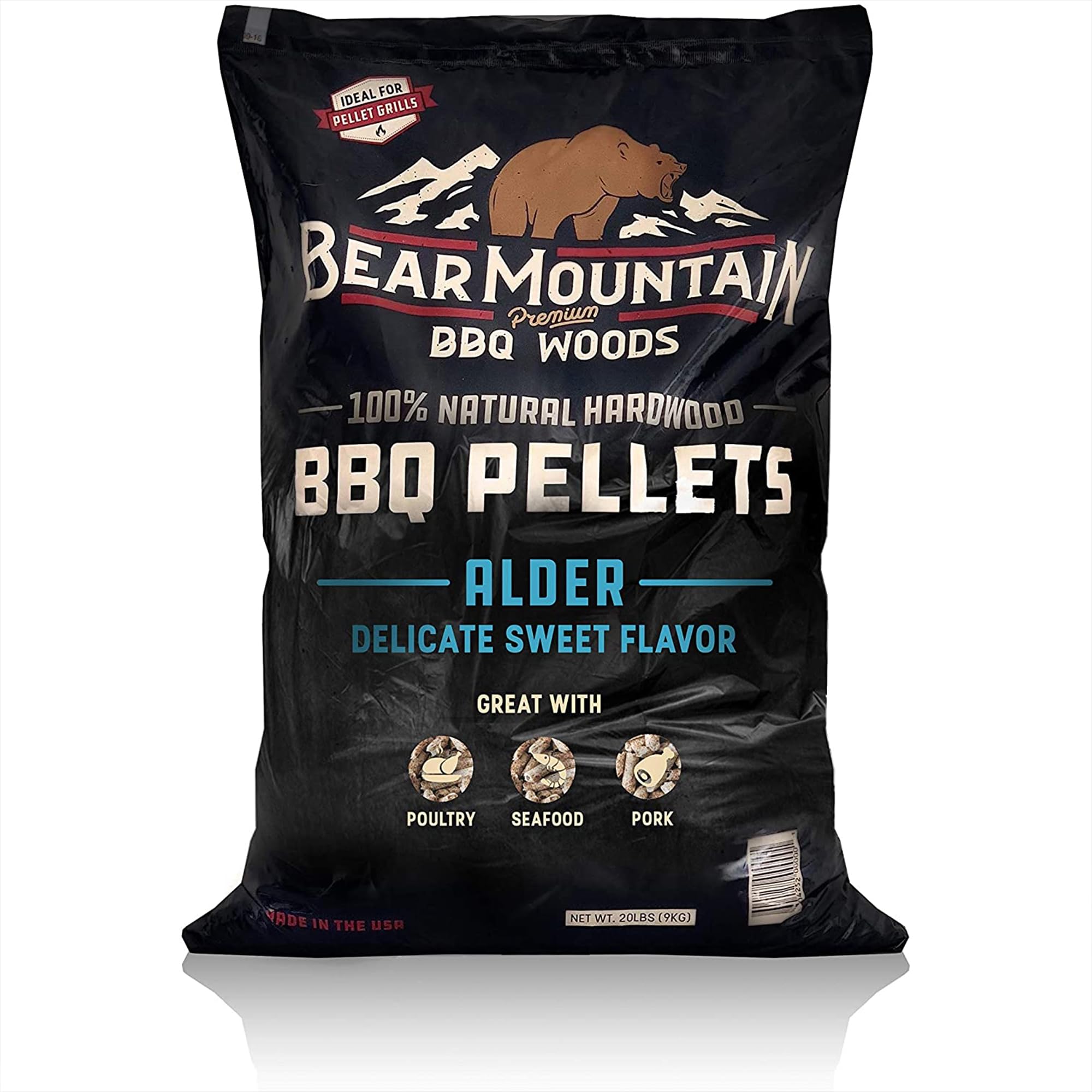
I pick alder when I’m smoking fish or poultry and I want a light, sweet smoke that never overwhelms the food.
Why I picked it: Very mild, clean smoke profile perfect for delicate proteins.
Best for: Fish, poultry, vegetables, and subtle-flavor cooks.
Midrange bulk bag that’s well-suited for gentle smoking.
Pros
- Mild, clean smoke
- Low moisture, reliable burn
- Minimal ash
Cons
- Too subtle for heavy red meats
- Requires dry storage
My take
Alder is my go-to for salmon and light poultry. It imparts a delicate, slightly sweet smoke that enhances texture and flavor without masking the protein.
These Bear Mountain pellets feed smoothly and burn predictably. For cooks where subtlety is the goal—think smoked fish or vegetables—I reach for alder over stronger woods every time.
How I Choose Wood Pellets
Pick the wood to match the food
I match the wood to the protein: hickory and oak for beef and pork, alder and fruit woods for fish and poultry, and cherry or apple when I want a sweeter, fruitier finish.
- Hickory: bold, bacon-like—great for brisket and pork shoulder
- Oak: steady, versatile—works across most meats
- Fruit woods (cherry, apple): sweeter, great for poultry and pork
- Alder: light and neutral—ideal for fish
Consider bag size and storage
I buy large bags if I smoke frequently to keep spare pellets on hand, but I always store them dry in sealed buckets to prevent crumbling and mold.
- 40 lb bags are economical for frequent cooks
- 20 lb bags strike a balance for occasional smokers
- Small resealable packs are perfect for sampling or smoker tubes
- Always keep pellets dry and lifted off concrete floors
Hopper-fed grills vs. smoker tubes
I don’t use small sample packs in hopper-fed pellet grills—those were made for direct addition or smoker tubes. If you have a hopper-fed unit, choose uniform, low-dust pellets designed to feed smoothly.
- Use hopper-friendly pellets for pellet grills
- Use small packs or chips for direct-add or smoker tubes
- Watch for long pellets if your auger is sensitive
Smoke intensity and cook length
I pick slow-burning, low-ash pellets for long smokes and bolder woods for short, intense flavoring. If I want subtle smoke, I use fruit woods or alder and reduce the pellet quantity.
- Long cooks: prioritize slow, stable-burning pellets
- Short cooks: use bolder woods or increase pellet exposure
- Low ash equals easier cleanup and more efficient burning
Frequently Asked Questions
Can I use these pellets in any pellet grill?
In my experience most hopper-fed pellet grills will work with the full-size pellets listed here; Kona’s small 1 lb sampler is designed for smoker tubes and direct-add use rather than hopper-fed systems.
How should I store pellets to keep them usable?
I keep pellets in a dry, airtight bucket or a resealable bag and store them off the ground. Avoid moisture at all costs—wet pellets turn to powder and won’t feed or burn consistently.
Will a blended pellet give me as much flavor as single-wood pellets?
I find blends give a more balanced and versatile smoke that suits a wide range of foods, while single-wood pellets (hickory, oak, alder, fruitwoods) are better when I want a defined, characteristic flavor.
Do pellets make a lot of ash?
I choose pellets labeled low ash when possible. Premium blends I use (like recteq and Traeger) produce noticeably less ash, which makes long cooks cleaner and more efficient.
Final Take
I keep a mix of pellets on hand: a versatile signature blend for everyday use, a bulk hickory for big jobs, a premium blend for special cooks, and a sampler for experimenting. That approach covers every cook I do.
Pick the wood to match the food, store pellets dry, and choose pellet size and packaging based on whether you’ll use a hopper or a smoker tube. Do that and the smoke will do the rest.
