
I tested six pizza peels—wood, bamboo, and aluminum—to find tools that make launching, turning, and serving homemade pizzas easier. Here are the peels I keep reaching for and why.
I make pizza at home a lot, and the right peel changes the whole process—from loading a wet, stretched dough onto a hot stone to pulling a blistered crust out without a single tear.
In this roundup I focused on materials (basswood, bamboo, and anodized aluminum), blade profile, handle reach, and how each peel behaved with semolina or flour-dusted dough. If I were recommending one tool to a regular pizza maker, I’d pick differently than if I was recommending a compact peel for a countertop oven.
Below I walk through the peels I tested, what each one does best, and the trade-offs I ran into in actual kitchen use.
I compared peels by material and use: wooden/bamboo peels are better for launching dough without sticking, while slim aluminum blades excel at sliding under and retrieving a finished pie. I also weighed handle length and storage—long reach keeps me safely away from heat, but collapsible or detachable handles win in small kitchens.
1. New Star Foodservice Wooden Pizza Peel – Best Overall
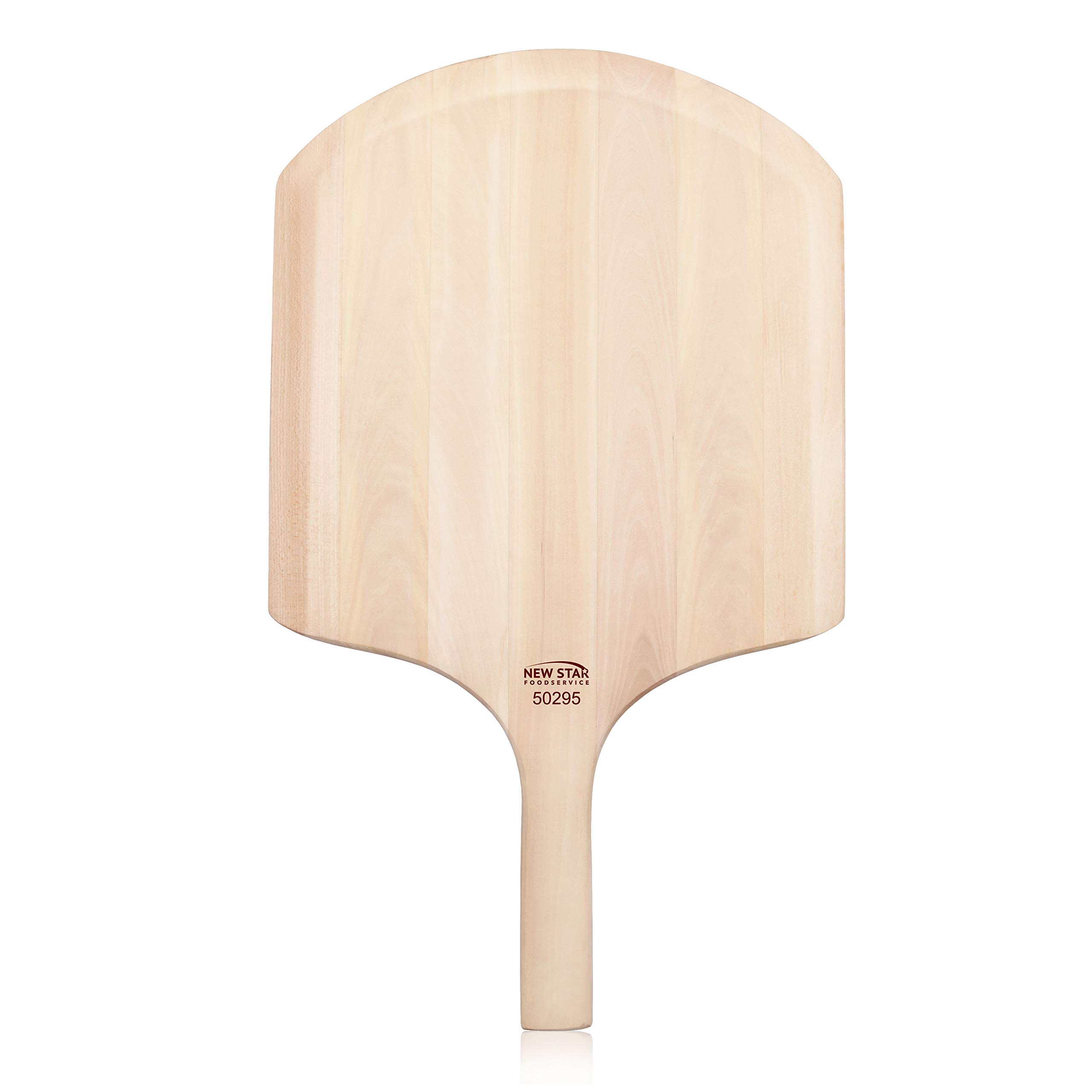
Basswood paddle with a tapered half-inch blade that makes launching and lifting 10–12" pies straightforward.
Why I picked it: Sturdy, lightweight basswood and a tapered blade that slides under dough reliably.
Best for: Home cooks making 10–12" pizzas and anyone who wants a solid all-purpose wooden peel.
A sensible mid-priced wood peel that performs like a pro tool.
Pros
- Durable basswood construction
- Tapered blade for easy launches
- Comfortable leverage with long handle
- Versatile for breads and baked goods
Cons
- Hand-wash only
- Wood will stain over time
My take
This basswood peel became my go-to for launching dough. The half-inch tapered blade slips under a semolina-dusted crust without catching, so I can launch with confidence instead of wrestling a sticky edge.
The board feels light but solid—less prone to cracking than cheap pine peels I’ve used—and the finish won’t leach oils into the dough. I keep one near my pizza stone for quick transfers and another for serving when I want a rustic look.
What I noticed in regular use is that the surface will pick up stains from sauce and char; that’s cosmetic and it cleans easily with a wipe and a quick hand scrub. Overall, it balances durability and handling in a way that makes it useful for both occasional and frequent pizza nights.
2. New Star Aluminum Pizza Peel – Best for Heavy Loads
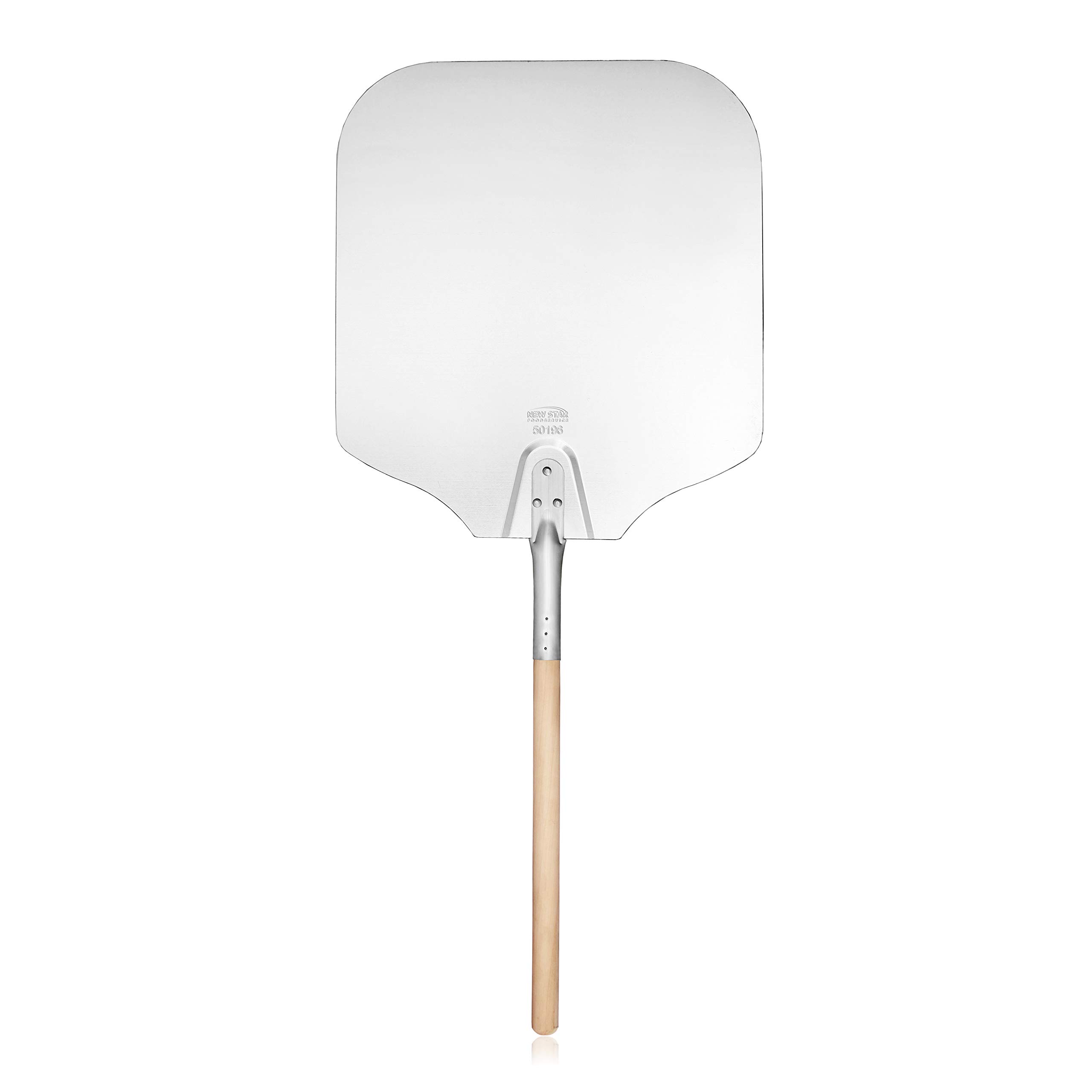
Anodized aluminum blade with triple-rivet basswood handle—slim, easy to clean, and built for repeated use.
Why I picked it: Slim aluminum blade that slides under heavy or well-topped pies and is easy to maintain.
Best for: Frequent pizza makers and anyone retrieving heavy, fully loaded pizzas from a hot oven.
A bit pricier than entry-level wooden peels but built for long-term use.
Pros
- Slim blade slides under food
- Anodized surface resists odors
- Triple-rivet handle attachment
- Easy to clean
Cons
- Less forgiving for launching dough
- Can be trickier to manipulate inside the oven
My take
I turned to this aluminum paddle when my pizzas started carrying heavier toppings. The slim profile gets under pies where a thicker wooden blade struggles, and the anodized finish wipes clean—no absorbed smells or sticky dough residue.
The triple rivets feel secure; after extended use the handle stayed tight and the blade didn’t develop looseness that I’ve seen with cheaper metal paddles.
One caveat: I found it easier to use this peel for retrieval and flipping rather than launching a very wet dough. If you want one tool to both launch and retrieve, I supplemented it with a wooden peel for the initial launch and used the aluminum for pullout and turning.
3. Chicago Brick Oven Aluminum Peel – Best Long Reach
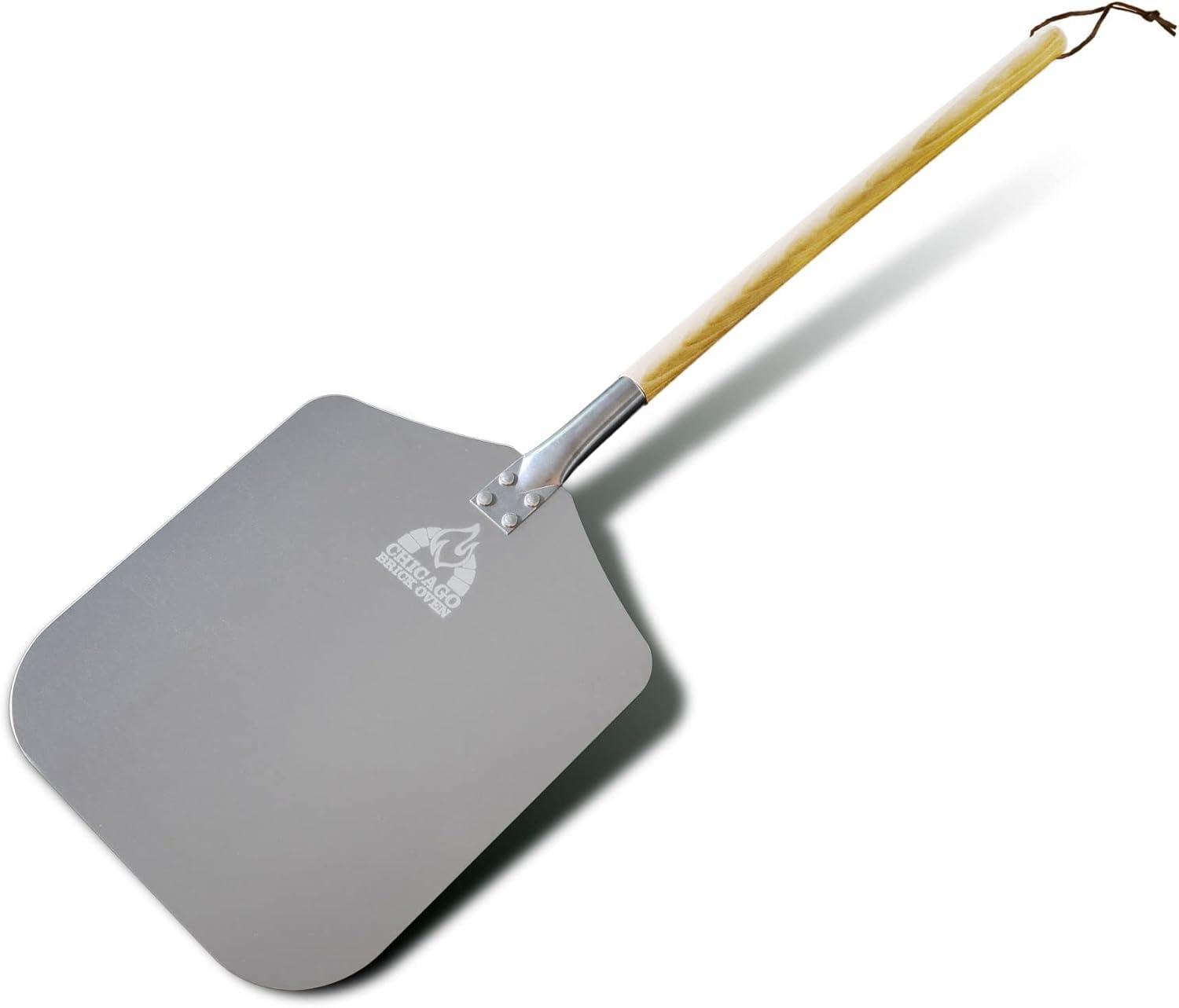
12 x 14" head with a detachable 21" wooden handle for a total reach that keeps hands well away from oven heat.
Why I picked it: Exceptional reach and a detachable handle that makes in-oven turning and storage easy.
Best for: Large or deep ovens, grills, and anyone who needs extra reach for safety.
Good value for the length and detachable handle convenience.
Pros
- Very long overall reach
- Detachable handle for storage
- Rounded corners for safety
- Secure rivet construction
Cons
- 12×14 head may be small for very large pies
- Assembly can feel fiddly at first
My take
The thing I appreciated most was the reach. With the full handle attached I could rotate and nudge pies deep in a hot oven without getting burned, and the sanded wooden handle felt comfortable on long bakes.
The detachable handle makes cleanup and storage simple—unscrew it and the head slides into the sink or a drawer. I also liked the rounded corners and the secure rivet pattern; the head stayed stable every time I used it.
If you make very large pizzas regularly, the 12 x 14" head is a little snug, but for most of my oven work this peel is the safest and most practical tool for turning and maneuvering pies.
4. Old Stone Aluminum Collapsible Peel – Best for Small Kitchens
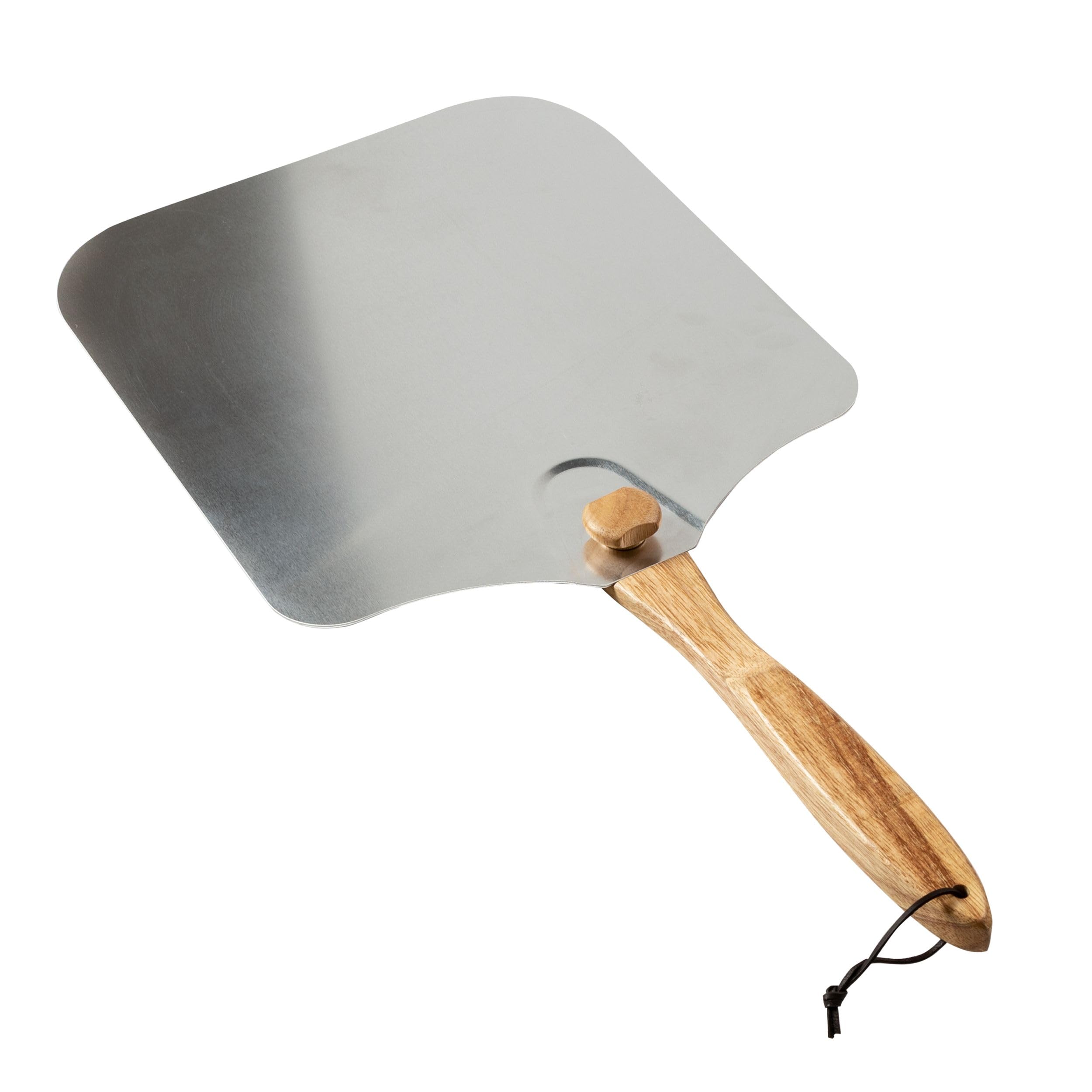
Large 14 x 16" carrying surface with a swivel/collapsible wooden handle that breaks down for compact storage.
Why I picked it: Big surface and a folding handle that solves storage problems in cramped kitchens.
Best for: Family-size pizzas and cooks with limited storage space.
An economical option for a large, easy-to-clean metal peel.
Pros
- Large carrying surface
- Handle folds for storage
- Lightweight aluminum
- Easy to clean
Cons
- Folding mechanism may not lock perfectly
- Metal can show tarnishing
My take
When I need a large platform to carry family-size pies, this peel’s 14 x 16" head makes life easy. It’s surprisingly light for the size and handles big pies without flexing.
The folding handle is the feature that sold me for small-kitchen use—collapse it and the peel tucks into a narrow cabinet space. I did notice the folded position can be a bit finicky on some units, so I keep it folded for storage and extended the handle for use.
Cleaning is straightforward; a quick wipe and towel dry keeps it ready. For the price and the surface area, it’s the most practical large aluminum peel I’ve owned.
5. Premium Bamboo Pizza Peel (XL) – Best for Serving
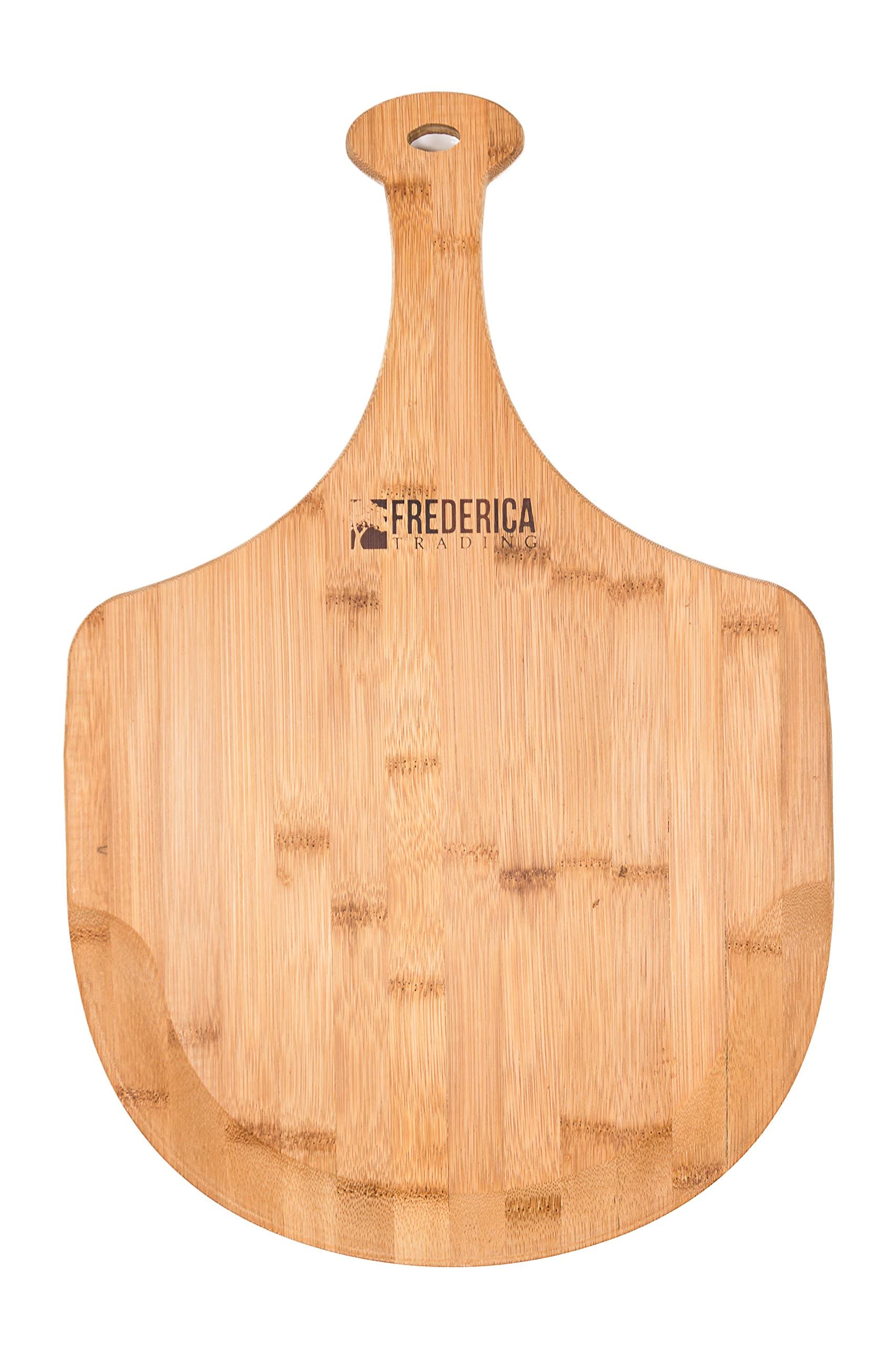
Large bamboo paddle with an attractive finish that doubles as a serving board and cutting surface.
Why I picked it: Extra-large surface and durable bamboo make it great for prepping, serving, and presentation.
Best for: Serving pizzas, cutting, and anyone who wants a multi-use paddle that looks good on the table.
Midrange pick that trades off some oven reach for presentation and stability.
Pros
- Attractive, stable bamboo
- Large surface for bigger pizzas
- Multipurpose as serving board
- Dimensionally stable, resists warping
Cons
- Not dishwasher safe
- Handle may need light sanding
My take
I use this XL bamboo peel more as a finishing and serving tool than a long-reach oven paddle. The 13.5" surface gives me room to top and slide a pizza without crowding, and it looks great on the table.
The bamboo is hard and dimensionally stable—unlike softer woods it hasn’t warped or cracked after repeated washes. I did sand the handle a touch when I first unboxed it to remove a minor rough spot, and after that it’s been trouble-free.
Because it’s not dishwasher safe I treat it like any quality wooden board—quick scrub, rinse, and towel dry—and it stays in excellent shape. If you want a single tool that can prep, launch smaller pies, and double as a presentation board, this one fits the bill.
6. HANS GRILL Bamboo Pizza Peel 12 Inch – Best Compact
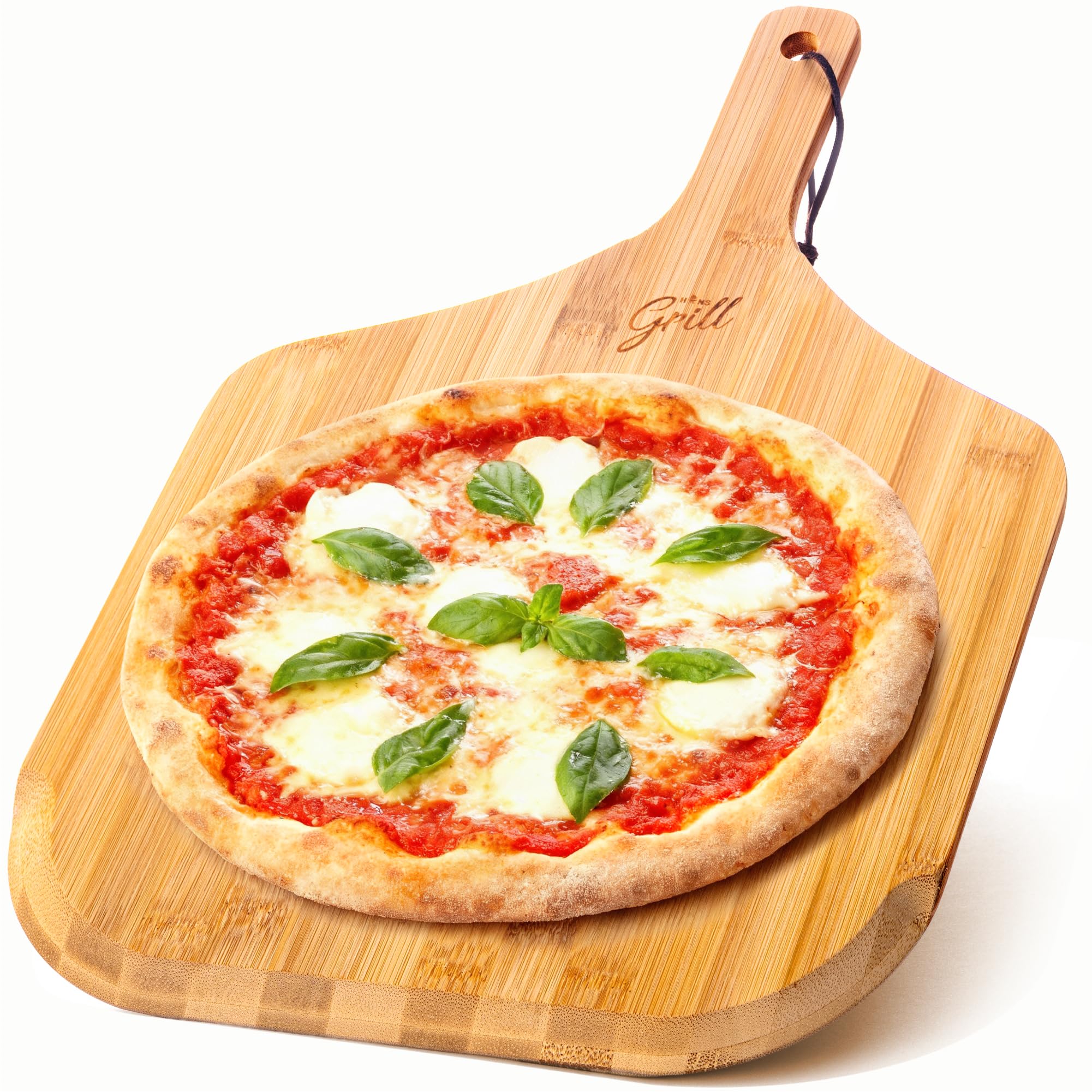
Restaurant-grade 12" bamboo peel with a tapered edge and a comfortable handle—designed for home ovens and countertop units.
Why I picked it: Restaurant-style taper and compact size make it ideal for home ovens and smaller pizza stones.
Best for: Small home ovens, countertop pizza ovens, and cooks who want a tidy, lightweight tool.
Budget-friendly with solid restaurant-style construction.
Pros
- Gently tapered edge for easy launches
- Comfortable long handle
- Naturally hygienic bamboo
- Compact and easy to store
Cons
- Too small for very large pizzas
- Requires drying after wash
My take
I reached for this 12" bamboo peel when using my countertop pizza oven and was impressed by how reliably it slid under the dough. The tapered edge reduces drag, so a light dusting of semolina is all I need for consistent launches.
The handle provides good clearance from heat and feels comfortable even on repeated bakes. Bamboo’s natural resistance to odors and its tighter grain make it a cleaner-feeling alternative to softer woods.
For folks who bake smaller pies or use compact pizza ovens, this peel gives professional-feeling control without being bulky. It’s a simple, dependable tool that I use almost every pizza night.
How I Choose a Pizza Peel
Material: Wood/Bamboo vs Aluminum
I pick wooden or bamboo peels for launching dough because their slightly porous surfaces grip flour and semolina, preventing the dough from slipping. I turn to aluminum for retrieving or sliding under a finished pie thanks to its thin, slick blade.
If you want one tool to do both, expect trade-offs: a thicker wood is more forgiving for launch but bulkier for retrieval; a thin aluminum is great for sliding but can let a wet dough fold if you aren’t careful.
- Wood/Bamboo: Best for launching; attractive for serving.
- Aluminum: Best for retrieval and in-oven maneuvering; easy to clean.
Size and Reach
I always match the peel head size to my stone or oven. Too small and toppings hang off; too large and the peel becomes unwieldy.
Handle length matters for safety. I use long handles for deep or very hot ovens and collapsible or detachable handles for storage.
- Head size: pick a bit larger than your pizza diameter.
- Handle: long for safety, detachable/folding for small kitchens.
Edge Profile and Launching
A tapered or beveled edge is non-negotiable for me; it makes sliding under dough effortless. I use semolina or cornmeal to help the pizza break free from the peel.
For metal peels, I dust and practice quick launches; for wood, I keep the surface dry and dusted with flour or semolina.
- Tapered edge helps with clean launches.
- Semolina or cornmeal reduces sticking.
Care & Longevity
I hand-wash all wooden and bamboo peels and dry them immediately to avoid warping. Aluminum peels tolerate a more vigorous clean but still do best when wiped and dried promptly.
If a wooden handle feels rough, a quick pass with fine sandpaper smooths it right out.
- Wood/Bamboo: hand wash, dry immediately.
- Aluminum: wipe clean; avoid abrasive chemicals.
Frequently Asked Questions
Do I need both a wooden and an aluminum peel?
In my experience, having both covers all bases: a wooden or bamboo peel for launching and an aluminum peel for retrieving and flipping. If you want one tool only, pick based on which task you do more—launching (wood) or retrieving (aluminum).
How do I prevent dough from sticking to the peel?
I dust the peel with semolina or cornmeal and keep the surface dry. For wetter doughs I use a well-floured peel and work quickly so the dough doesn’t hydrate the surface and stick.
What’s the best way to care for wooden and bamboo peels?
I hand-wash with warm soapy water, rinse, and towel dry immediately. Every few months I condition the wood lightly with a food-safe oil if it looks dry. I avoid the dishwasher to prevent cracking or warping.
Final Take
I keep different peels for different jobs: a basswood paddle for launching, an aluminum blade for retrieval, and a compact bamboo peel for small ovens and serving.
If you want one recommendation to start with, choose the tool that matches your oven and pizza size—launch-focused cooks will prefer a wooden or bamboo peel, while those handling heavy, loaded pies will appreciate a slim aluminum blade.
Whichever peel you choose, practice launching with a dusting of semolina and you’ll be getting dinner into and out of the oven with far fewer dramas.
