
I tested eight yarn bags and backpacks so you can grab-and-go with organized projects. I focus on capacity, pockets, yarn-feeding options, and real portability to help you pick the right storage system.
I carry yarn projects everywhere—from the couch to planes—so I evaluated bags for how well they protect yarn, prevent tangles, and make working on the go painless.
In this roundup I compare upright project totes, divided organizers, roomy backpacks, and compact project pouches. I prioritized organization, durability, and how easy each bag makes feeding yarn while I work.
I tested each bag for real-world use: loading skeins, feeding yarn through grommets or top openings, carrying comfort, and whether the bag kept tools and projects separated without snagging yarn.
1. CRAFTISS Yarn Organizer Bag – Best Overall
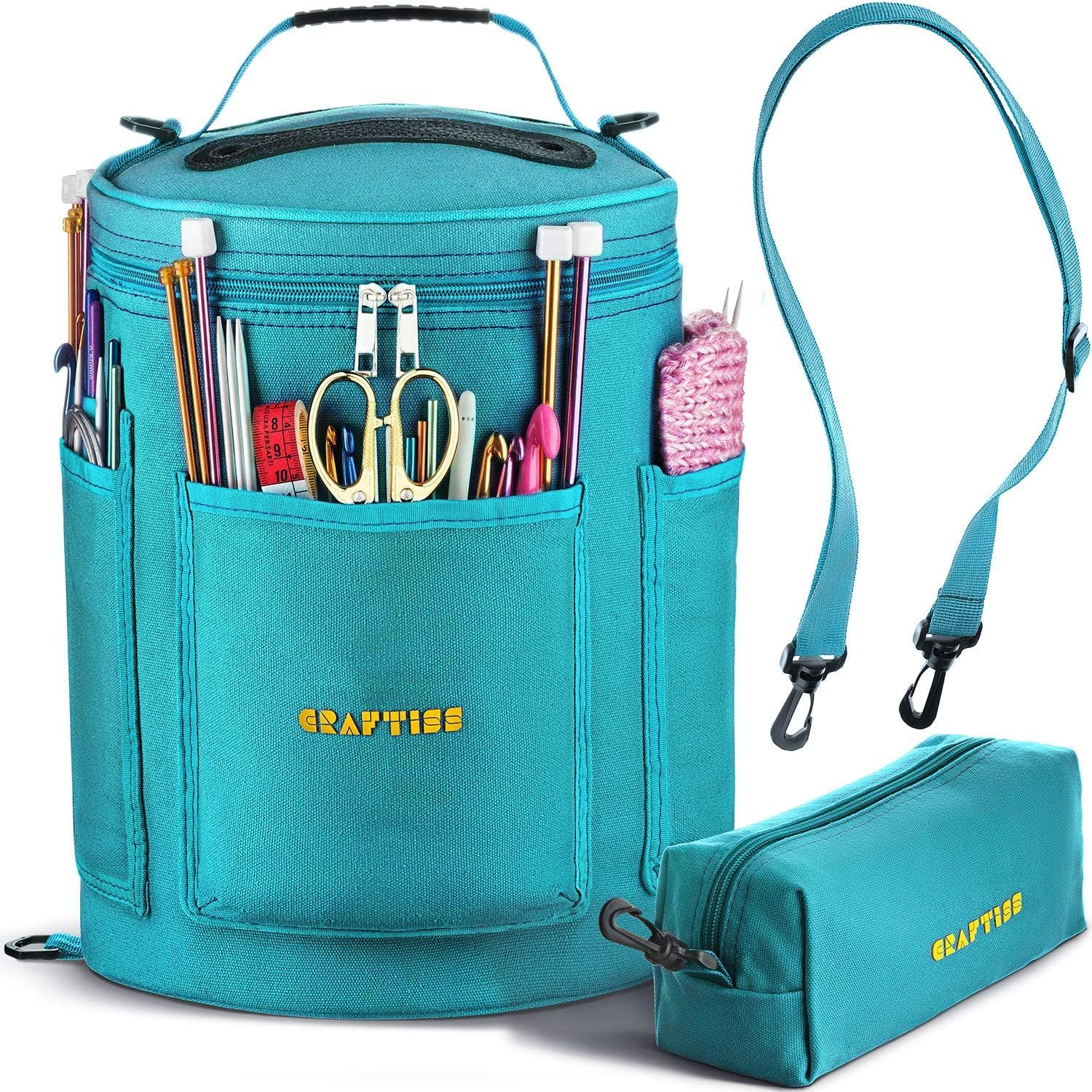
A sturdy canvas organizer that stands upright, holds multiple projects, and includes a removable divider plus an accessory pouch.
Why I picked it: I liked that it stands upright and has a removable divider for 2–4 projects.
Best for: Knitters and crocheters who juggle multiple small-to-medium projects.
Affordable canvas option with bonus patterns and a warranty.
Pros
- Stands upright for easy yarn feeding
- Removable divider for 2–4 projects
- Three deep external pockets
- Durable heavy cotton canvas
- Includes zippered accessory case
Cons
- Not ideal for very large sweater-sized skeins
- Cylindrical shape limits flattened storage
My take
I reach for this bag when I want an all-around dependable project holder. The canvas feels solid, the zipper and stitching held up after regular use, and there was no chemical smell out of the package.
The removable divider is useful: I can separate colorways or collapse the sections to use the whole interior for a single large project. The three tall exterior pockets keep hooks, needles, and scissors upright and easy to grab.
The bag’s cylindrical shape means it feeds yarn smoothly from the top slots while standing on my lap. It’s roomy enough for several medium skeins, and the included accessory pouch keeps notions from wandering around the main compartment.
2. Teamoy Knitting Bag – Best for Separating Colors
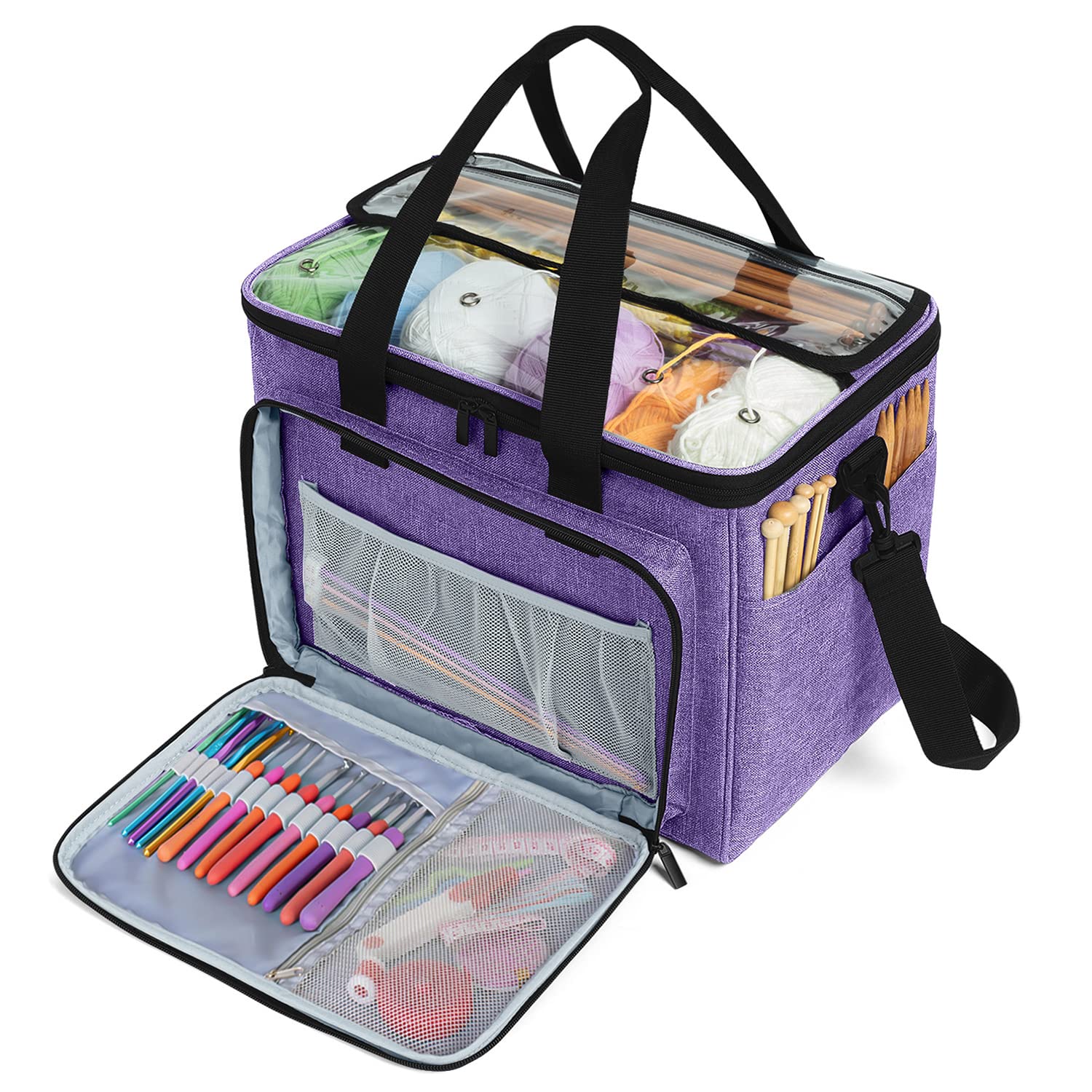
A wide, divided tote with a clear top and six bottom-to-top compartments that prevent tangles and let me feed multiple yarns at once.
Why I picked it: I appreciated the six sewn-through compartments and clear PVC top for organized multi-color work.
Best for: Projects that use many colors or several skeins at once.
Mid-priced organizer with patent-style internal divisions.
Pros
- Six full-depth compartments
- Clear PVC top for instant visibility
- Multiple yarn-feed holes
- Handles plus removable shoulder strap
- Magnet snap and zipper closure
Cons
- PVC top can crease with heavy packing
- Larger footprint for small projects
My take
When I need strict separation—striping, colorwork, or multiple projects—this bag’s six compartments are a game-changer. The dividers go to the bottom, so nothing rolls into neighboring sections.
The flexible clear lid makes it fast to see what’s inside without opening the bag, and the matching top holes let me feed yarn through while keeping the rest covered. I like the half-open top for quickly tucking a WIP inside.
The nylon construction feels light yet sturdy, and the magnet snap plus two-way zipper keeps pets and dust out when I’m traveling with a project.
3. Leudes Knitting Backpack – Best Backpack
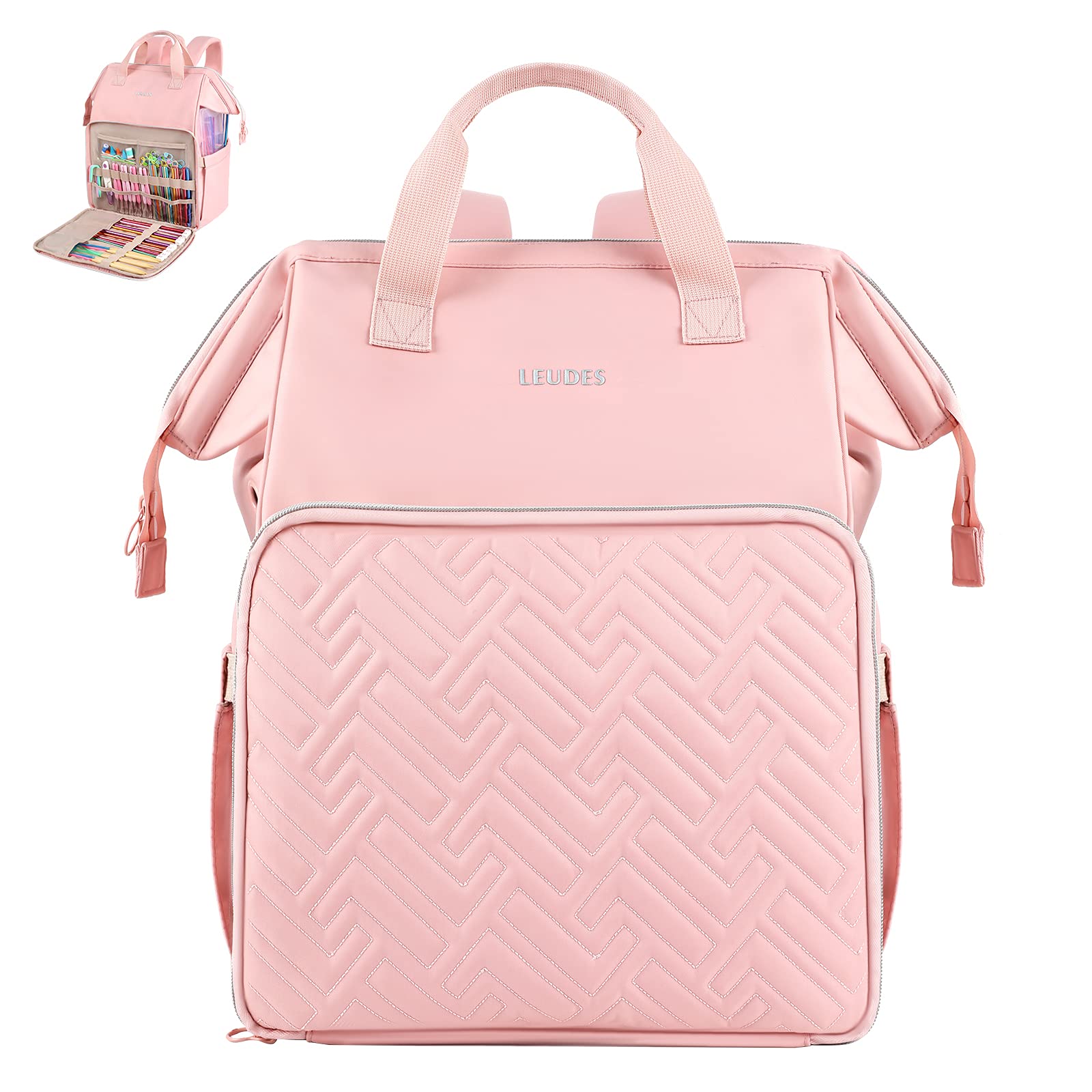
A roomy, structured backpack built for travel: steel frame, padded 'S' curve straps, and dozens of pockets for long projects.
Why I picked it: I wanted a hands-free option with big capacity and a frame that keeps its shape.
Best for: Travelers and makers who carry large projects and tools hands-free.
Mid-priced backpack with travel-friendly features.
Pros
- Large 25 L capacity
- Steel frame keeps shape
- Padded S-curve shoulder straps
- Multiple inner and outer pockets
- Can hold up to ~30 small skeins
Cons
- Bulky for quick errands
- Takes more space when not full
My take
I use this backpack when I need to carry sweaters, blankets, or a stash for a weekend away. The 25-liter capacity handles many skeins and the internal six pockets help keep colors separated to avoid tangles.
The padded straps are genuinely comfortable for longer wear, and the frame means I can open the wide mouth like a doctor bag to pack or retrieve tools quickly. I’ve also found pockets sized for an iPad or patterns, which is handy when I follow tutorials.
If you prefer hands-free travel and prioritize capacity over compactness, this backpack is the most practical option I tested.
4. Coopay Yarn Tote – Best Value Tote
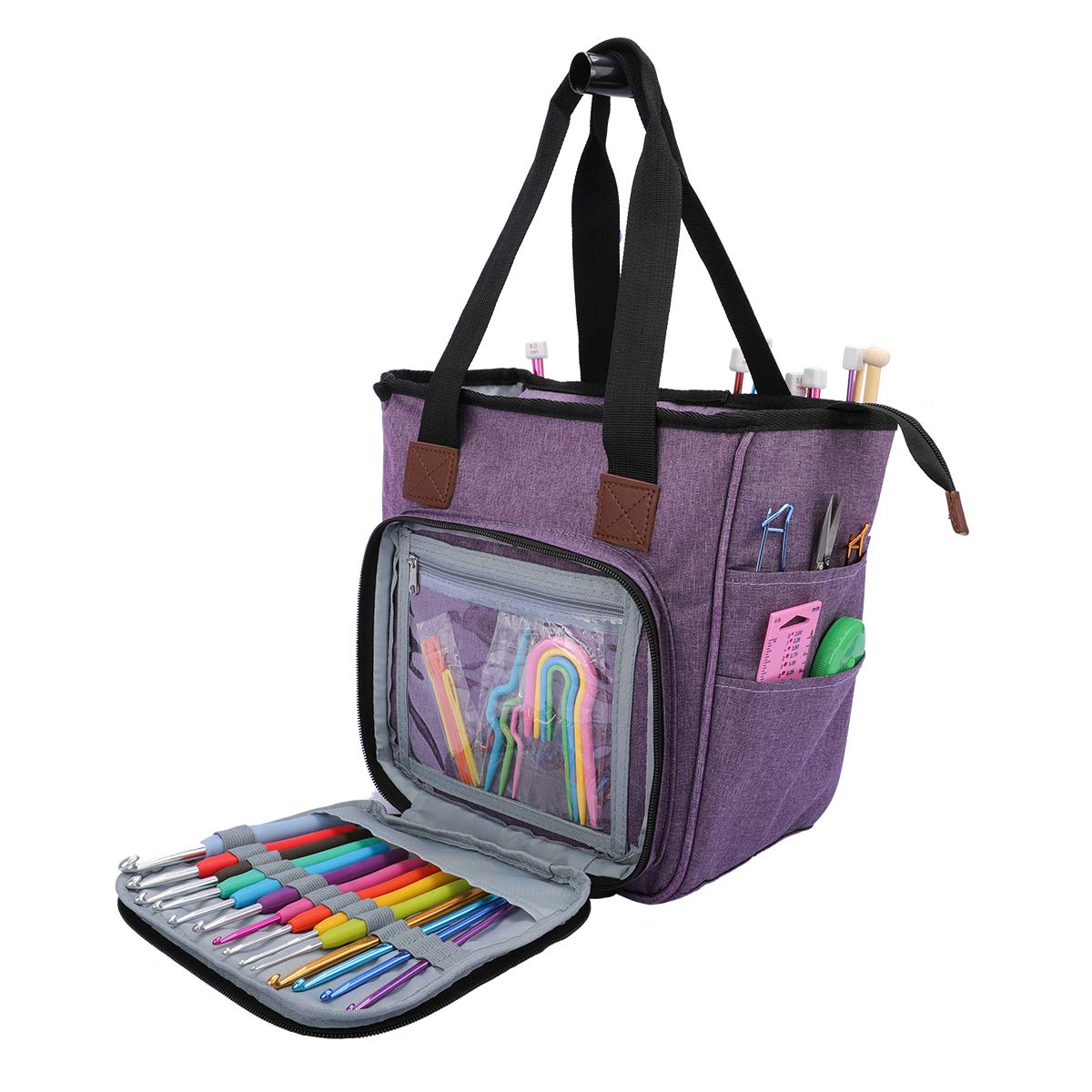
A durable 600D oxford tote with grommeted flaps for yarn feeding, water-resistant fabric, and a padded lining that helps it stand upright.
Why I picked it: I liked the water-resistant fabric and simple grommet setup that keeps yarn tidy.
Best for: Beginners and crafters who want a sturdy, wipeable daily tote.
Very affordable, durable tote option.
Pros
- 600D oxford — easy to wipe clean
- Grommeted flaps for yarn feeding
- Well-padded lining retains shape
- Multiple interior and exterior pockets
- Stands up when partially full
Cons
- Medium size limits very large stashes
- Simpler styling than rigid organizers
My take
I reached for this tote for quick car trips and road projects because the fabric wipes clean easily and the bag keeps its shape thanks to the padded lining.
The top grommets make feeding yarn straightforward whether the bag sits on my lap or shoulder, and the front and back pockets are handy for patterns, rulers, and longer needles.
For an everyday, low-maintenance project tote that won’t frighten the cat, this bag delivers excellent value.
5. Coopay Large Knitting Bag – Best for Big Stashes
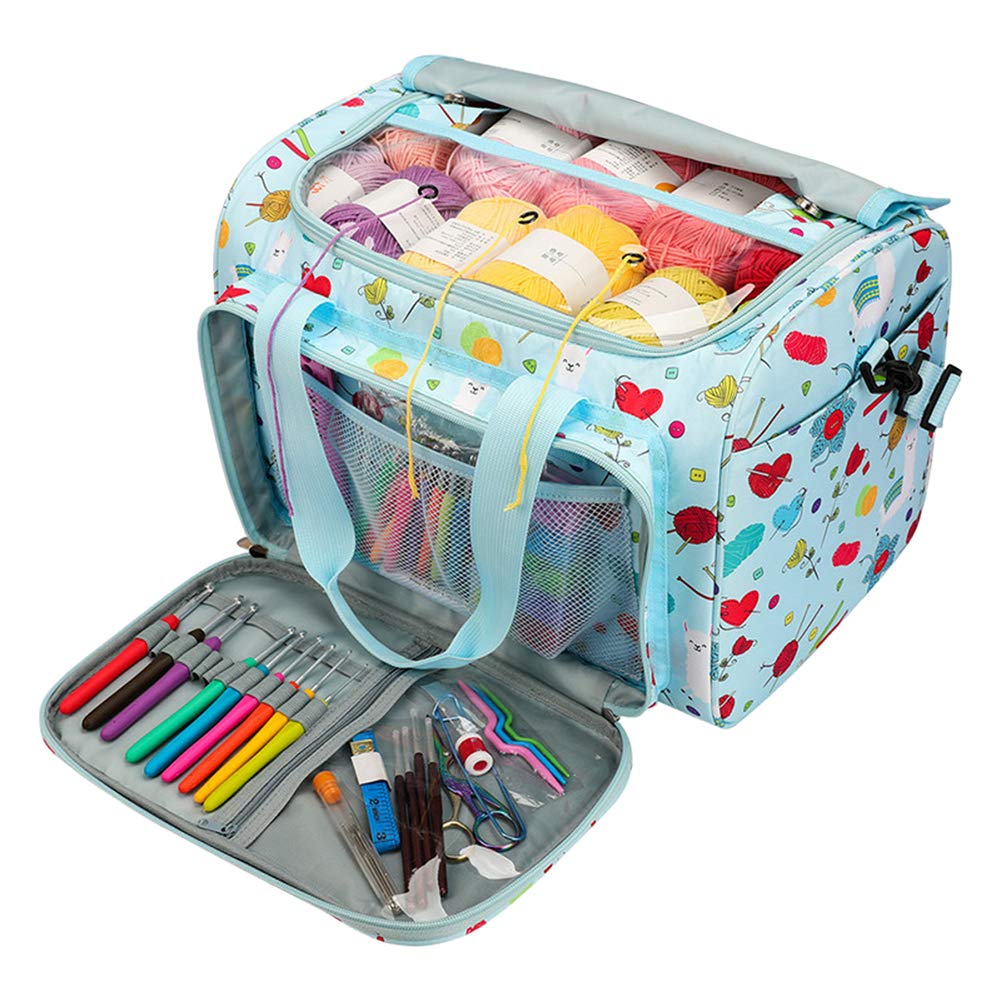
A large-capacity organizer with internal divisions, clear PVC top, and heavy-duty construction designed to hold multiple projects and large volumes of yarn.
Why I picked it: I chose this for big, multi-project outings where capacity and sectioning matter most.
Best for: Crafters with large stashes or several ongoing projects.
Higher-capacity option in the same practical material family.
Pros
- Very large main compartment
- Clear PVC top for visibility
- Sections go to the bottom to prevent rolling
- Sturdy 600D oxford fabric
- Handles and shoulder strap options
Cons
- May be smaller than some listing photos imply
- Padded liner can arrive twisted
My take
I packed this bag for a long road trip when I wanted nearly every tool and yarn I might need. The internal divisions keep skeins separate and the clear top lets me find colors without unzipping.
It’s built like a duffel with knitting-specific organization: the bottom-to-top dividers stop small items from migrating and the well-padded lining keeps the bag from slumping even when partially full.
If you need to move a lot of yarn and equipment at once, this is the bag I reach for before anything smaller.
6. USB Knitting Backpack – Best with USB Charging
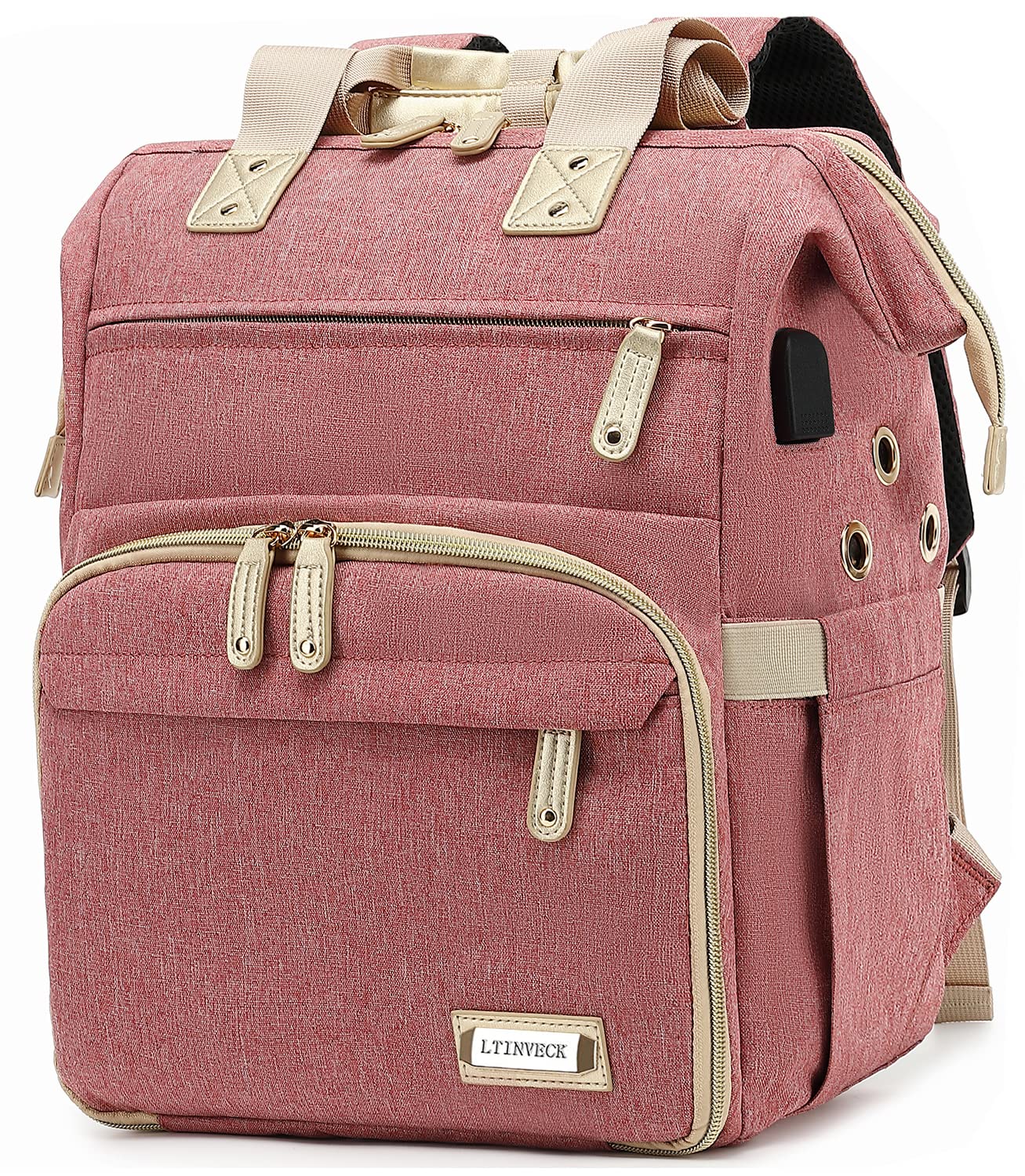
A functional knitting backpack with a built-in USB port, luggage strap, rectangular frame, and an anti-theft back pocket for secure travel.
Why I picked it: I appreciated the USB port and luggage strap for transit-friendly crafting.
Best for: Frequent travelers who like to charge devices while knitting on the go.
Feature-packed mid-range backpack.
Pros
- Built-in USB charging port
- Luggage strap for suitcases
- Rectangular frame for visibility
- Anti-theft back pocket
- Plenty of internal pockets
Cons
- Shoulder straps can be a bit short
- Occasional zipper stiffness
My take
I use this bag when I travel because the luggage strap slides over my suitcase handle and the rectangular frame keeps contents visible and accessible.
The external USB port is convenient for keeping my phone powered while I knit; it requires a power bank inside, but the access point makes charging simple during long transit days.
There are many pockets and elastic loops for hooks and needles, and the back anti-theft pocket is perfect for a phone or passport when I’m commuting.
7. LUXJA Small Yarn Bag – Best Small Project Bag
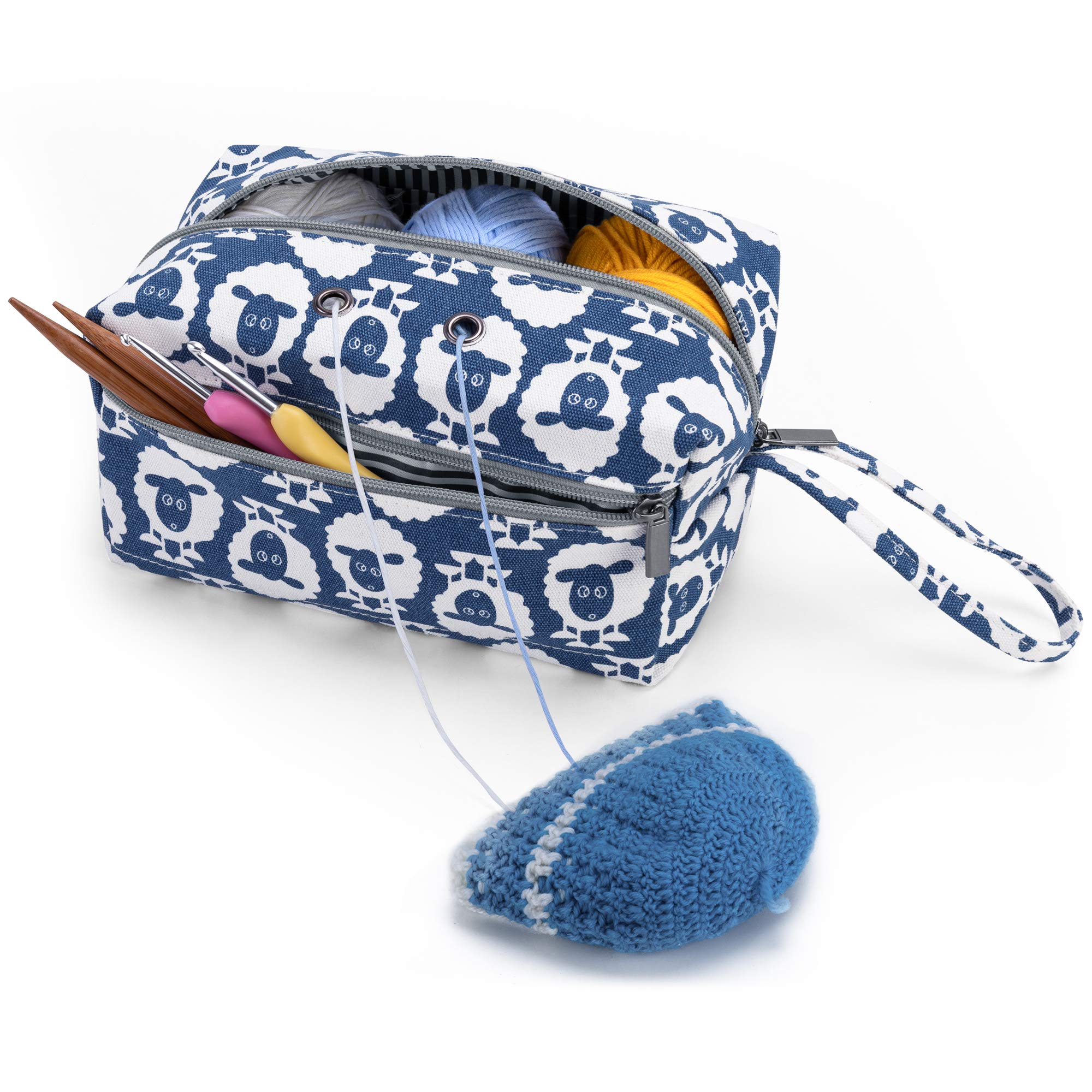
A compact, well-made pouch with multiple grommets and a wrist handle that’s engineered for single projects and short needles.
Why I picked it: I picked this when I needed a compact go-bag for one project and quick outings.
Best for: Single skein projects and short-needle work.
Budget-friendly small bag.
Pros
- Compact and very portable
- Four grommets for yarn feeding
- Durable construction
- Outer zipper pocket for notions
- Wrist-friendly handle
Cons
- Fits only short needles (up to ~8")
- Limited capacity for larger skeins
My take
For quick trips out the door I stash a project in this small bag and appreciate how neat it keeps everything. The grommets let me knit while the project stays protected inside.
It’s surprisingly roomy for its footprint; I can tuck an extra skein in alongside my WIP, and the outer zip pocket holds scissors and measuring tape safely.
If you mostly work on small accessories or need an under-seat project bag, this is my go-to compact option.
8. Luxja Knitting Tote – Best Mid-Size Workhorse
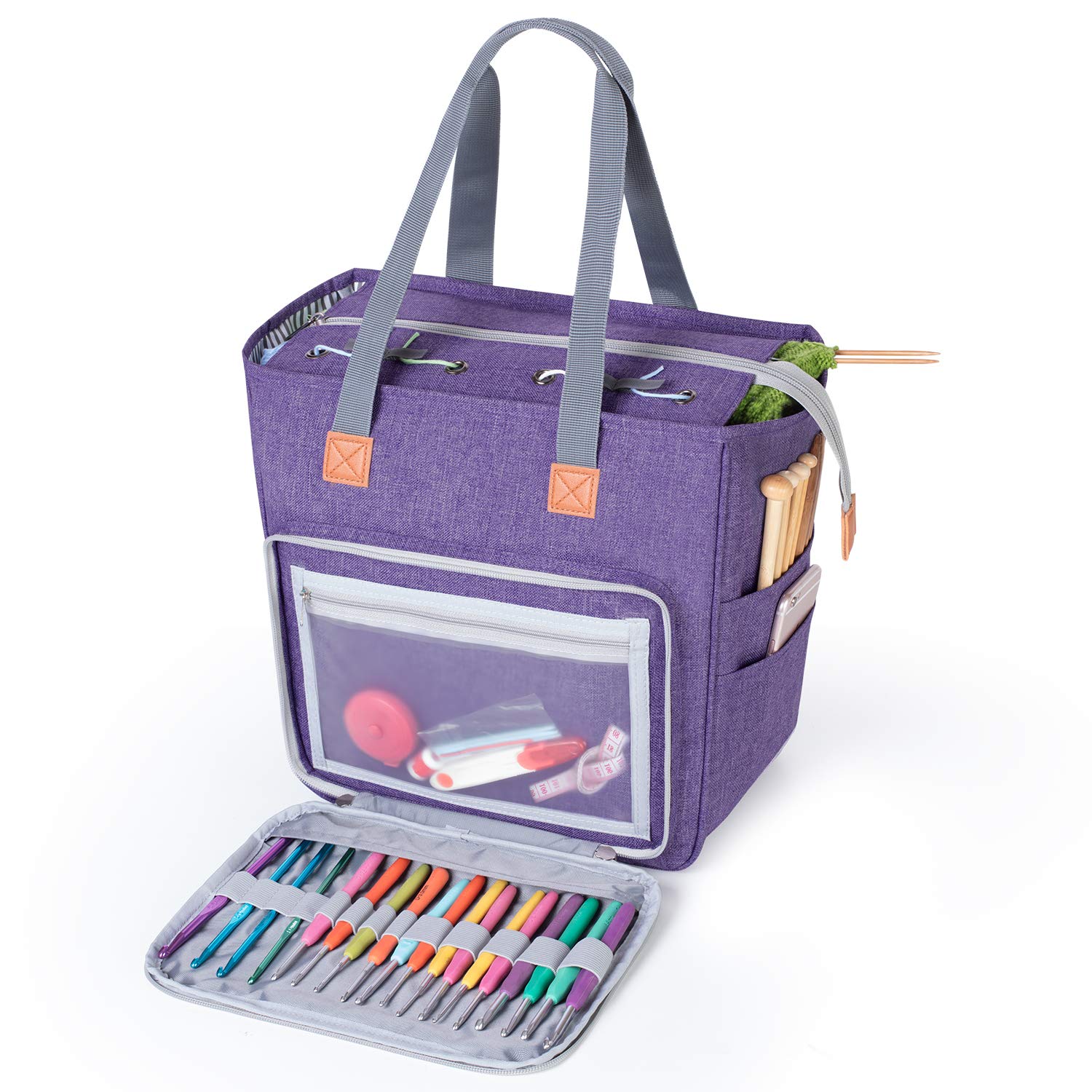
A medium-sized, well-padded nylon tote that stands up, offers Velcro straps and grommets, and balances capacity with portability.
Why I picked it: I wanted a dependable middle ground between tiny pouches and full duffels.
Best for: Crafters who want a versatile everyday project bag.
Mid-priced, reliable tote with good pocket layout.
Pros
- Stands on its own
- Double-zip outer pocket
- Velcro straps to secure yarn
- Padded lining protects projects
- Lightweight but sturdy nylon
Cons
- Occasional quality control issues reported
- Not as rigid as framed backpacks
My take
This tote is the best compromise if I want room for a medium blanket or a couple of garments without hauling a big backpack. It stands up on a table and the padded lining protects my yarn from crushing.
The double-zip outer pocket makes grabbing small tools fast, and the internal pockets help keep pattern books and circular needles organized.
I’ve used it on camping trips and commuting days—its cross-body strap and short handles give me multiple carry options depending on how much I pack.
How I Choose Yarn Storage
Size and capacity
I start by matching bag capacity to the projects I work on most. Small bags are great for single-skein projects; backpacks and large totes work best for blankets and multiple garments.
- Think in skeins: some backpacks hold ~25–30 small 50 g balls.
- Choose internal dividers if you work with many colors.
- Remember packed volume: a framed bag takes more space than a squishy tote.
Organization features
I look for grommets or top-feed holes so I can knit without unwrapping yarn. Full-depth dividers prevent skeins from rolling into each other.
- Grommets/top holes for feeding yarn while closed.
- Elastic loops or pockets for hooks and needles.
- Clear lids or pockets for quick content checks.
Material and durability
I prefer heavy canvas or 600D oxford for longevity and easy cleaning. Avoid machine washing bags with frames or rigid inserts.
- Canvas is sturdy and odor-free out of the box.
- Nylon/oxford is water-resistant and wipeable.
- Check seams and zippers if you carry heavy loads.
Portability and comfort
If I travel with projects I choose backpacks with padded straps or totes with luggage straps. Shoulder straps should be adjustable and long enough for my carrying style.
- Luggage strap helps when combining with a suitcase.
- Padded S-curve straps reduce shoulder fatigue.
- Consider anti-theft pockets for commuting.
Extra features I value
Small touches make a bag more useful: USB ports, accessory pouches, and removable dividers can change how I use a bag day to day.
- USB ports are convenient but require a power bank.
- Removable dividers let you switch between single-project and multi-project setups.
- Bonus pattern libraries or warranties are nice extras.
Frequently Asked Questions
How many skeins will fit in these bags?
I estimate capacity by skein size: compact bags hold a handful, mid-size totes fit several projects, and large backpacks or 25 L organizers can store around 25–30 small 50 g skeins depending on skein shape.
Can I feed yarn through the bag while it’s closed?
Yes—many bags I tested have grommets or top-feed holes designed to let yarn pass while the project stays protected. Some half-open lids let you tuck a WIP inside without cutting the yarn.
Are these bags washable?
Materials vary: canvas and nylon/oxford can often be spot-cleaned or wiped, but bags with steel frames, clear PVC tops, or sewn liners should not be machine-washed. I recommend spot cleaning and checking the manufacturer's care notes.
Final Take
If I want an everyday do-it-all bag, I reach for the CRAFTISS for its upright design and divider flexibility. For strict color separation I grab the Teamoy, and when I travel hands-free the Leudes backpack is my top pick.
Match the bag to how you work: compact pouches for quick outings, mid-size totes for balanced daily use, and framed backpacks or large duffels when capacity is the priority.
I tested each option with real projects—pick the one that fits your usual project size, carrying style, and storage needs and you’ll spend more time knitting and less time untangling yarn.
